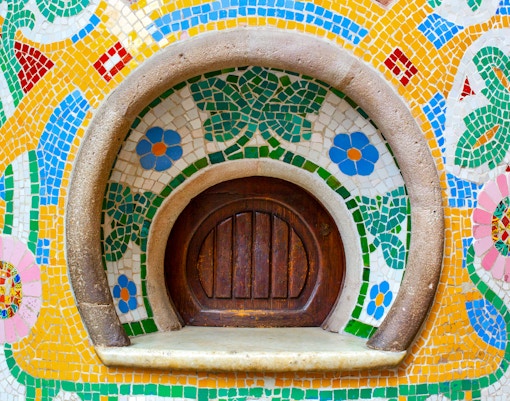
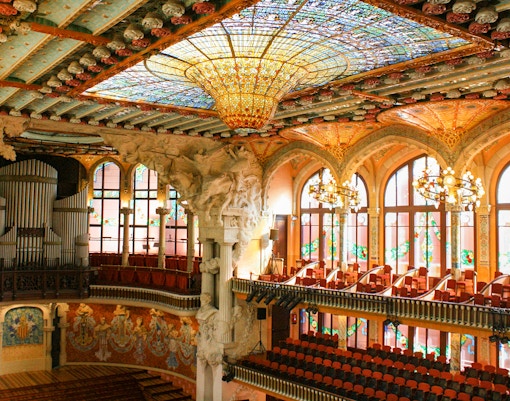
The building employs a steel frame allowing expansive open spaces, minimizing structural facades, and maximizing natural light. This innovative approach reflects the technological advancements of the early 20th century, creating an interactive environment that blurs the lines between interior and exterior spaces.
What is the Palace of Catalan Music?
The Palau de la Música Catalana, also known as the Palace of Catalan Music, is a stunning example of Catalan Modernisme, designed by architect Lluís Domènech i Montaner. Located in Barcelona, this UNESCO World Heritage Site features a vibrant mosaic facade and a stunning stained-glass skylight. It is known for being a cultural hub and hosting a variety of performances—from classical symphonies to contemporary music with its exceptional acoustics.
Must-see at Palau De La Musica
1/5
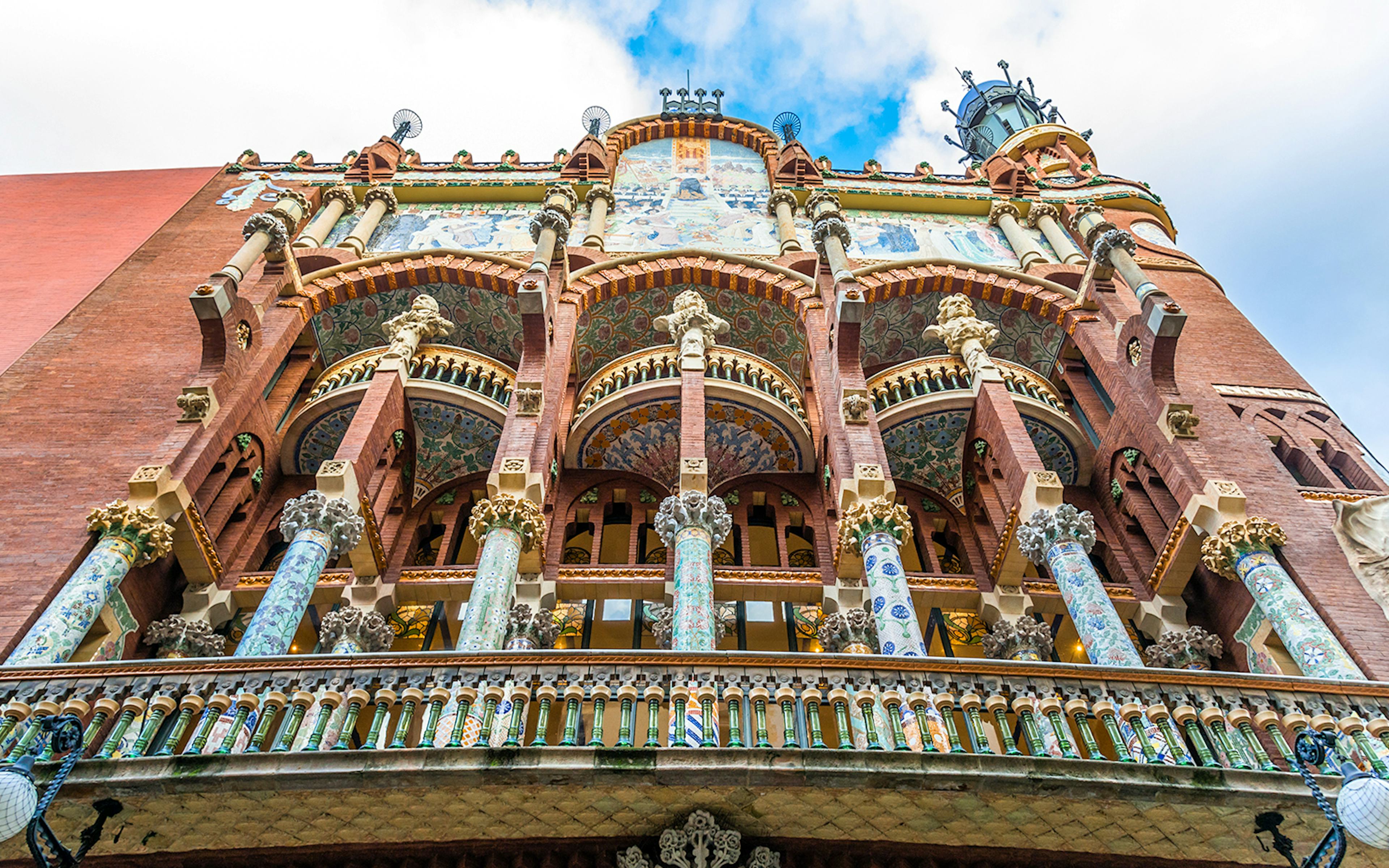
Ornate Façade
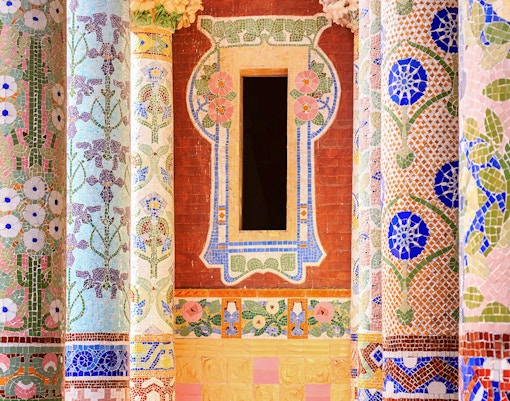
The Palace of Catalan Music’s façade is a breathtaking spectacle that's sure to leave you awestruck. A stunning fusion of Spanish and Arabic styles, it's composed of vibrant, multicolored glazed tiles that shimmers in the sunlight. Spot Miquel Blay's impressive sculpture, a tribute to Catalan music, and the intricate floral designs that cover the columns. And let's not forget the busts of musical legends like Beethoven, Bach, and Wagner!
Vestibule and Staircases
As you enter the Palau, you're greeted by a beautiful vestibule. Its ceiling is adorned with a mesmerizing star-shaped mosaic, creating a celestial ambiance. The grand marble staircases, framed by unique yellow glass balusters, leads you to the upper levels of this magnificent building.
Lluís Millet Hall
The Lluís Millet Hall, named after the Orfeó Català's founder, is a beautiful space with stunning views of the exterior columns. It's a perfect spot for breaks during concerts, with its stained-glass windows and busts of famous Catalan musicians.
Concert Hall
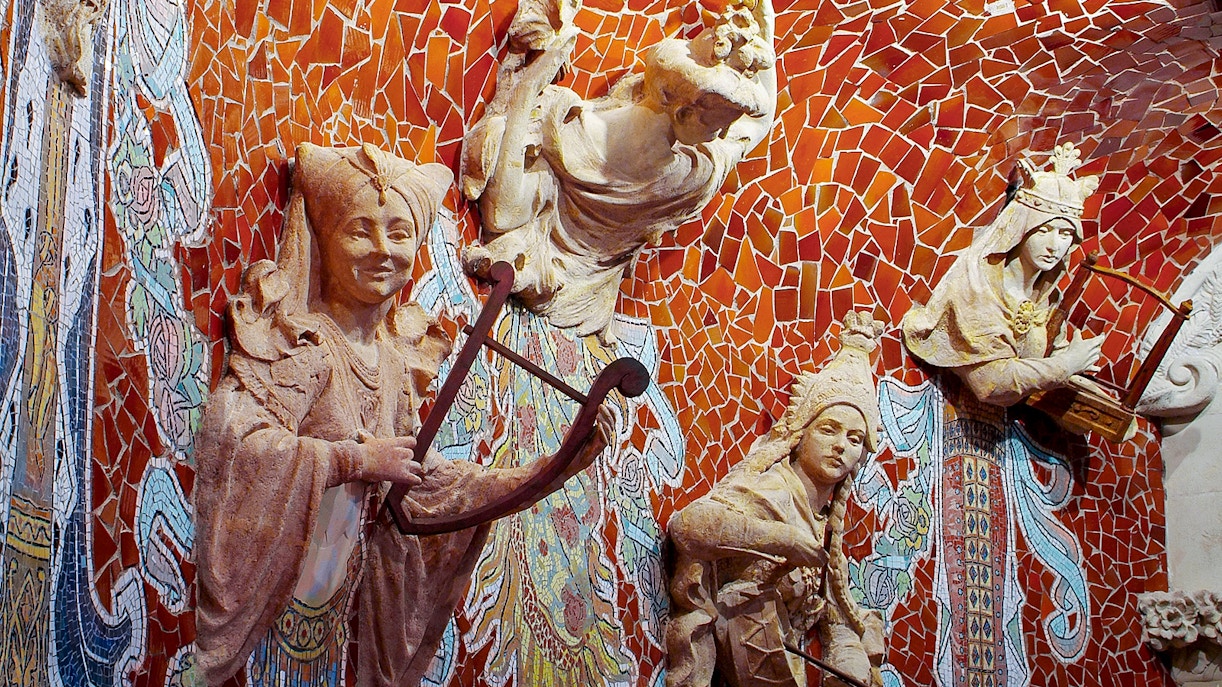
The crown jewel of the Palace of Catalan Music, the concert hall is illuminated by natural light streaming through its stunning stained-glass skylight designed by Antoni Rigalt. This inverted dome represents the sun and sky. The hall's decor celebrates music with sculptures of muses, Pegasus, and notable musicians. It's here that world-class performances come alive.
Petit Palau
The Petit Palau, a modern addition to the complex unveiled in 2004, is an underground auditorium that hosts various cultural and business events. This versatile space has a capacity of 538 and hosts cultural and business events.
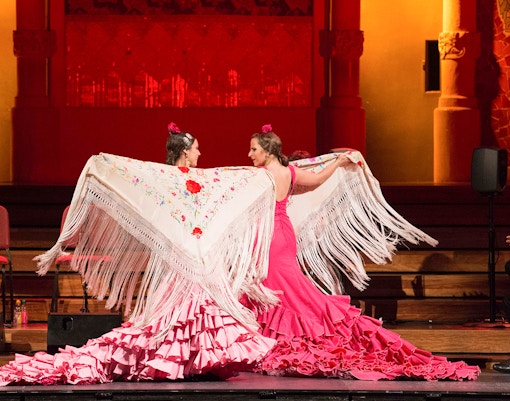
Flamenco Show at the Palau de la Música Catalana
History of the Palace of Catalan Music in a nutshell
- The Palau de la Música Catalana was inaugurated in 1908, and designed by Lluís Domènech i Montaner, a master of Catalan Modernisme architecture. Built as the home for the Orfeó Català choral society, it became a symbol of Catalan cultural identity during a time of national resurgence.
- The Palau was funded by public donations, showcasing the community's commitment to the arts.
- Throughout the 20th century, the Palace of Catalan Music hosted premieres by renowned composers like Enric Granados, Joaquín Rodrigo, and Manuel de Falla, cementing its reputation as a world-class venue for classical music.
- After falling into disrepair, the Palau de la Música underwent extensive restoration from 1982 to 1989 to preserve its original charm and adapt the building to contemporary needs. This included creating a six-story adjoining building with dressing rooms, a library, and archives. Materials like stone, glass, iron, and ceramics were used in line with Domènech i Montaner’s original methods.
- In 2004, the Petit Palau was inaugurated. Situated 11 meters below a newly created square, it offers seating for 538 people and features state-of-the-art acoustics and audiovisual technology. Designed to complement the main palace
- It is now a UNESCO World Heritage Site (listed in 1997), celebrated for its stunning beauty and continued role as a cultural beacon in Barcelona.
Who designed the Palace of Catalan Music?
Architecture & design of the Palau de la Musica Catalana
Frequently asked questions about the Palace of Catalan Music
Construction began in 1905 and was completed in 1908. The building was commissioned by the Orfeó Català, a choral society dedicated to promoting Catalan music and culture. The Palau de la Música Catalana was inaugurated on February 9, 1908, and has since been a vital cultural venue in Barcelona, hosting numerous concerts and events.
It is famous for its unique architecture, particularly the stained-glass skylight, ornate facade, and intricately decorated concert hall. It is also celebrated for its role in promoting Catalan culture and hosting a variety of musical performances.
The Palace of Catalan Music hosts a wide range of performances, including classical concerts, flamenco shows, choral music, and contemporary performances. It features both local and international artists.
Yes, guided tours of the Palau are available in multiple languages (Catalan, Spanish, French, Italian, and English). Tours typically last about 55 minutes and provide insight into the building's history and architecture.
Major restoration and expansion projects were carried out between 1982 and 1989, including the addition of a six-story adjoining building. Further work from 2006 to 2008 reinstated decorative elements and restored the lantern on the tower.
Facilities include free WiFi, elevators, a cloakroom, a café (El Foyer), a gift shop, and accessible seating for individuals with reduced mobility.
Yes, the Palau is equipped with wheelchair access and other facilities to accommodate visitors with reduced mobility. It’s advisable to contact the venue in advance to make arrangements if needed.
There is no strict dress code; however, smart casual attire is generally recommended for attendees of concerts.
The Palau has an onsite café and restaurant where visitors can enjoy refreshments or meals before or after performances. The menu includes Catalan-inspired dishes and beverages.
Photography and recording devices are not allowed during concerts to avoid disturbing the artists and audience. However, visitors on guided tours may be permitted to take photos in certain areas.