Barcelona Museum of Contemporary Art visitor guide
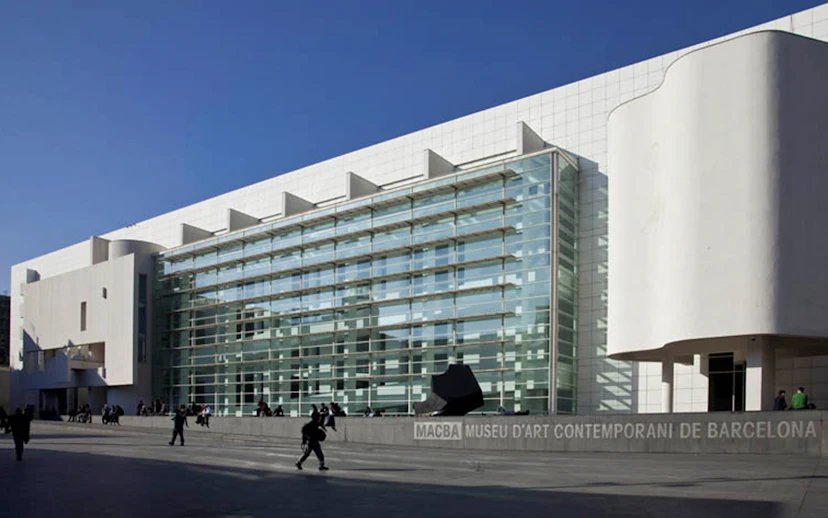
The Barcelona Museum of Contemporary Art, better known as MACBA, is Barcelona’s main museum for post-1945 and contemporary art, and it’s as much about the Richard Meier building and Raval atmosphere as the collection itself. The visit is manageable in size, but contemporary art lands better when you slow down and use the free digital guide. The biggest difference between a flat visit and a rewarding one is timing: Saturday afternoons are free, but noticeably busier. This guide covers tickets, timing, route, and what not to miss.
Quick overview: Barcelona Museum of Contemporary Art (MACBA) at a glance
If you want the short version before you book, this is what will actually shape your visit.
- When to visit: Wednesday–Monday, with Tuesday closures; weekday late mornings and early afternoons feel calmer than Saturday after 4pm, when free entry draws more local drop-ins and the plaza gets much livelier.
- Getting in: From €10.20 for off-peak entry and about €10.80 online for standard admission. Guided visits are included on select weekends with advance reservation, and booking ahead matters most during major temporary shows and free-entry Saturdays.
- How long to allow: 1–2 hours for most visitors. Temporary blockbusters, video installations, and time spent with the digital guide push it closer to 2 hours.
- What most people miss: The building itself, the views over Plaça dels Àngels, and the study center add a lot to the visit, but many people rush straight to the headline galleries and leave.
- Is a guide worth it? Usually, the free digital guide is enough for an independent visit, but a guided visit is worth reserving if you want help unpacking conceptual works and Catalan art context.
Jump to what you need
🕒 Where and when to go
🗓️ How much time do you need?
🎟️ Which ticket is right for you?
🗺️ Getting around
🖼️ What to see
♿ Facilities and accessibility
Where and when to go
How do you get to MACBA?
MACBA sits in the Raval neighborhood in Ciutat Vella, a short walk from Plaça Catalunya and Universitat, so it’s one of the easier museums in central Barcelona to reach without overplanning.
Plaça dels Àngels, 1, Barcelona
- Metro: Universitat → 5-min walk → the simplest option from central Barcelona.
- Metro / airport connection: Plaça Catalunya → 7-min walk → easiest if you’re arriving by Aerobús or regional train.
- Taxi / rideshare: Plaça dels Àngels drop-off → 1–2 min walk → useful if you want to avoid walking through the Gothic quarter or Raval side streets.
- Bike: Bicing stations nearby → short final walk → convenient if you’re exploring Ciutat Vella by bike.
Which entrance should you use?
MACBA is straightforward once you’re there: there’s one main entrance, and the mistake most visitors make is assuming free Saturday entry means instant entry. It often just means more people showing up at the same time.
- Located at: The main entrance on Plaça dels Àngels. Expect 0–10 min waits on quiet weekday mornings and up to 15–20 min around Saturday 4pm free entry.
When is MACBA open?
- Monday, Wednesday, Thursday, Friday: 11am–7:30pm
- Saturday: 10am–8pm
- Sunday and public holidays: 10am–3pm
- Tuesday: Closed
- Last entry: 30 min before closing
When is it busiest? Saturday after 4pm, spring weekends, and major temporary exhibitions are the busiest windows, and that matters because the smaller galleries and video rooms feel crowded quickly.
When should you actually go? Wednesday or Thursday around 11am–1pm is the sweet spot if you want the permanent collection to feel calmer and the plaza outside to be less hectic.
Which Barcelona Museum of Contemporary Art ticket is best for you?
| Ticket type | What's included | Best for | Price range |
|---|---|---|---|
Barcelona Card | Unlimited public transport, free entry to 25+ museums and discounts at major attractions, including cultural venues around Barcelona. Includes airport transfers. | Museum lovers planning to visit multiple museums alongside the Barcelona Museum of Contemporary Art. | From €59 |
Articket Passport | Includes skip-the-line entry to 6 major art museums, including MACBA, Museu Picasso, Fundació Joan Miró, CCCB, MNAC, and Museu Tàpies with 12-month validity. Best value for art-focused trips. | Art lovers planning to visit multiple museums and save money on combined admission fees. | From €38 |
Hola Barcelona Travel Card | Unlimited public transport on metro, buses, trams, FGC trains, Rodalies Zone 1, and airport metro/train connections for 2–5 days. | Budget travelers who already plan to buy separate museum tickets and want easy transport across Barcelona. | From €18 |
Go City Barcelona Explorer Pass | Choose 2–7 attractions from 45+ experiences, including museums, guided tours, cruises, and landmarks. Flexible 30-day validity. | Visitors who only want a few premium attractions and prefer flexibility over unlimited sightseeing. | From €84 |
Turbopass Barcelona City Card | Access to 35+ attractions, optional public transport, skip-the-line benefits at selected sites, and digital city pass access. | First-time visitors wanting an all-in-one sightseeing package with transport and major attraction coverage. | From €104 |
How do you get around Barcelona Museum of Contemporary Art (MACBA)?
Museum layout
MACBA is a modern, mostly linear museum rather than a maze, but the mix of permanent rooms, temporary exhibitions, and video installations means it’s still easy to drift through too fast without a plan.
- Ground floor / lobby: Ticket desk, orientation point, and occasional large-scale interventions → 10–15 min.
- Main collection galleries: Postwar Catalan, Spanish, and international works → 30–45 min.
- Temporary exhibition spaces: Rotating themed shows and larger installations → 30–60 min.
- Study center area: Archives, publications, and research resources → 15–20 min if you want to go beyond the galleries.
Suggested route: Start with the temporary exhibition while your energy is highest, then slow down in the permanent collection, and leave time for the study center or a second pass through the work that landed best.
Maps and navigation tools
- Map: Digital guide + on-site map → covers highlighted works and key spaces → get it at arrival through your phone.
- Signage: Good enough for the main route, but a downloaded map or the digital guide helps if you want specific works rather than a general wander.
- Audio guide / app: Free digital guide in English, Catalan, and Spanish → access it on your smartphone → worth using because it adds context where labels stay brief.
💡 Pro tip: Download the digital guide as soon as you arrive , MACBA is one of those museums where 2 minutes of context can change how a room feels.
Where are the masterpieces inside Barcelona Museum of Contemporary Art?

Dins el roig
Artist: Albert Ràfols-Casamada
Ràfols-Casamada’s Dins el roig is one of the collection works that helps ground MACBA’s Catalan art story. It rewards a slower look because the emotional pull comes from color, balance, and texture rather than obvious narrative. Many visitors glance at it, take in ‘red abstraction,’ and move on too fast.
Where to find it: In the permanent collection galleries focused on postwar Catalan abstraction.
Rinzen
Artist: Antoni Tàpies
Tàpies’ Rinzen is one of the strongest reasons to slow down in the collection. It carries the rough surfaces, spiritual references, and material intensity that made Tàpies central to postwar Spanish art. What people often miss is how physical the work feels up close — the texture is part of the meaning, not just the finish.
Where to find it: In the main collection route among the postwar Spanish and Catalan works.
Atomic Kiss
Artist: Joan Rabascall
Rabascall’s Atomic Kiss captures MACBA at its sharpest: political, image-driven, and instantly readable from a distance, then more unsettling when you stay with it. Visitors often enjoy the surface pop-culture hit and miss the Cold War tension underneath. It’s one of the best bridges between Spanish context and international visual language.
Where to find it: In the permanent collection galleries covering late 20th-century art.
Between the Frames: The Forum
Artist: Antoni Muntadas
Muntadas’ Between the Frames: The Forum shows why MACBA works so well for visitors open to media-based art. It’s more spatial and idea-heavy than a painting-led museum experience, and the payoff comes when you let the installation unfold instead of trying to decode it instantly. Many people rush because they assume they’ve already ‘got it.’
Where to find it: In the museum’s installation or media-art presentation spaces within the main gallery route.
The Meier building and interior ramp
Creator: Richard Meier
The building is one of MACBA’s real highlights, not just the container for the art. The bright white surfaces, high windows, and shifting natural light change how the galleries feel over the course of the day. Many visitors photograph the façade outside, but skip the internal views back over Plaça dels Àngels and the contrast with the older Raval streets.
Where to find it: Throughout the museum, especially around the central circulation spaces and windows facing the square.
Facilities and accessibility
- 🎧 Digital guide: The free smartphone guide covers selected works in English, Catalan, and Spanish, so you don’t need to rent separate audio equipment.
- 📚 Study center: The public study center gives you access to archives, publications, and research materials if you want more than a standard gallery visit.
- 👥 Weekend guided visits: Public guided visits run on select weekends at no extra charge, but you’ll need to reserve in advance.
- 🪑 Rest pace: The museum suits a stop-and-start visit better than some older museums because the route is modern, open, and easy to break into shorter stretches.
- ♿ Mobility: MACBA is one of the easier Barcelona museums to navigate because it is housed in a modern building, and the main gallery route is generally more manageable than the city’s older historic sites.
- 👁️ Visual impairments: The free digital guide adds audio context for selected works, which helps if labels alone feel too brief.
- 🧠 Cognitive and sensory needs: Weekday mornings are the calmest window, while Saturday afternoons and the plaza-facing entrance feel noticeably busier and louder.
- 👨👩👧 Families and strollers: The museum layout is more stroller-friendly than many historic museums, but some contemporary video and conceptual rooms hold older children’s attention better than toddlers’.
MACBA works best for families with school-age children, teens, or curious kids who like unusual spaces more than traditional ‘masterpiece hunting.’
- 🕐 Time: 45–75 min is realistic with younger children, and the building, big visual works, and plaza break usually hold attention best.
- 🏠 Facilities: The modern layout makes it easier to pause, regroup, and visit without the stop-start bottlenecks common in older museums.
- 💡 Engagement: Use the building as part of the game—ask children to notice how light, windows, and open ramps change from one space to the next.
- 🎒 Logistics: Bring your own headphones if you want to use the digital guide without sharing sound in the galleries.
- 📍 After your visit: CCCB is the easiest next stop with children because it is right next door and breaks the day into two short cultural visits instead of one long one.
Rules and restrictions
What you need to know before you go
- Entry requirement: Standard entry is ticketed by time slot, and you should keep ID with you if you’re using a reduced or free-admission category.
- Bag policy: Travel light, because a small day bag is far easier to manage in the galleries than anything bulky.
- Re-entry policy: MACBA admission includes re-entry for 1 month after activation, which makes it one of the easier Barcelona museums to split across 2 short visits.
Not allowed
- 🚫 Food and drink: Food and drink are best kept for before or after the visit rather than taken into gallery spaces.
- 🚬 Smoking / vaping: Smoke or vape outside the museum rather than around the entrance or inside the plaza-facing access points.
- 🐾 Pets: Pets are not part of a standard museum visit, while assistance animals follow accessibility rules.
- 🖐️ Touching exhibits: Don’t touch works or lean into installations, because many pieces use sensitive surfaces and materials.
Photography
- Photography is usually fine for personal use in much of the museum, but the real rule to follow is room-by-room signage rather than assumptions.
- Temporary exhibitions can apply stricter limits than the permanent collection, especially for video, loaned works, or image-heavy installations.
- Flash, tripods, selfie sticks, and bulky filming setups are the items most likely to be restricted.
Good to know
- Saturday free entry: Free admission after 4pm on Saturdays is real, but it also changes the pace of the visit because more people arrive at once.
- Digital guide: MACBA makes more sense if you use the free digital guide, especially in the conceptual and media-art rooms where labels stay short.
Practical tips
- Booking and arrival: Book online if you want the lower online price or an off-peak slot, and aim to arrive 10–15 min early so you’re not starting your visit by rushing through the lobby.
- Pacing: Save your best focus for the temporary exhibition and the media-heavy rooms first; they demand more attention than the abstract collection galleries, which are easier to loop back through later.
- Crowd management: Wednesday or Thursday before lunch is the calmest sweet spot here, while Saturday after 4pm is better for saving money than for having space.
- What to bring or leave behind: Bring wired or Bluetooth headphones for the digital guide; it’s free, genuinely useful, and much better than trying to decode every room from labels alone.
- Food and drink: Eat before you go if you’re using the free Saturday window, because nearby cafés and bars feel much busier right after the 4pm rush starts.
- Mindset: If contemporary art sometimes feels opaque, don’t try to ‘finish’ every room. Pick the works that hold you, use the guide on those, and the museum becomes much more rewarding.
- Outside the building: Give yourself 5–10 min in Plaça dels Àngels before or after the galleries; the skate scene outside is part of the museum’s atmosphere, even if it isn’t part of the ticket.
What else is worth visiting nearby?
Commonly paired: CCCB
Distance: Across Plaça dels Àngels , 5 min walk
Why people combine them: They sit side by side and make the cleanest same-area cultural half-day in Raval, with CCCB complementing MACBA’s contemporary art focus through exhibitions, film, and culture programming.
Commonly paired: Museu Picasso
Distance: About 1.6km, 20 min walk
Why people combine them: It makes sense if you want one day of contrasting art history, moving from MACBA’s postwar and conceptual work to Picasso in a much more historic setting.
Also nearby
Palau Güell
Distance: About 850m, 10 min walk
Worth knowing: It’s a strong contrast to MACBA because you go from white-box contemporary architecture to one of Gaudí’s richest early interiors.
Plaça Reial
Distance: About 900m, 10–12 min walk
Worth knowing: It’s an easy post-museum pause if you want tapas, a drink, or just a more relaxed Barcelona square after the Raval crowds.
Eat, shop and stay near Barcelona Museum of Contemporary Art
- Santa Caterina Market (about 7-min walk, Santa Caterina area): A flexible lunch stop with multiple casual options, and it works well if your group can’t agree on one cuisine.
- Raval bars and tapas spots (5–10 min walk, El Raval): These are the most practical post-visit fallback because you don’t need to leave the neighborhood to eat well.
- Plaça Reial restaurants (10–12 min walk, Plaça Reial): Better if you want a sit-down meal after the museum rather than a quick snack between sights.
- 💡 Pro tip: If you’re visiting on Saturday after 4pm, eat before you enter or wait until later in the evening, the free-entry crowd spills into nearby cafés.
Yes, the area is practical if you want to walk to MACBA, CCCB, La Rambla, and other Ciutat Vella sights without relying much on transit. Raval is lively, central, and culturally rich, but it is not the calmest or most polished base in Barcelona. It suits short stays better than travelers who want a quiet, residential neighborhood feel.
- Price point: Mixed, with a wider spread than some central areas, so you’ll find both budget stays and more design-led hotels nearby.
- Best for: Short city breaks where being able to walk to museums, bars, and the Gothic quarter matters more than having the quietest nights.
- Consider instead: Eixample works better for longer stays, easier airport connections, and a calmer street feel, while El Born suits travelers who want a more polished old-city base with strong food and shopping.
Frequently asked questions about visiting Barcelona Museum of Contemporary Art
Most visits take 1–2 hours. If you’re only doing the permanent collection and a quick architectural look, you can be done in about 60–75 min, but temporary exhibitions, video works, and time with the digital guide easily stretch the visit closer to 2 hours.
No, you don’t always need to book far ahead, but online booking is still the smarter move. It locks in your time slot, usually saves a little versus the on-site price, and matters more when a major temporary exhibition is on or if you’re planning around a tight city schedule.
Usually no, skip-the-line is not essential at MACBA. This is not one of Barcelona’s heaviest-queue museums, and timed entry keeps lines manageable, but pre-booking is still worth it if you want the smoothest arrival or you’re going during a high-profile exhibition.
Arrive about 10–15 min early. That gives you enough time to find the entrance, open your mobile ticket, and get oriented without eating into your visit, especially if you plan to start with the temporary exhibition.
Yes, a small bag or backpack is usually fine for a normal visit. It’s still best to travel light, because bulkier bags are less convenient in gallery spaces and slow down a museum visit that is otherwise fairly easy and compact.
Yes, but it suits older children and teens better than very young kids. The building, open spaces, and bold contemporary works keep the visit visually interesting, while the more conceptual rooms and video installations usually reward children who can slow down and engage for at least 45–60 min.
Yes, MACBA is one of the easier central Barcelona museums to navigate because it is housed in a modern building. The overall route is more manageable than older historic attractions, though it’s still worth checking ahead if a temporary installation might affect circulation through a specific space.
Yes, there are plenty of places to eat near MACBA even if you don’t build the visit around an on-site stop. Raval’s cafés and tapas bars are the quickest option, and Santa Caterina Market is a solid choice if your group wants flexibility and more variety.
Yes, MACBA is free every Saturday from 4pm, subject to capacity. It’s the best-value time to visit, but it is not the quietest — the trade-off is a busier atmosphere both inside the museum and in Plaça dels Àngels outside.
Yes, MACBA tickets are more flexible than many museum tickets because they allow re-entry for 1 month after activation. That makes it easy to do a shorter first visit and come back later for a temporary exhibition or a second pass through the collection.