- You want Montserrat at its most alive, not just at its most photographed. The choir changes the basilica from a sightseeing stop into a lived religious space.
- You’re visiting once and care about Catalan cultural traditions as much as the mountain views. The Escolania is one of Montserrat’s most distinctive living institutions.
- You don’t mind structuring your day around a fixed window. If you’re comfortable building your route, meal, and transport timing around the service, the upgrade makes sense.
- You prefer a quieter, more reflective highlight over another viewpoint or hike. This is one of the few Montserrat experiences built around listening rather than moving.

Quick overview
- Access: Included in select tickets only
- Separate ticket: Not required. Upgrade your existing ticket.
- Visit duration: 45–60 min additional to your Montserrat visit
- Best time: Weekday 1pm choir window, with arrival before reserved basilica access begins
- Physical requirements: Easier than the Black Madonna route for many visitors with mobility concerns, but seating can be limited and you may need to stand
Things to know before booking Escolania de Montserrat tickets
Accessibility and format: The choir is heard inside the basilica during a religious service, so this is easier than the Black Madonna route for many visitors with mobility concerns. However, seating can be limited, and you may need to stand if you arrive late.
Booking ahead: Only select Montserrat products include the choir, and the clearest signal is an option that explicitly says ‘Escolania.’ If that wording is missing, don’t assume choir access is part of the booking.
Time to budget: Keep around 45–60 minutes free around the performance window, not just the singing itself. That gives you time to enter calmly, find a place inside, and avoid rushing straight back to transport.
Timed access matters: From Monday to Friday, basilica access between 12:15pm and 1:15pm is reserved for visitors with an Escolania reservation. Arrive at least 15 minutes early, because late entry can disrupt the service flow.
What you’ll miss if you skip it: You can still see the basilica, the mountain setting, and other Montserrat highlights. What you lose is the live liturgical atmosphere of the Salve and Virolai, which is the moment that makes the space feel inhabited rather than simply visited.
Is it worth it?
Go for it if you
Skip it if you
- You mainly want scenic time, hiking, or funicular views. A fixed choir window can make the rest of your visit feel compressed.
- You dislike schedule-dependent experiences. The Escolania follows the school and religious calendar, so flexibility is lower than on a standard self-paced monastery visit.
- You need guaranteed seating or a fully relaxed indoor experience. During busy periods, arriving late can leave you standing and farther back than you’d like.
- You’re booking a broad day trip such as Montserrat plus Girona, Costa Brava, wine tasting, or horseback riding. Those itineraries usually prioritize range over choir-specific timing.
What you lose if you skip it
- You’ll still see Montserrat’s basilica and mountain setting, but you won’t experience the one moment that turns the visit into something unmistakably local: hearing the Escolania sing live during worship.
- The acoustics, the Salve and Virolai, and the change in mood inside the basilica are not things you can recreate later by walking back in. Most standard visits show you the setting; the choir lets you feel its rhythm.
Montserrat Boys Choir schedule: which performance should you hear?
1pm: the easiest choice for most visitors
From Monday to Friday, the Escolania sings the Salve and Virolai at 1pm. Individual weekday calendar entries commonly run from 1pm to 1:15pm. If you have a standard daytime visit from Barcelona, this is the performance that fits most naturally into the day.
There is another little advantage to 1pm: it gives your day a centre. Arrive in the morning, explore the monastery, hear the choir, then continue with the museum, viewpoints, Black Madonna, or mountain.
6:45pm: choose this for the liturgy, not convenience
Monday to Thursday, Vespers begins at 6:45pm, with the Escolania participating in the evening worship with the Salve Montserratina and polyphonic music. Specific calendar entries can place the choir's singing around 7:15pm, after Vespers has begun.
It is a very different proposition from dropping in for the 15-minute 1pm singing. You are staying for the rhythm of evening prayer.
Sunday: a slower Montserrat day works best
On Sundays and religious holidays, the regular pattern changes. The Salve and Virolai is at 12pm, while evening Vespers begins at 6:45pm. The choir also participates in the 11am Conventual Mass on scheduled Sundays.
Saturday: do not book the day for the Boys' Choir
This is the one line worth remembering from the entire Montserrat Boys Choir schedule:
The traditional Boys' Choir does not sing on Saturdays.
The 1pm prayer still exists, but pilgrims sing the Salve and Virolai instead.
Exploring inside Escolania de Montserrat
Hearing the Escolania live inside the basilica is something you only get from this choir-linked visit, not from a standard walk-through. The detail that changes the whole experience is this: you’re not attending a concert, you’re stepping into a liturgical moment. That shifts how you watch, listen, and move inside the space. The notes below help you focus on what actually matters once you’re there.
Entering the basilica
Try to notice how the room feels before the singing begins. The buildup is part of the experience: people settle, voices drop, and the basilica moves from visitor traffic into service mode. If you arrive early enough to witness that transition, the choir lands more powerfully than if you rush in at the last moment.
Listening to the space, not just the singers
Don’t fixate on getting a perfect visual angle of every choir member. What makes this special is how the voices carry through the basilica’s volume and stone surfaces. The sound expands far beyond the group itself, so judge your spot by acoustics and calm, not by closeness alone.
The Salve and Virolai moment
This is the emotional center of the experience. Even if you don’t know the texts, you’ll hear the shift from general attention to collective focus. Listen for how the service gathers around the music rather than pausing for it. That’s what separates the Escolania from a tourist performance.
After the final note
Don’t rush straight out the moment the singing ends. The atmosphere usually lingers for a few minutes, and that after-silence is part of what visitors remember. Let the basilica empty slightly before moving on, then continue to the Black Madonna, museum, or mountain viewpoints.
What are you actually hearing?
The Escolania is not a tourist concert with a fixed greatest-hits set. Its primary role is liturgical, so what you hear depends on the service and day.
Salve Regina
“Salve” refers to the Salve Regina, the Marian antiphon that forms part of the choir's weekday 1pm prayer. It places what you are hearing directly within Montserrat's centuries-old devotion to the Virgin.
The Virolai
The Virolai is Montserrat's great hymn to the Virgin, also known as Rosa d'abril after its opening words.
Here is the wonderful bit: the words and tune were not written together.
Jacint Verdaguer wrote the text for Montserrat's millennium celebrations in 1880. A musical competition followed. The prize for the best melody was a gold-and-enamel flabiol, a traditional Catalan pipe. Josep Rodoreda's tune won from roughly 70 entries. The melody visitors now associate so strongly with Montserrat began as a competition entry.
Vespers, Salve Montserratina & the polyphonic motet
Come in the evening and the experience changes. Vespers is part of the monastery's evening prayer rather than a repeat performance for late visitors. From Monday to Thursday and again on Sunday evenings, the choir's role includes the Salve Montserratina and polyphonic repertoire.
That is also a clue to understanding the Escolania itself: the choir performs around the world, but its reason for being is still tied to worship at Montserrat.
Meet the people behind Montserrat's sound
Jacint Verdaguer
The Catalan poet wrote the words of the Virolai in 1880 for Montserrat's millennium celebrations.
Josep Rodoreda
His melody for the Virolai beat around 70 competing compositions and became the tune still sung at Montserrat today.
Ireneu Segarra
Director of the Escolania from 1953 to 1997, he was also a composer and oversaw the beginning of the choir's international touring era.
Know before you go
- Monday to Friday: Salve and Virolai at 1pm. Individual weekday entries are commonly scheduled from 1pm to 1:15pm.
- Monday to Thursday: Vespers begins at 6:45pm, with choir participation during or following the service.
- Saturday: the traditional Boys' Choir does not sing.
- Sunday and religious holidays: Salve and Virolai at 12pm; Vespers from 6:45pm. The choir also participates in scheduled Sunday Conventual Mass at 11am.
- Performance times can change for special religious celebrations, tours, concerts, and the school calendar.
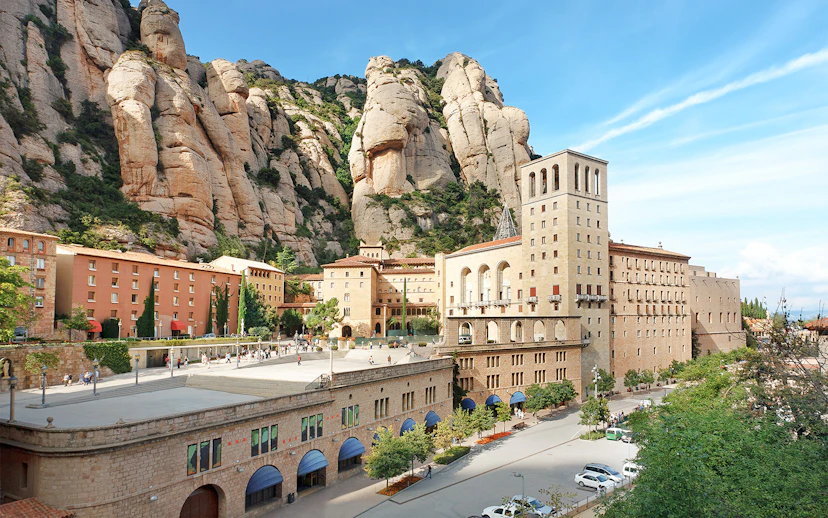
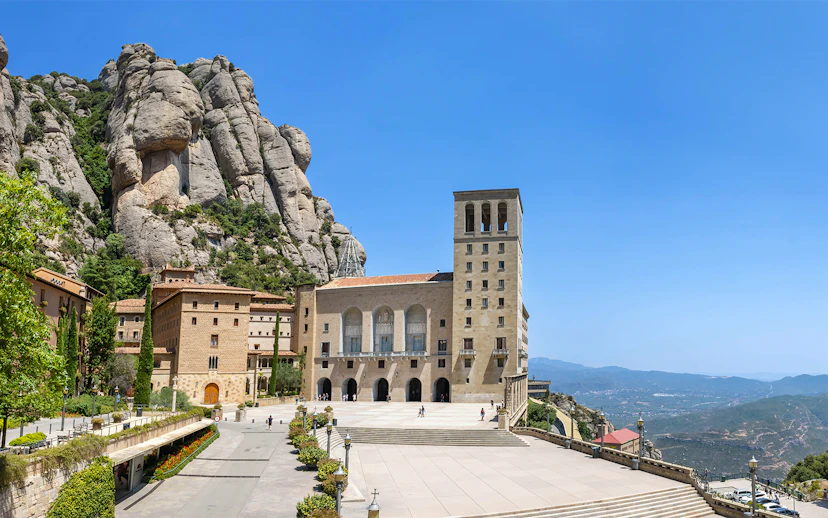
- The Escolania sings at the Basilica of Santa Maria de Montserrat, within the Montserrat monastery complex.
- If you select Montserrat + Train & Rack-Railway + Escolania Choir Access, your journey from Barcelona and the rack railway are bundled with the monastery experience.
- Travelling independently? FGC trains on the R5 line leave Barcelona-Plaça Espanya for Montserrat. Services begin from 8:26am and run roughly hourly.
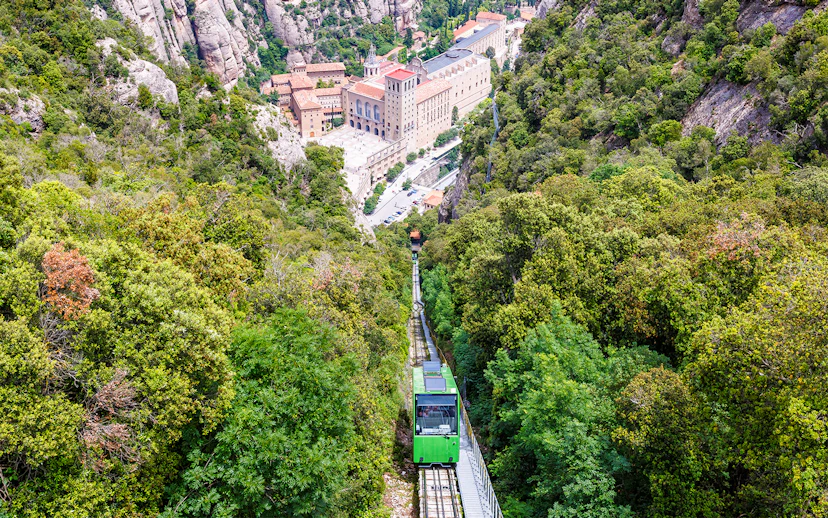
- From Monistrol de Montserrat, the rack railway covers 5km, climbs more than 600 metres, and takes about 15 minutes. Departures from Monistrol Vila run approximately every 20 minutes.
- The Aeri cable car is the faster mountain ascent. It covers 1,350 metres in about 5 minutes, with departures roughly every 15 minutes.
- Most areas of the monastery complex are wheelchair accessible on current transport-inclusive products.
- The choir experience itself is easier for many visitors than the Black Madonna route because you remain inside the basilica.
- Seating may be limited during busy services, so visitors who need to sit should arrive early.
- Train and rack railway options are described as accessible to visitors with reduced mobility on some products.
- Black Madonna access has stricter mobility limitations on some tickets, but that does not automatically apply to choir attendance.
- Photography during services is prohibited.
- Flash photography, tripods, and selfie sticks are not permitted inside the basilica.
- Photos inside the basilica are allowed without flash only when no service is taking place.
- Do not enter worship areas during services unless you are attending the service.
- Food and drinks are not permitted inside the monastery or basilica areas on relevant products.
- If your booking includes the choir, late arrival can affect entry during the reserved service window.
- This is a religious site, so knees and shoulders must be covered.
- The dress code applies to both men and women.
- Flip-flops are prohibited on current Montserrat products.
- If you’re dressed inappropriately, access to worship areas may be refused.
Frequently asked questions about Escolania de Montserrat tickets
No. Only select Headout options include an Escolania reservation or choir-specific option. Standard Montserrat visits and most day trips do not automatically include choir access.
Choose a product or variant that explicitly says ‘Escolania’ or ‘Choir option,’ such as ‘Montserrat Experience and Escolania’ or ‘Montserrat from Barcelona with Train and Rack Railway + Escolania.’
Yes, if live sacred music is a priority. No, if you mainly want mountain views, hiking, or total flexibility, because choir timings can shape your whole visit.
No. This is not a standalone ticket; it’s usually an add-on or specific option within a Montserrat booking, and the performance takes place inside the basilica.
Allow about 45–60 minutes around the performance window, including early arrival, finding a place inside the basilica, and waiting for the service flow to begin.
Yes. Choir-linked options are limited and can disappear on dates when the school calendar or religious celebrations change the schedule. Book as soon as your travel date is fixed.
Usually yes for the choir itself, because you stay in the basilica. However, seating is limited, and Black Madonna access has stricter mobility limits on some products.
No. The usual weekday performance is at 1pm, but the Escolania can be away during school breaks, special celebrations, or calendar changes.