Plan your visit to Poble Espanyol
Poble Espanyol is an open-air museum on Montjuïc, best known for its full-scale Spanish architectural replicas, artisan workshops, and Fran Daurel Museum collection. It feels more like wandering a compact village than following a fixed museum route, so timing shapes the experience more than people expect. Arrive too late, and some workshops and shops start winding down, which makes the site feel quieter than it should. This guide covers arrival timing, tickets, route planning, and what to prioritise once inside.
Quick overview: Poble Espanyol at a glance
If you want the short version before you book, this is what actually changes the visit.
- When to visit: Open daily from mid-morning, with later closing on many evenings; weekdays before 1pm are noticeably calmer than weekend afternoons, and the artisan studios are more likely to be active earlier in the day.
- Getting in: From €13.50 for standard entry bought online, or about €15 at the gate. Guided tours are available, while the audio guide costs €3.50; advance booking is smart on weekends, school breaks, and event dates, but most regular weekdays are still manageable.
- How long to allow: 2–3 hours for most visitors. Lunch, the Fran Daurel Museum, the viewpoint, or children using the slides push it toward the longer end.
- What most people miss: The Fran Daurel Museum and the monastery viewpoint are the two big misses, because the outdoor village atmosphere keeps most visitors moving past them.
- Is a guide worth it? Yes if you want the architectural context and regional stories; otherwise, a good audio guide is usually enough for an independent visit.
Jump to what you need
🕒 Where and when to go
🗓️ How much time do you need?
🎟️ Which ticket is right for you?
🗺️ Getting around
🏘️ What to see
♿ Facilities and accessibility
Where and when to go
How do you get to Poble Espanyol?
Poble Espanyol sits on Montjuïc, just above Plaça Espanya and close to the Magic Fountain and MNAC, around 15 minutes from central Barcelona by public transit.
Address: Av. Francesc Ferrer i Guàrdia, 13, 08038 Barcelona, Spain | Find on Google Maps
- Metro: Espanya station (L1/L3) → 15-min uphill walk → easiest if you want to combine the visit with Plaça Espanya and MNAC.
- Bus: Bus 150 → stop near Poble Espanyol → simplest low-effort option if you don’t want the uphill walk.
- Funicular + bus: Paral·lel funicular → Bus 150 → good if you’re already coming from the Parallel side of Montjuïc.
- Taxi/rideshare: Drop-off at the main entrance on Av. Francesc Ferrer i Guàrdia → best choice if you’re arriving with children or limited mobility.
- Parking: Large parking areas around Poble Espanyol and nearby Montjuïc venues → useful for drivers, but busier on weekends and event nights.
Which entrance should you use?
Poble Espanyol is straightforward to enter, and most visitors overthink this part. There’s one main public entrance, so the real choice is not which gate to use, but whether to arrive early enough to catch the workshops before they start winding down.
- Main entrance: Located on Av. Francesc Ferrer i Guàrdia. Expect 0–10 min wait on most weekdays, and around 15–20 min on busy weekend afternoons or event dates.
When is Poble Espanyol open?
- Monday: 10am–8pm
- Tuesday–Sunday: 10am–12 midnight
- Special events and festivals: Hours can extend later depending on the program
- Last entry: Plan to enter at least 1 hour before closing if you want time for the museum and workshops
When is it busiest? Weekend afternoons, summer evenings, and major event dates feel busiest, with more foot traffic in the main plaza and less room to browse the workshops slowly.
When should you actually go? Weekdays from 10am to 1pm are the best window because the site feels peaceful, the light is good for photos, and the artisan studios are more likely to be active.
The biggest timing mistake here is arriving after 3pm and expecting the full village atmosphere; the site stays open, but some workshops and shops start closing down well before evening.
How much time do you need?
| Visit type | Route | Duration | Walking distance | What you get |
|---|---|---|---|---|
Highlights only | Main entrance → Main Square → artisan streets → Fran Daurel Museum → exit | 1.5–2 hrs | 1.5 km | You get the core village atmosphere, a quick look at the workshops, and the art museum, but you’ll likely skip the monastery viewpoint and any relaxed food stop. |
Balanced visit | Main entrance → Main Square → regional streets → workshops → Fran Daurel Museum → monastery viewpoint → exit | 2.5–3 hrs | 2.5 km | This is the best first visit because it adds the upper viewpoint and quieter streets without turning the day into a full Montjuïc commitment. |
Full exploration | Main entrance → full village loop → workshops → Fran Daurel Museum → monastery viewpoint → slides / family area → meal stop → exit | 3.5–4.5 hrs | 3.5 km | You’ll see the site properly, including the corners most visitors miss, but it only feels worth it if you’re happy with a slow pace and plenty of walking between stops. |
All 3 routes are doable with the skip-the-line tickets. The full route is harder than it looks because the village branches into side streets, and the Fran Daurel Museum sits off the main outdoor flow.
Which Poble Espanyol ticket is best for you
| Ticket type | What's included | Best for | Price range |
|---|---|---|---|
General admission | Entry to Poble Espanyol + Fran Daurel Museum + artisan workshop area + audiovisual exhibits | A flexible visit where you want to wander at your own pace and decide on the museum, food stops, and family time as you go. | From €13.50 |
General admission + audio guide | Entry to Poble Espanyol + Fran Daurel Museum + multilingual audio guide | A self-guided visit where you want more architectural and cultural context without joining a fixed group tour. | From €17 |
Official guided tour | Entry + 1-hour guided walkthrough | A first visit where you want the regional architecture and history explained clearly instead of piecing it together from signs. | |
Family scavenger hunt add-on | Entry ticket + family riddle game pack | A visit with children who need a task-based route to stay engaged beyond the slides and open plazas. | From €6.75 add-on |
Seasonal event entry | Event admission for experiences like Portal de la Llum or Halloween programming | A repeat visit or evening plan where the main draw is the special event atmosphere rather than the standard daytime village route. |
How do you get around Poble Espanyol?
Getting around the site
Poble Espanyol is best understood as a zone-based open-air museum rather than a single loop, and that matters because it’s easy to browse the main streets and miss the quieter corners, the museum, or the upper viewpoint if you don’t glance at a map first.
- Main Square and central streets: The social heart of the site with the most photogenic facades, restaurants, and open space → budget 20–30 min.
- Artisan quarter: Working studios for ceramics, glass, jewelry, leather, and other crafts → budget 30–45 min, longer if you like stopping to watch.
- Fran Daurel Museum: Indoor modern art collection with works by Picasso, Miró, Dalí, and others → budget 30–45 min.
- Monastery and upper end: The quieter high point with views back over Montjuïc and Barcelona → budget 20–30 min.
- Family area: Slides and child-friendly open space that break up the more museum-like parts of the visit → budget 15–30 min.
Suggested route: Start in the Main Square while the site still feels quiet, branch into the workshops before lunch, then do the Fran Daurel Museum in the warmest or busiest part of the day, and save the monastery viewpoint for later light and thinner foot traffic.
Maps and navigation tools
- Map: Printed and on-site orientation materials cover the main streets, museum, and services → pick one up near the entrance before you start wandering.
- Signage: Wayfinding is decent in the central village, but a map helps once you begin ducking into side streets and heading toward the monastery.
- Audio guide/app: Audio guides are available in multiple languages → worthwhile if you want context on why the buildings differ so much by region.
- Large outdoor POIs only: Not applicable.
💡 Pro tip: Do the Fran Daurel Museum when the main plaza gets busiest. Most visitors stay outside, so this is the easiest way to reset the pace without losing time.
What is Poble Espanyol worth visiting for?

Main Square
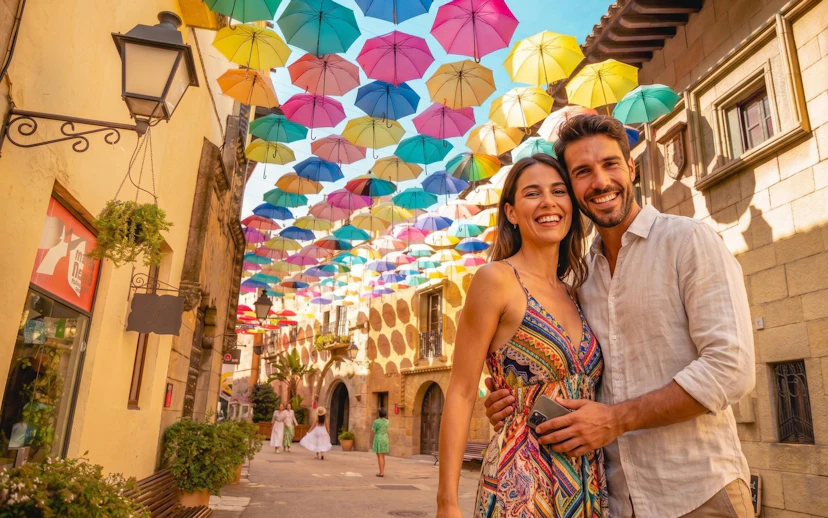
This is the image most people remember: a sunlit square ringed by facades modeled on buildings from different Spanish regions. It’s worth slowing down because it shows the whole idea of Poble Espanyol in one glance, and the detail most visitors miss is how much the arches, balconies, and stonework change from one side of the plaza to the other.
Where to find it: Just beyond the main entrance, at the center of the village.
Fran Daurel Museum
This indoor museum is the best surprise in the complex, with more than 300 works by artists including Picasso, Miró, Dalí, and Chillida. It gives the visit depth beyond architecture and craft demos, and the detail most visitors miss is that it sits slightly off the main outdoor flow, so it is much quieter than the village lanes.
Where to find it: Inside Poble Espanyol, signed from the main village streets and set slightly off the main outdoor flow.
Artisan workshops
The workshops are where the place feels least like a replica and most like a living cultural space, with glassblowers, ceramicists, jewelers, and other makers at work. The detail people often miss is that timing matters here: mid-morning to early afternoon usually feels much more active than late day.
Where to find it: Scattered through the village streets, especially along the quieter lanes off the main plaza.
Monastery of Sant Miquel viewpoint
This upper section gives you the calmest part of the visit and one of the best built-in viewpoints over Montjuïc. It’s worth the detour because it changes the experience from simple wandering to something more layered, and the detail many visitors miss is that the best views are inside the complex, not outside it.
Where to find it: At the higher end of the village, reached by following signs away from the central plaza.
Andalusian and southern-style streets
These streets, with whitewashed walls, tighter lanes, and patio-style details, are where Poble Espanyol feels most cinematic. They are worth noticing because the mood changes quickly from the broad main plaza into more intimate corners, and the detail most visitors miss is the regional contrast between one street and the next.
Where to find it: Off the main central routes, branching away from the square into narrower streets.
Giant slides
For families, these slides are the payoff that turns the visit from a nice architecture walk into something children actually remember. They matter because they break up the adult-paced rhythm of plazas, shops, and museums, and the detail many adults miss is that this stop works better later in the visit.
Where to find it: In the family area inside the complex, away from the busiest central restaurant terraces.
💡 Don't leave without seeing the Fran Daurel Museum and the monastery viewpoint. The crowd flow keeps most visitors outdoors in the central streets, so both are easier to miss than they should be.
Facilities and accessibility
- 🎒 Lockers: Travel light, because the visit works best with a small day bag, and the narrow workshop lanes are less comfortable with bulky backpacks.
- 🛍️ Gift shop/merchandise You’ll find tapas bars, terrace seating, and dinner-show options inside the village, so this is one of the easier Montjuïc attractions to build lunch into.
- 🪑 Seating/rest areas: The main plaza terraces and shaded benches are the easiest places to pause without losing your rhythm.
- 🅿️ Parking: Nearby parking areas around Poble Espanyol and the wider Montjuïc complex make driving workable, but weekends and event evenings are the tightest times for spaces.
- ♿ Mobility: The site itself is largely flat and wheelchair-accessible, but the approach up Montjuïc is easier by bus, taxi, or direct drop-off than on foot from Plaça Espanya.
- 👁️ Visual impairments: The audio guide is more useful than relying on the street-by-street layout alone, because many of the most interesting details sit in side lanes and workshop interiors.
- 🧠 Cognitive and sensory needs: Weekday mornings are the calmest window, while concerts, festivals, and later-day plaza activity make the site feel louder and more stimulating.
- 👨👩👧 Families and strollers: Most internal routes are stroller-friendly, and the open plazas make it easier to take breaks than in a conventional museum with fixed galleries.
Poble Espanyol works well for children because the visit alternates between open space, things to watch, and things to do, rather than asking them to move quietly through long indoor galleries.
- 🕐 Time: 2–3 hours is realistic with young children, and the best family mix is the main plaza, workshops, and slides rather than every street in the village.
- 🏠 Facilities: Terrace restaurants, open seating, and the slides make it easier to reset the visit if children lose interest in the architecture.
- 💡 Engagement: Pick up the family scavenger hunt if it’s available, because the site makes more sense to children when they’re looking for clues instead of seeing buildings.
- 🎒 Logistics: Arrive earlier in the day, bring sun protection, and don’t save the whole visit for late afternoon when some workshops are already winding down.
- 📍 After your visit: The Magic Fountain area and the wider Montjuïc spaces nearby make an easy post-visit wander if children still have energy.
Rules and restrictions
What you need to know before you go
- Entry requirement: A valid admission ticket is the simplest way in, and children under 4 enter free, while family tickets can be better value than buying separate entries.
- Bag policy: A small day bag is the easiest choice here, because you’ll move in and out of workshops, museum spaces, and narrow lanes rather than staying in one large hall.
- Re-entry policy: Ask at the entrance if you plan to leave and return the same day, because event programming can change how flexible entry feels in practice.
Not allowed
- 🚫 Food and drink: On-site bars and restaurants are part of the setup, so outside picnics are not the most practical way to do this visit.
- 🚬 Smoking and vaping: Keep to outdoor common-sense etiquette and away from workshop fronts, dining terraces, and family areas.
- 🐾 Pets: Check ahead before bringing pets, and assume service animals are the safer exception.
- 🖐️ Touching exhibits, climbing, or behavior: Don’t climb on facades or handle workshop pieces unless invited, because many craft spaces are active working studios.
Photography
Photography is one of the pleasures of Poble Espanyol, and outdoor photos are generally part of the experience. The main distinction is between the open village streets, where people naturally photograph the architecture, and more controlled spaces like workshops, museum rooms, or event areas, where you should be more discreet and follow any posted instructions.
Note: Flash, tripods, and bulky photo gear are best avoided in indoor or active craft spaces unless clearly permitted.
Good to know
- Some workshops and shops start winding down after about 3pm, so a late arrival can make the village feel quieter than the admission price suggests.
- Seasonal concerts, light shows, and private events can change the mood of the site, and occasionally, access to some spaces, more than first-time visitors expect.
Practical tips to make the most of your visit
- Book at least a few days ahead for weekends, school breaks, and special event dates; on a normal weekday, you can be more relaxed, but the family ticket and event-led visits are worth locking in early.
- Arrive before 1pm if you care about the craft workshops, because the village can still be open later, while the most interesting studio activity has already started to taper off.
- Don’t rush the Fran Daurel Museum just because it’s indoors; it’s the smartest place to slow down when the outdoor lanes get hottest or busiest.
- Save the monastery viewpoint for later in the visit, when the central streets are fuller, and the light over Montjuïc is softer.
- A small bag beats a backpack here — you’ll move more comfortably through the artisan lanes, and you won’t feel like you’re constantly taking up space in shops.
- This is one of the few Barcelona attractions where eating on-site can make sense, but lunch works better than a late snack because the site feels livelier earlier in the day.
- If you’re visiting with children, don’t start with the slides; save them for the second half so you still have bargaining power for the workshops and museum.
- Treat this as part of a wider Montjuïc plan, not a rushed standalone stop between central-city sights, because the uphill travel time and nearby attractions make half a day the sweet spot.
What else is worth visiting nearby?
Commonly paired: Magic Fountain of Montjuïc
Magic Fountain of Montjuïc
- Distance: 400 m — 5 min walk,
- walk It’s the easiest same-day pairing, because Poble Espanyol fills the afternoon well, and the fountain area makes sense as your evening follow-up.
Commonly paired: MNAC
MNAC – Museu Nacional d’Art de Catalunya
- Distance: 800 m — 10 min walk
- Why people combine them: Both sit on the same Montjuïc slope, and the pairing works if you want architecture and folk culture first, then a more conventional museum collection afterward.
Also nearby
Joan Miró Foundation
- Distance: 500 m — 5–7 min walk
- Worth knowing: This is the strongest nearby add-on for art-focused visitors, especially if the Fran Daurel Museum leaves you wanting a deeper museum stop.
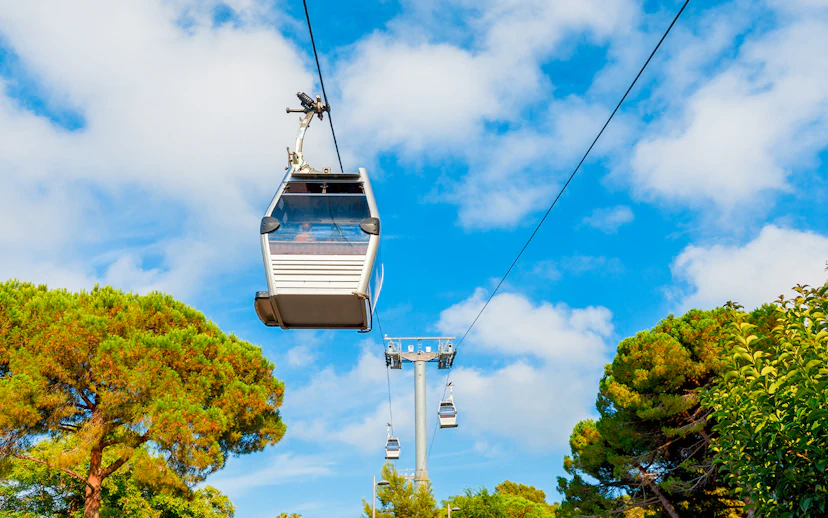
Montjuïc Cable Car
- Distance: 1.2 km — 15 min walk or short bus ride
- Worth knowing: This works best if you want to turn the visit into a fuller Montjuïc day rather than squeezing Poble Espanyol into a central Barcelona schedule.
Eat, shop and stay near Poble Espanyol
- On-site: The village’s tapas bars, terrace restaurants, and Tablao de Carmen-style dinner-show options are more convenient than you might expect, and they make the most sense if you want to stay on Montjuïc instead of heading back downhill.
💡 Pro tip: Eat before or during the middle of your visit, not after 3pm, because that’s also when some of the village’s workshops and shops start to feel quieter.
- Artisan workshops: This is the best reason to shop here, because ceramics, glass, jewelry, leatherwork, and other handmade pieces feel tied to the visit instead of generic souvenir buying.
- Village stores: The small shops around the lanes are worth a look, but the strongest purchases are the ones made directly from craftspeople you’ve seen working.
Montjuïc is pleasant, green, and easy for a half-day sightseeing plan, but it’s not the most practical base for most Barcelona trips. It suits visitors who want a quieter night near museums or event venues more than travelers who want to walk out each morning into the busiest restaurant and nightlife districts.
- Price point: The area usually feels more mid-range to upscale than budget-led, with better value once you move closer to Plaça Espanya.
- Best for: Short stays built around Montjuïc attractions, concerts, museums, or a calmer base away from the Gothic Quarter rush.
- Consider instead: Plaça Espanya or Eixample make better all-round bases if you want stronger transit, more restaurant choice, and easier citywide sightseeing over several days.
Frequently asked questions about visiting Poble Espanyol
Most visits take 2–3 hours. If you add lunch, the Fran Daurel Museum, the monastery viewpoint, and time to watch artisans at work, it can easily stretch to 3.5–4 hours without feeling padded.
No, you don’t always need to, but booking ahead is the safer choice for weekends, school vacations, and special event dates. Regular weekdays are usually more forgiving, and queues are normally short compared with Barcelona’s highest-demand landmarks.
Arrive around 10–15 minutes before you want to go in. The bigger issue here isn’t heavy queueing, but getting inside early enough to enjoy the workshops and quieter streets before the middle of the day.
Yes, a small bag is the practical choice. Poble Espanyol is an easy site to explore with a day bag, but a large backpack feels awkward once you start stepping into workshops, shops, and the museum.
Yes, photography is one of the main reasons people enjoy the visit. Outdoor shooting is part of the experience, but in workshops, museum areas, or event spaces you should follow posted rules and avoid using intrusive gear.
Yes, and it works well for groups because the site is open, easy to regroup in, and offers guided tours on request. The main thing to decide in advance is whether your group wants a structured 1-hour overview or a looser self-guided visit.
Yes, it’s one of the easier cultural attractions in Barcelona to do with children. The open plazas, slides, scavenger-hunt option, and short walking segments make it less demanding than a traditional museum-heavy day.
Yes, the site is generally wheelchair-accessible once you’re inside. The main accessibility consideration is the approach up Montjuïc, which is much easier by bus, taxi, or direct drop-off than by walking up from Plaça Espanya.
Yes, food is available inside the complex and around Montjuïc. On-site tapas bars and terraces make it easy to stay for lunch, which is helpful because the visit works better when you don’t have to break the route and head back downhill.
A standard ticket includes access to the open-air village and the Fran Daurel Museum. That museum inclusion is one of the best-value parts of the visit, because many first-time visitors don’t realize the ticket covers both the outdoor streets and a serious indoor art collection.
Yes, the Fran Daurel Museum is included with general admission. That’s worth knowing before you go, because it changes the pacing of the visit and gives you a strong indoor stop when the outdoor lanes feel hottest or busiest.