Your only guide to visit Banksy Museum in Barcelona
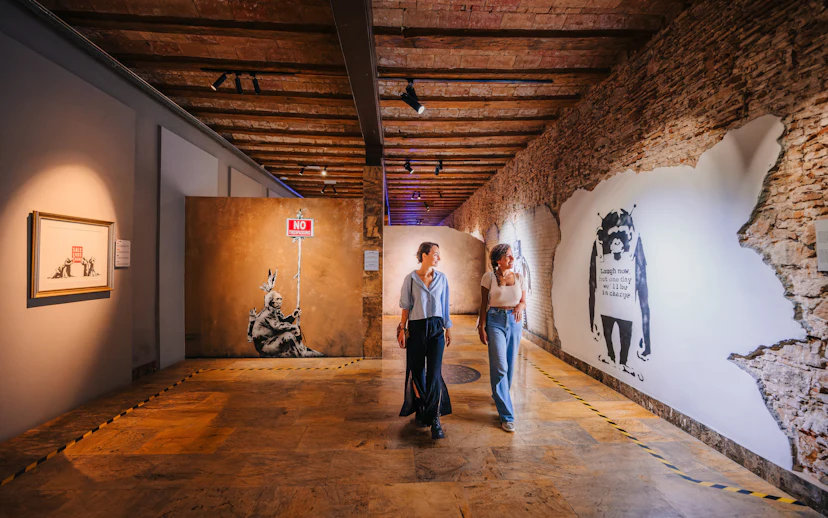
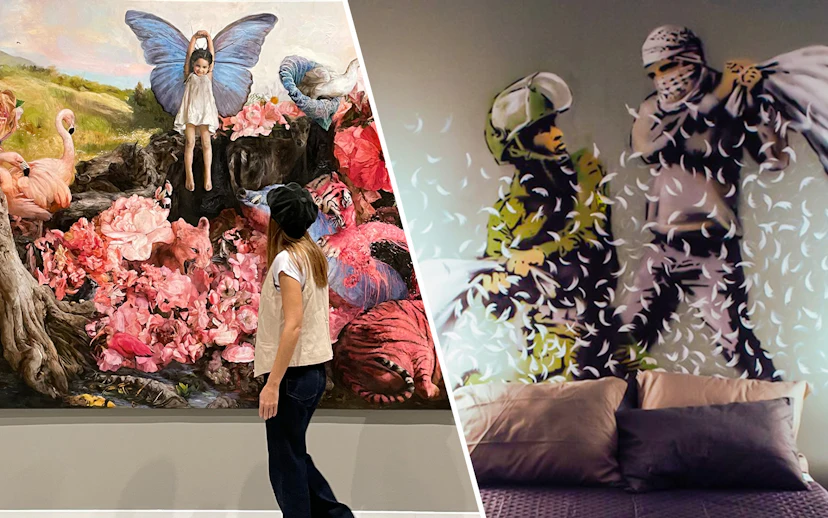
Banksy Museum Barcelona is a permanent indoor exhibition best known for life-size recreations of Banksy’s most famous works across immersive, multi-floor sets. The visit is physically easy, but the compact layout can feel crowded and warm once the late-morning rush builds. The biggest difference between a smooth visit and a cramped one is timing, which matters more than buying a pricier ticket. This guide covers the best arrival window, ticket options, route, and what not to rush past.
Quick overview: Banksy Museum Barcelona at a glance
This is a short, easy museum visit, but it feels much better when you time it right.
- When to visit: Open daily 10am–8pm (Thursday until 9pm); right at 10am or after 5:30pm is noticeably calmer than 11am–4pm because the galleries are compact and crowding builds fast around the headline pieces.
- Getting in: From €14 for skip-the-line entry, with combo tickets including the Moco Museum starting higher; low season is usually fine for walk-ins, but summer weekends and rainy afternoons are better with advance booking.
- How long to allow: 1–1.5 hours for most visitors, stretching closer to 2 hours if you read the wall texts, take photos, or join a guided visit on Monday.
- What most people miss: The upper-floor Paris and Italy section, especially the Bataclan door tribute, plus the smaller scenographic details that make the recreations feel more like street installations than gallery copies.
- Is a guide worth it? Yes, if you want the political context behind the work, but a self-guided visit is enough if you mainly want to see the pieces because the route is short and visually direct.
Jump to what you need
Where and when to go
Which Banksy Museum Barcelona ticket is best for you
| Ticket type | What's included | Best for | Price range |
|---|---|---|---|
Skip-the-Line Tickets to Banksy Museum Barcelona | Entry to the Banksy Museum | A central-Barcelona visit where you want guaranteed entry and no queue at the desk | Skip-the-line from €14 |
Combo: Moco Museum Barcelona + Banksy Museum Tickets | Entry to Moco Museum + permanent and temporary collections + entry to Banksy Museum | A same-day art plan where you also want original authenticated works alongside the immersive recreations | Combo from €27.70 |
How do you get around Banksy Museum Barcelona?
What happens inside Banksy Museum Barcelona?
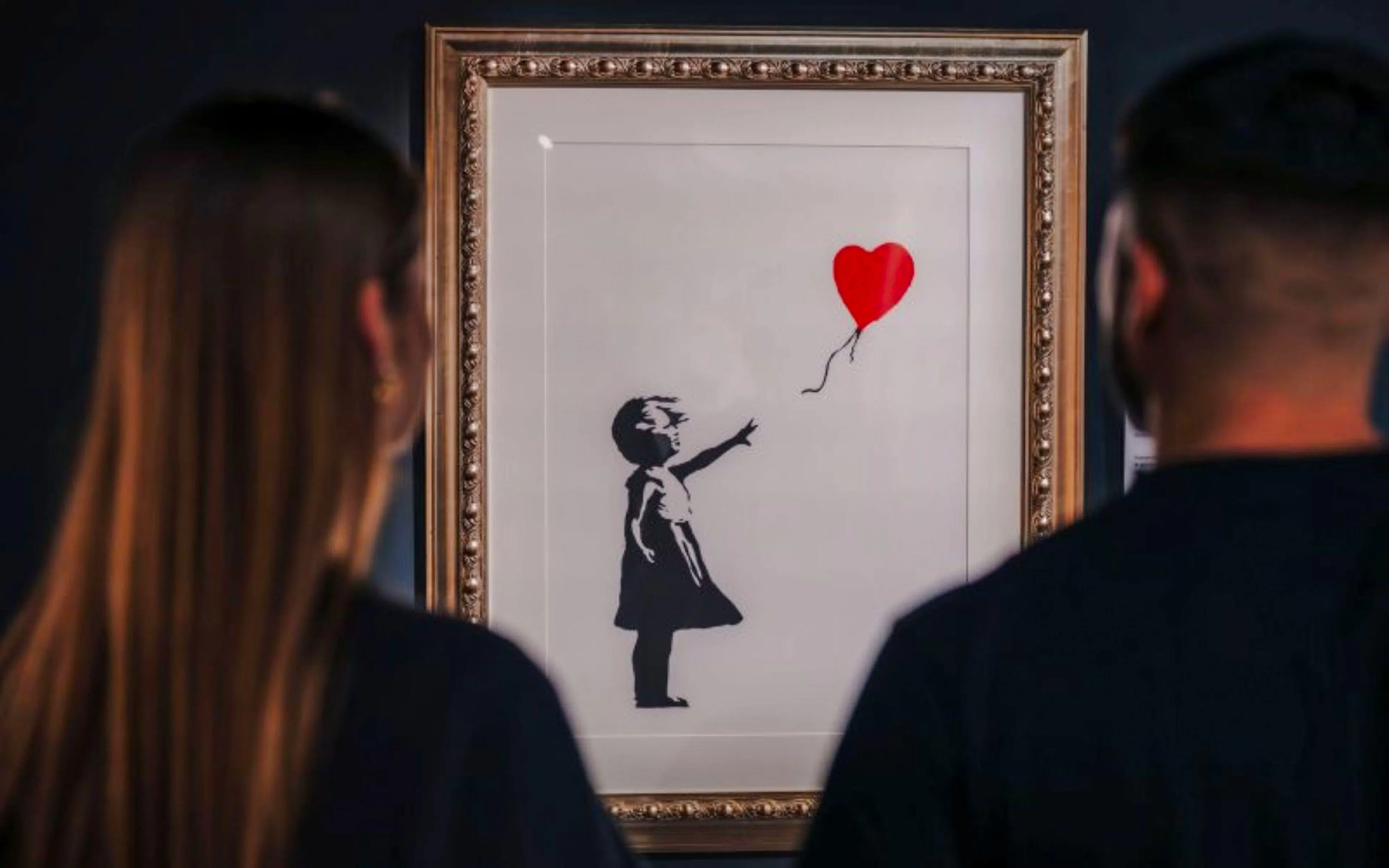
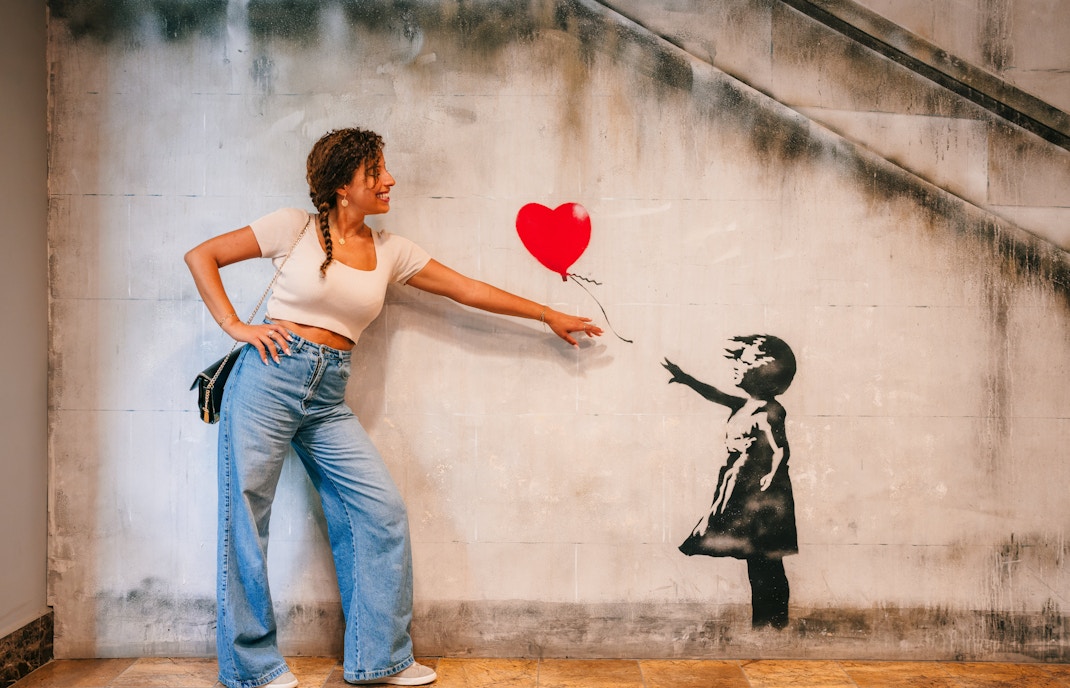
Girl With Balloon
Attribute — Theme: Love, loss, and hope
This is the image most visitors arrive already knowing, so it usually gets the quickest crowd build-up. In person, what is easy to miss is how much power comes from the empty space around it — the simplicity is the point, and it lands harder when you stand back instead of rushing in for a close photo first.
Where to find it: Early in the main route, in the ground-floor section with the best-known UK works.
Flower Thrower
Attribute — Theme: Protest and anti-violence
This piece works best when you pause long enough to notice the tension between the figure’s riot-like stance and the harmless bouquet in his hand. Most visitors photograph it and move on, but the contrast is exactly why it has become one of Banksy’s defining images.
Where to find it: Ground floor, in the cluster of the most recognizable street-art recreations.
Kissing Coppers
Attribute — Theme: Satire and public provocation
At first glance, it reads as one of the museum’s lighter works, but it was deliberately confrontational when it first appeared. What many visitors miss is how much of Banksy’s humor depends on placement — it only really works when you imagine it back in the public space it was made to interrupt.
Where to find it: Ground floor, alongside other UK works that lean on social satire.
Devolved Parliament
Attribute — Theme: Political commentary
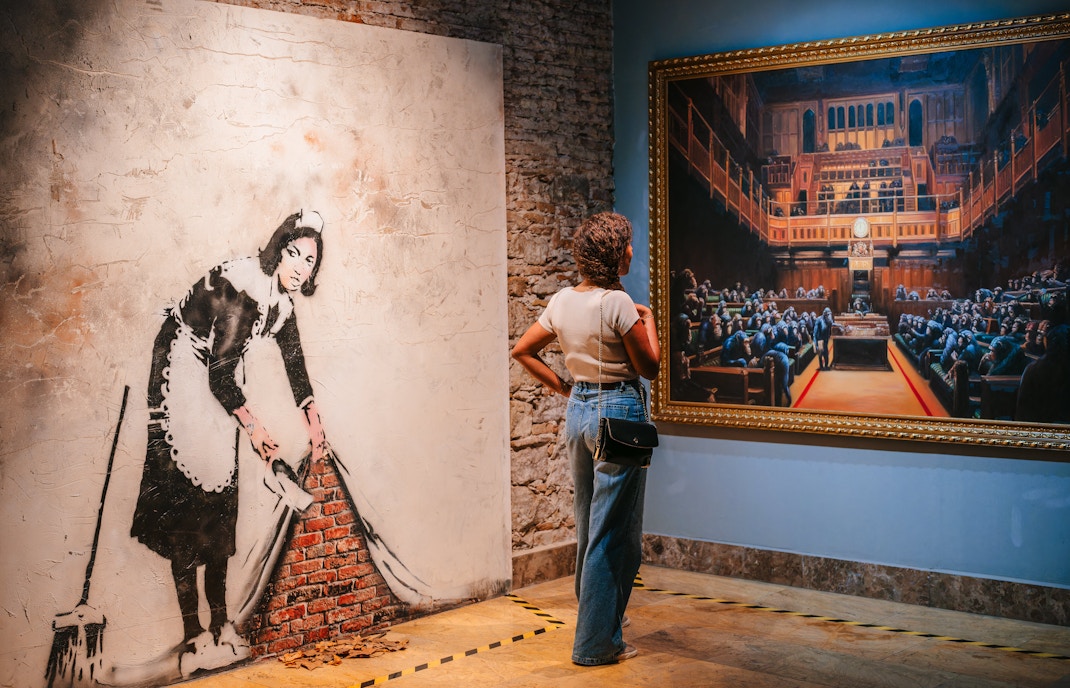
This is one of the pieces that benefits most from a little extra time because it can look like a visual joke until you start noticing the scale and detail. Visitors often hurry past it in favor of the stencil pieces, even though it is one of the clearest examples of Banksy’s political bite.
Where to find it: Lower level, within the section focused on larger, more overtly political works.
Dismaland material
Attribute — Theme: Anti-fantasy installation
This section gives the visit more than just a greatest-hits feel because it shows how Banksy’s work can expand into full environments, not just standalone images. Most people remember the big visuals, but the mood matters just as much here — bleak, funny, and deliberately uncomfortable at the same time.
Where to find it: Lower level, in the larger scenographic rooms.
Bataclan tribute door
Attribute — Theme: Memorial and solidarity
This is one of the most moving parts of the museum, and also one of the easiest to miss because it comes later in the route after the headline images have already taken most of your attention. It feels quieter than the earlier rooms, which is exactly why it lingers.
Where to find it: Upper floor, in the Paris and Italy section near the end of the visit.
Facilities and accessibility
- Cloakroom / lockers: There is no full cloakroom service, so bring only a small bag because oversized items can be refused at entry.
- Cafe / food: There is no on-site café, which makes this a better pre-lunch or pre-dinner museum stop than a place to linger between meals.
- Gift shop / merchandise: The route ends through a small shop with posters, books, and Banksy-themed souvenirs if you want a quick takeaway.
- Parking: Paid parking is available nearby in central Barcelona, but driving only makes sense if you are already coming in by car.
- Mobility: The museum is not wheelchair accessible. The three-floor layout and some of the narrower recreated alleyway spaces present significant barriers. Visitors with mobility needs should confirm specifics with the venue before visiting.
- Visual impairments: There is no standard tactile or audio-described visit format, but registered service animals are typically permitted.
- Cognitive and sensory needs: There are no dedicated quiet hours, so the easiest low-stimulation window is right at opening when the soundtrack, dark rooms, and crowding are at their lightest.
- Families and strollers: Families can visit comfortably, but a compact stroller works better than a large one because several rooms feel narrow during busy hours.
The museum works best for school-age children, teens, and visually curious younger visitors who like bold imagery more than long written explanations.
- Time: Around 45–60 min is realistic with children, and the best sections to prioritize are the headline stencil rooms on the ground floor.
- Facilities: There is no dedicated play zone, so this works better as a short cultural stop than a long family base.
- Engagement: Ask kids to spot the works they already know from posters or social media before you tell them the titles — it turns the route into a simple visual game.
- Logistics: Bring only a small bag, avoid the hottest afternoon hours, and aim for opening time if you want the easiest family photos.
- After your visit: Ciutadella Park is a good follow-up if children need space to move, decompress, or grab a snack outdoors.
Rules and restrictions
Practical tips
- Booking and arrival: Book at least 1–2 days ahead for summer weekends or rainy afternoons, but in quieter months you can often still visit same day without stress.
- Pacing: Do not spend your whole visit on the first room of greatest hits — save 15–20 min for the upper floor, because that is where many people start rushing.
- Crowd management: Tuesday or Wednesday at 10am is the calmest sweet spot here; Mondays can be busier than expected because of the free guided tours.
- What to bring or leave behind: Bring a small day bag only — oversized bags create needless hassle because there is no real cloakroom to fall back on.
- Food and drink: Eat before you go or plan lunch after, because there is no café inside and the museum only needs about 1–1.5 hours if you pace it well.
- Comfort: In summer, late morning to mid-afternoon can feel warmer than you expect indoors, so the first entry slot is not just quieter but noticeably more comfortable.
- Photos: If you care about photos more than a guide, choose the last 2 hours of the day; there is usually more breathing room around the best-known pieces.
- Context: If you already know the famous images but want deeper meaning, Monday’s guided option adds more value here than trying to decode every piece from the short labels alone.
What else is worth visiting nearby?
Eat, shop and stay near Banksy Museum Barcelona
- On-site: There is no on-site café, so this is best treated as a museum stop between coffee and lunch rather than a place to eat.
- Citizen Café (6-min walk, Plaça d’Urquinaona area): All-day brunch, coffee, and easy seating if you want a relaxed pre-visit breakfast.
- Elsa y Fred (10-min walk, El Born): Mediterranean small plates and cocktails, best if you want a slower sit-down meal after the museum.
- Tosca Palau (8-min walk, near Palau de la Música): Good for tapas and a glass of wine if you want something central without drifting too far from the route.
Pro tip: Visit the museum first, then eat after 1pm — the galleries feel better before lunch, and you avoid turning a short visit into a stop-start plan.
- Banksy Museum gift shop: Posters, books, and branded souvenirs at the exit, best if you want something fast and directly tied to the visit.
- El Born boutiques: Better for design-led shopping than generic souvenirs, and easy to pair with a walk to Moco Museum or Ciutadella Park.
This part of central Barcelona is convenient, walkable, and easy for short stays, especially if you want to move between El Born, Gothic Quarter, and Plaça de Catalunya without overthinking transport. It is less about calm neighborhood charm and more about having the city center within easy reach. For 1–2 nights, it works very well; for a longer stay, you may want a base with more evening breathing room.
- Price point: Mid-range to upper-mid-range, with better value once you move a few blocks away from the busiest tourist strips.
- Best for: Short city breaks where you want to walk to major central sights and keep logistics light.
- Consider instead: Eixample for a calmer, more hotel-friendly base, or Gràcia if you want more neighborhood feel and less tourist traffic after dark.
Frequently asked questions about visiting Banksy Museum Barcelona
Most visits take 1–1.5 hours. If you like reading the labels, taking photos, or joining a guided visit on Monday, you could stretch it to nearly 2 hours, but this is still a compact museum rather than a half-day attraction.
No, you do not always need to book far ahead, but pre-booking is the safer move in summer, on weekends, and on rainy afternoons when more people look for indoor attractions. In quieter months, same-day entry is usually manageable.
Yes, but mainly because it removes the ticket-buying step rather than unlocking a separate VIP entrance. Walk-in waits are usually short, but online tickets are still the easier choice if you want to go straight to check-in and avoid the busiest midday desk line.
If your ticket is date-based rather than tightly timed, arriving right at opening is the best strategy. The main advantage is not queue reduction so much as having the galleries before they fill, which matters more here because the route is compact.
Yes, but keep it small. Large bags are a poor idea because there is no full cloakroom, and oversized items can be refused at entry, which is frustrating at a museum where the visit itself only takes around 90 minutes.
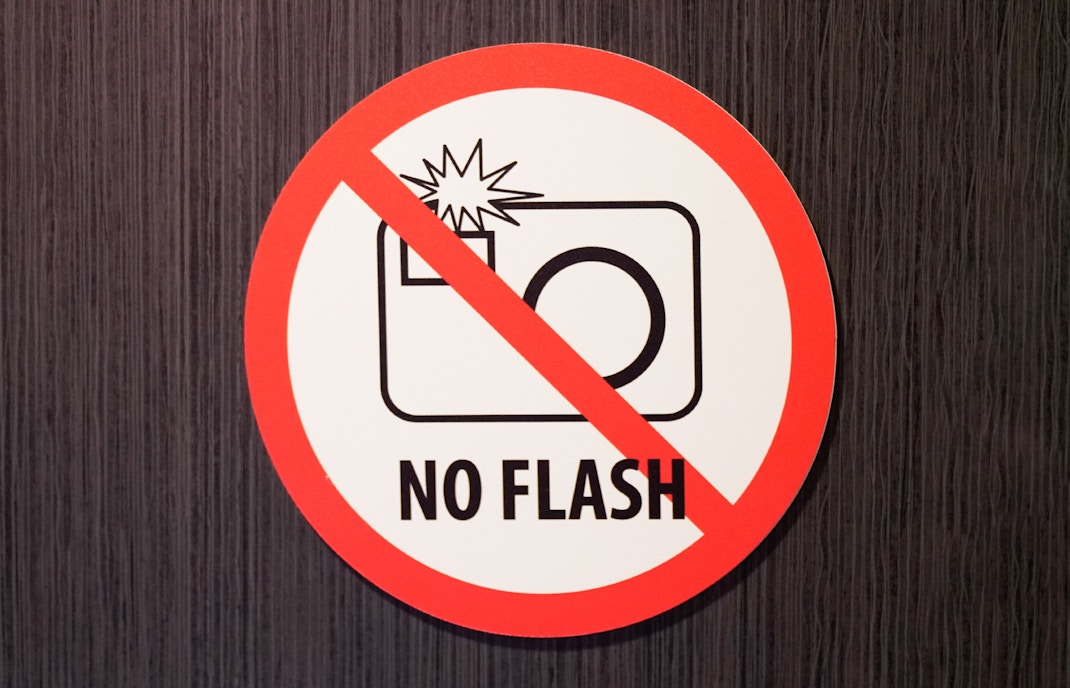
Yes, hand-held photography is generally allowed. Flash is best avoided, and staff may stop anything that blocks narrow rooms or turns a quick-moving gallery into a long photo setup, especially when the museum is busy.
No, the museum displays recreations rather than original Banksy works. That is the single most important expectation to set before you go, and it is also why some visitors pair this visit with Moco Museum if seeing authenticated work matters to them.
Yes, the museum works well for small groups, and guided visits are available on selected days. The main thing to remember is that the rooms are not huge, so larger groups feel more comfortable at opening than in the middle of the afternoon.
Yes, especially for school-age children and teens who respond to strong visuals more than long text panels. Younger children can still enjoy the colors and recognizable images, but most families are happiest keeping the visit short and following it with a park or outdoor stop.
No, the museum is not wheelchair accessible. The three-floor layout and narrow gallery sections present barriers for wheelchair users. Contact the venue directly before visiting if you have specific mobility requirements.
Food is available nearby, but not as part of the museum visit itself. That makes this an easy stop before lunch in El Born or after coffee around Urquinaona, rather than a place where you should plan to eat inside.
The museum can feel warm in summer, especially from late morning into mid-afternoon. If heat and crowding affect your enjoyment, choose the first entry window of the day or go later in the evening instead of treating this as a noon stop.