Gaudí's takeover in 1883 marked a shift from the original Gothic revival style to a more modernist approach. His holistic vision for the Sagrada Familia integrated nature, religion, and architecture into a complex symbolic structure. The initial focus was on the crypt and the Nativity façade, which exemplifies Gaudí’s intricate style and attention to detail
Detailed history of Sagrada Familia: Timeline, events & more
The Basilica de la Sagrada Familia, a beacon of architectural innovation and spiritual devotion, stands majestically in Barcelona. This Roman Catholic minor basilica, while still under construction, captures the hearts of millions with its intricate designs and historical depth. Its story begins in the late 19th century and unfolds over the decades, marked by visionary architects and significant milestones.
A detailed timeline of main milestones
1/16
1882
The project's journey commences with architect Francisco de Paula del Villar's neo-Gothic design. Bishop Urquinaona lays the cornerstone, setting the stage for a monumental construction.
1883
Antoni Gaudí assumes control, infusing the project with his unique artistic vision and steering away from its original Gothic constraints.
1885
The Chapel of Saint Joseph is inaugurated within the crypt, hosting its initial masses.
1891
Construction of the Nativity façade begins, which will later become one of the basilica’s most celebrated features.
1914 to 1926
Gaudí dedicates the final years of his life exclusively to the Sagrada Familia, witnessing the completion of the Saint Barnabas bell tower, the only part of his vision fully realized in his lifetime.
1936
The turmoil of the Spanish Civil War leads to the destruction of many original models and plans.
1954
The foundation for the Passion façade is laid, marking a new phase of construction.
1961
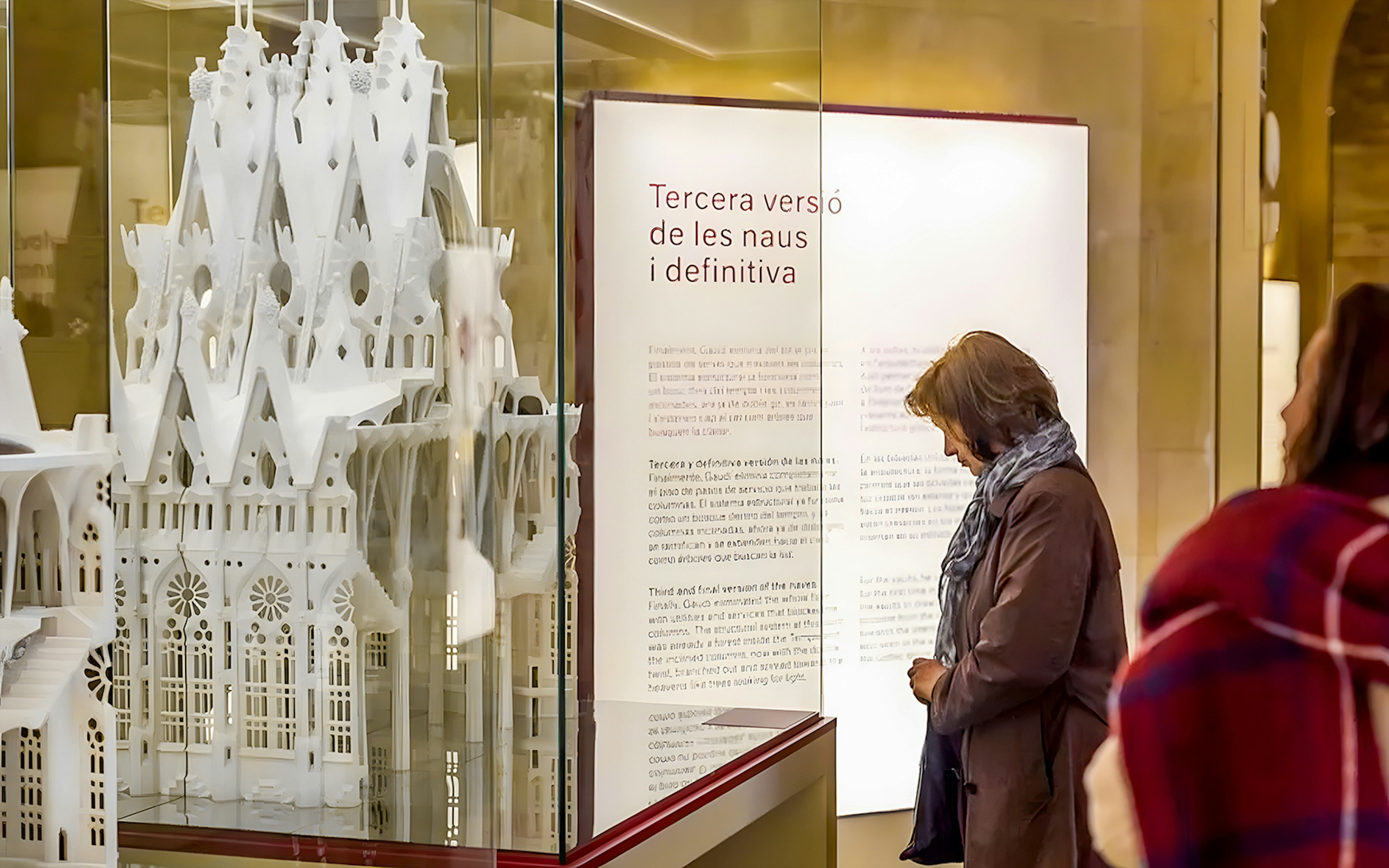
A museum opens, detailing the technical and symbolic facets of the temple.
1976
The bell towers of the Passion façade are completed, echoing the advancing construction techniques of the era.
1986
Modern foundations are laid for the naves and main structures, with work continuing into the new millennium.
2005
The Nativity façade and crypt are declared a UNESCO World Heritage Site.
2010
Pope Benedict XVI consecrated the basilica, elevating its status to a minor basilica.
2020
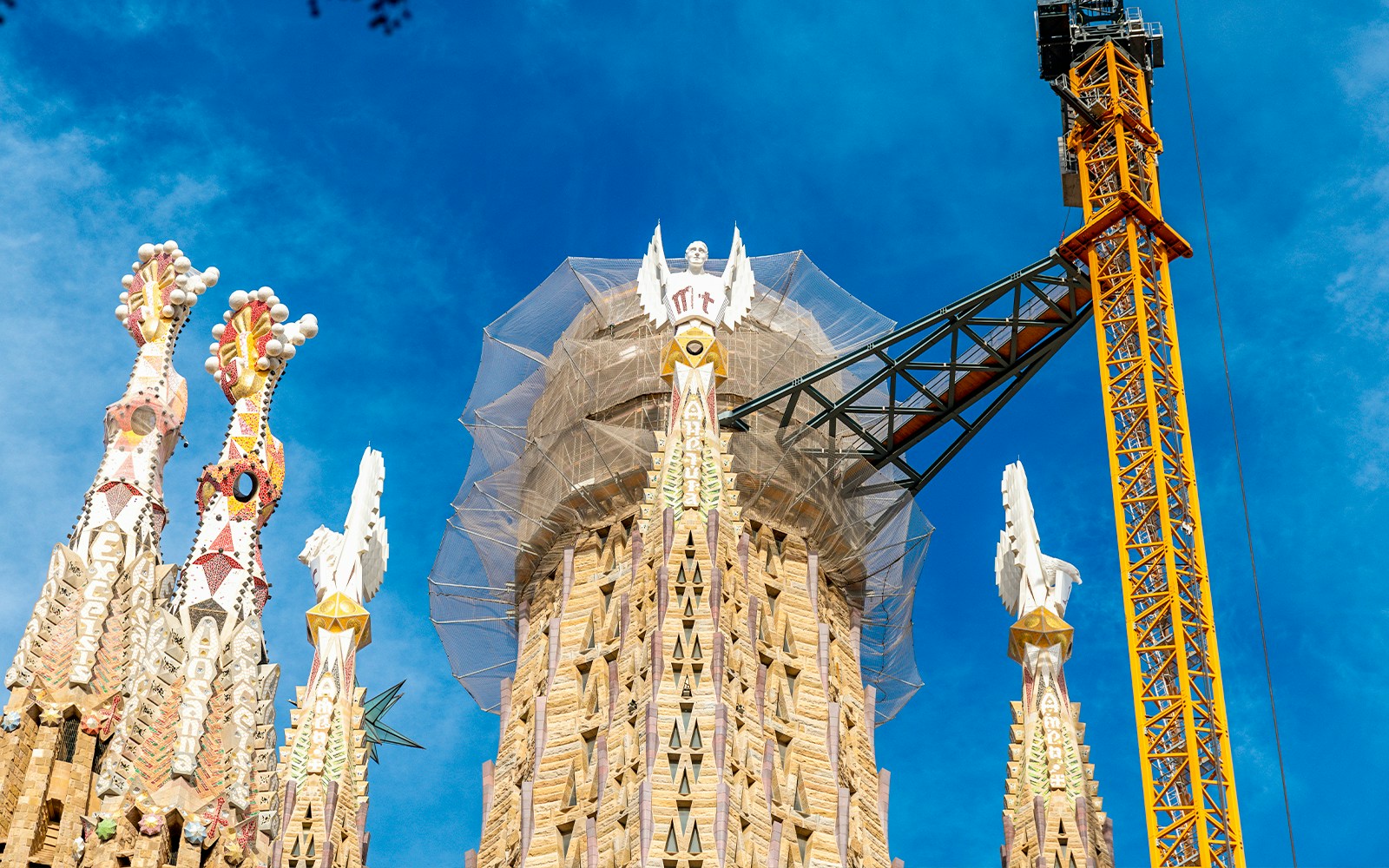
The Covid-19 pandemic briefly halts construction, but work resumes later in the year with significant progress on the tower of the Virgin Mary.
2021
The tower of the Virgin Mary is completed, significantly altering Barcelona's skyline.
2023
The four towers of the Evangelists are inaugurated, marking another major milestone.
2026
The Tower of Jesus Christ is completed, bringing the Sagrada Família to its full height and making it the tallest church in the world.
Architectural evolution: Construction phases of Sagrada Familia
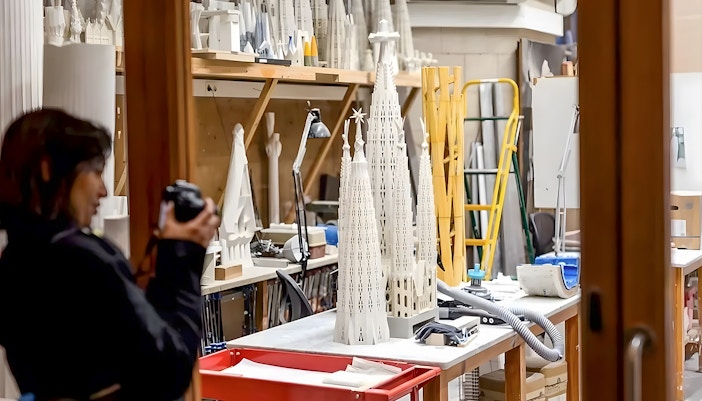
Early efforts
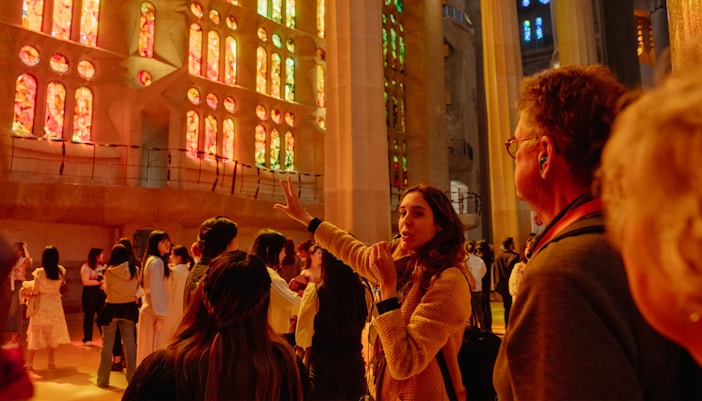
Neo-Gothic beginnings
The Sagrada Familia's architectural journey began with a Neo-Gothic design, a style characterized by its use of ogival windows, buttresses, flying buttresses, and pointed bell towers. Francisco de Paula del Villar’s initial plans in 1882 adhered to these elements, reflecting the architectural norms of the time. This traditional approach laid the foundation for what would become an extraordinary transformation under Antoni Gaudí.
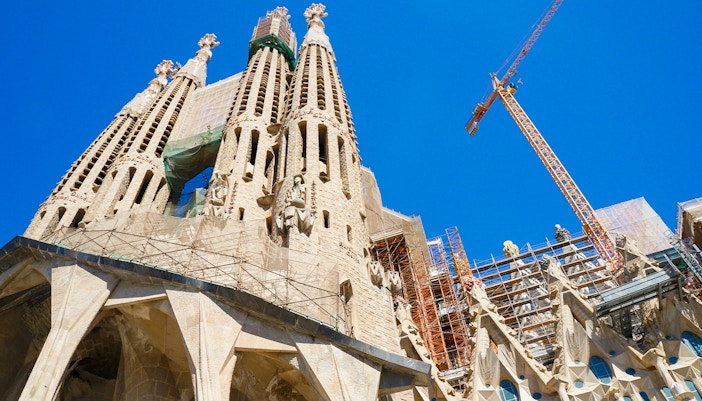
Mid-century adaptations (1939-1976)
Post-Civil War reconstruction under architects like Francesc de Paula Quintana and later Isidre Puig i Boada involved piecing together Gaudí’s legacy from surviving plans and photographs. The Passion façade began in 1954, introducing a stark contrast with its austere, angular sculptures designed by Josep Maria Subirachs in the late 20th century.
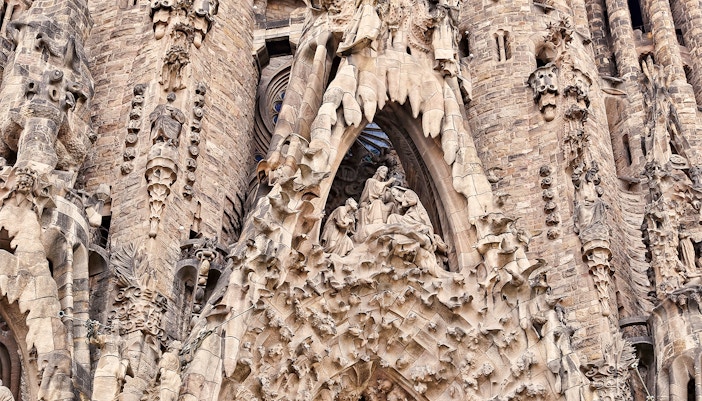
Influence of the Spanish Civil War
The Spanish Civil War had a profound impact on the Sagrada Familia's construction. In 1936, anarchists vandalized the site, destroying Gaudí’s original plans, photographs, and plaster models. This event halted construction and posed a significant challenge to future architects. The reconstruction efforts post-war relied heavily on the remaining fragments of Gaudí’s work and published materials. Despite these setbacks, the project persevered, embodying resilience and dedication.
Modern innovations (1986-Present)
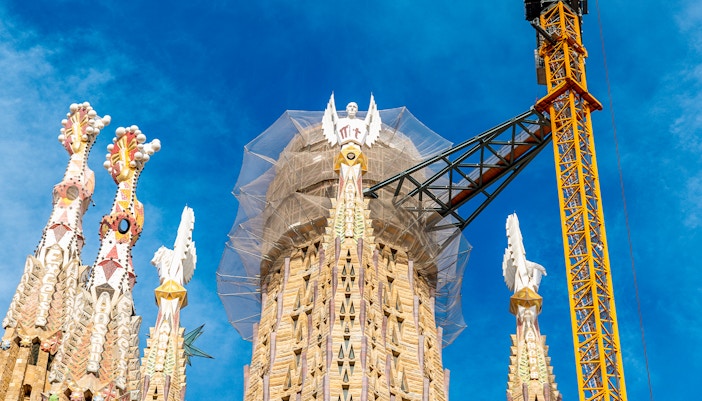
The adoption of computer-aided design technology in the 1980s under Jordi Bonet i Armengol propelled construction of the Sagrada Família into a new era, allowing architects to accurately interpret and build Antoni Gaudí’s complex geometries. These innovations ultimately enabled the completion of the Tower of Jesus Christ in February 2026, crowned with a monumental cross and marking a symbolic milestone in realizing Gaudí’s long-awaited vision for the basilica’s central towers.
Art Nouveau elements
The influence of Art Nouveau is evident throughout the Sagrada Familia, particularly in its decorative aspects. Art Nouveau, known for its use of flowing lines and floral motifs, is seamlessly integrated into the basilica’s design. Gaudí’s meticulous attention to detail is seen in the intricate carvings, colorful mosaics, and symbolic sculptures adorn the façades and interior spaces. These elements contribute to the Sagrada Familia’s status as a masterpiece of modernist architecture.
The visionaries behind the Basilica
Francisco de Paula del Villar (1882-1883)
Initiated the project with a traditional Gothic design, which was soon to be radically transformed
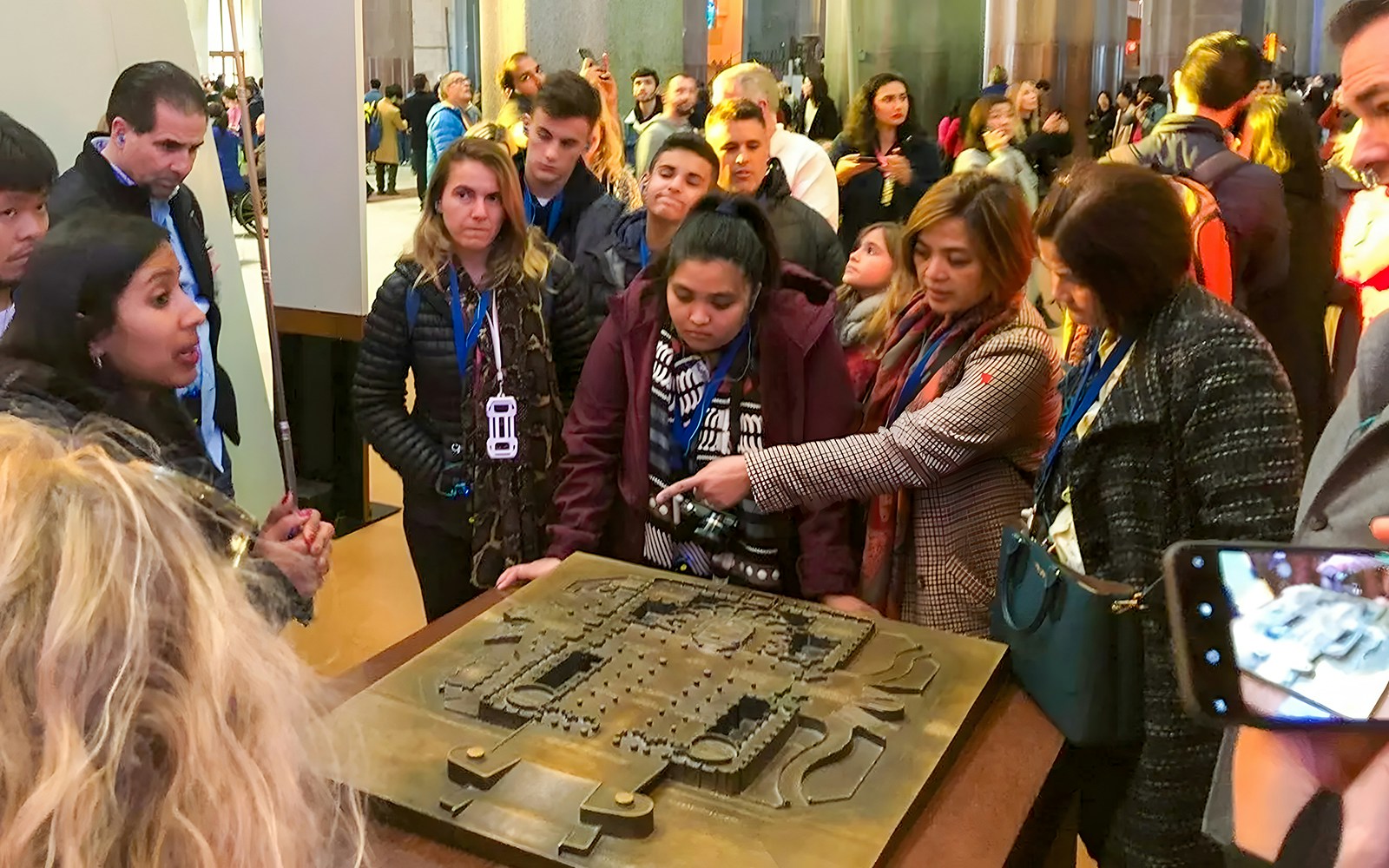
Sagrada Familia’s architecture | A fusion of art and spirituality
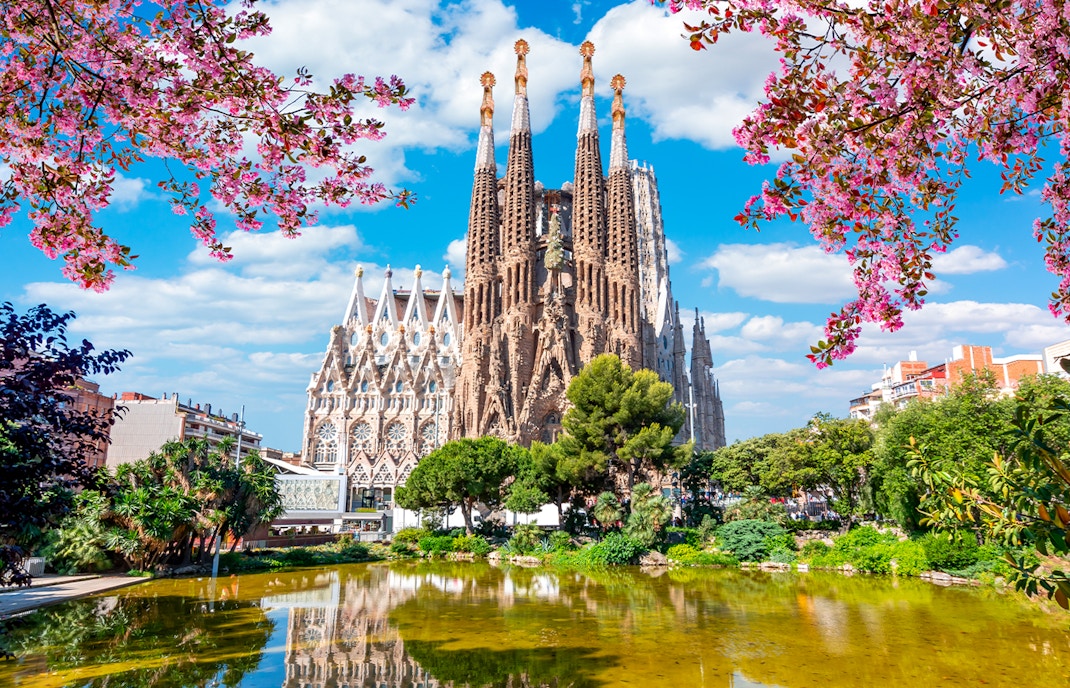
Exterior
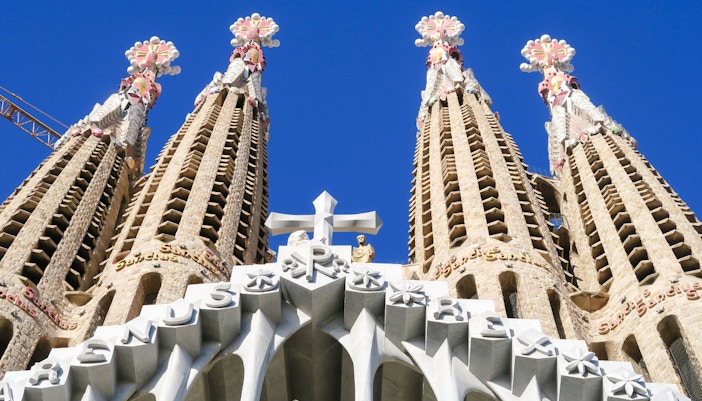
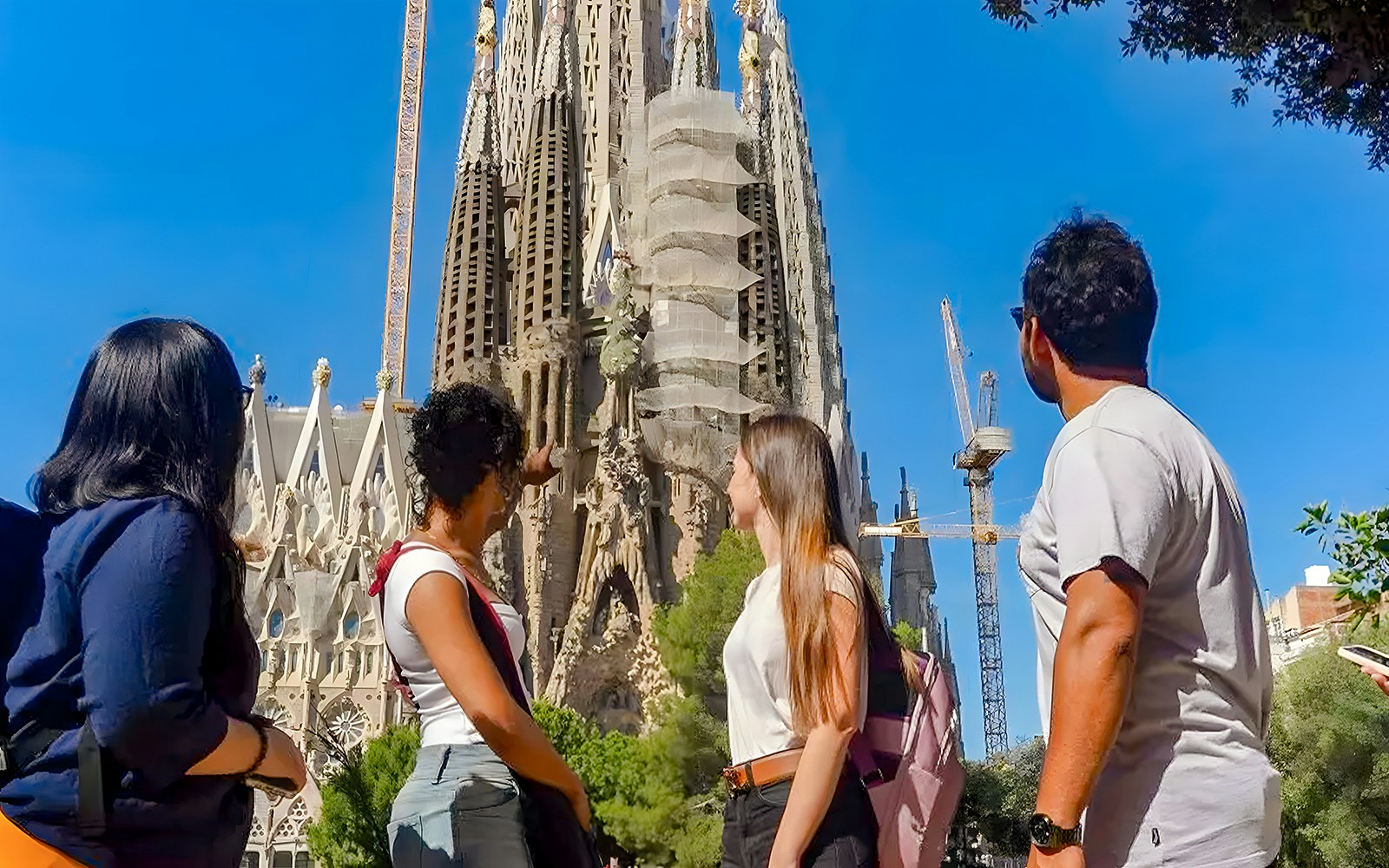
The Sagrada Familia's exterior is a testament to Gaudí’s vision, blending Gothic and Art Nouveau styles. The basilica is designed to feature 18 towering spires, each symbolizing key religious figures. The three grand façades—Nativity, Passion, and Glory—each tell a different aspect of the Christian story through their ornate sculptures and detailed carvings
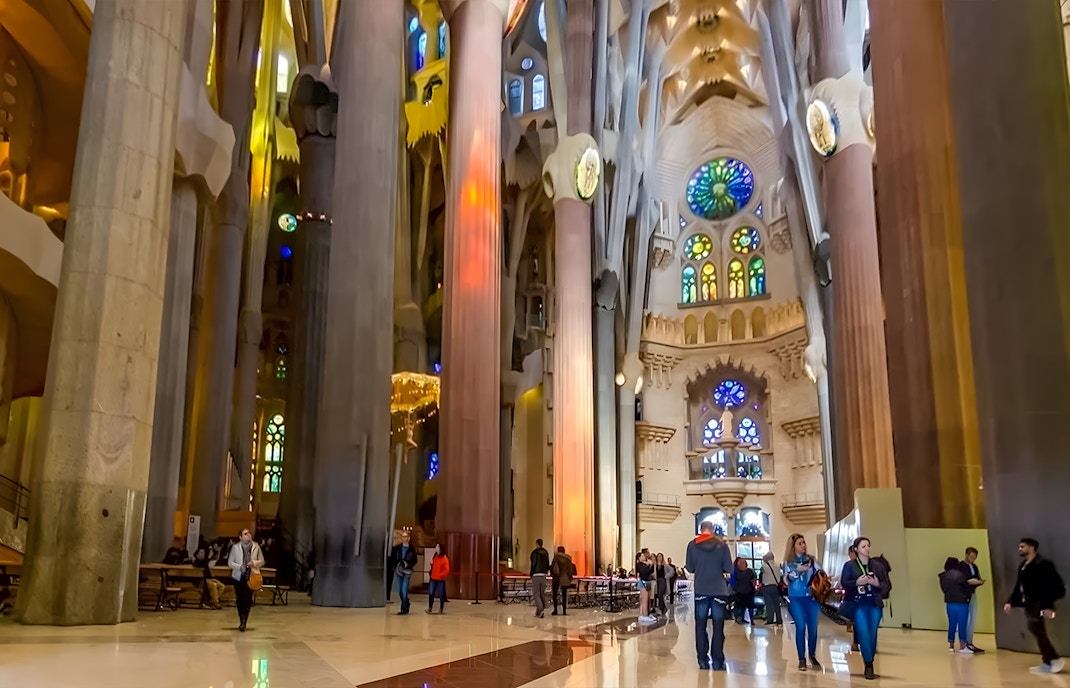
Interior
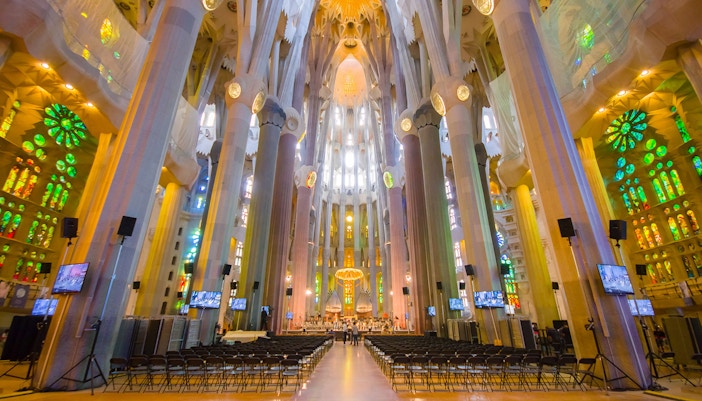
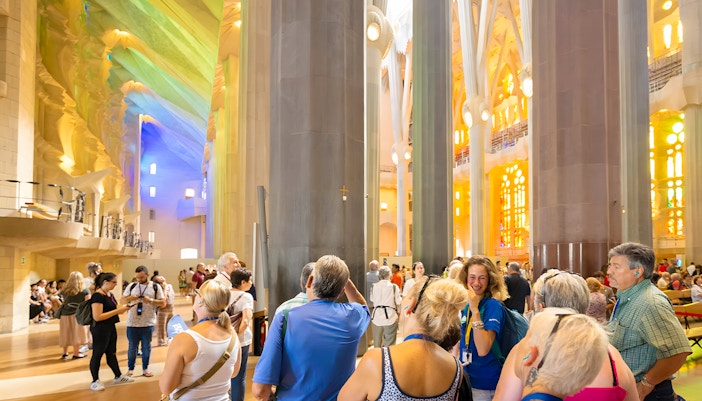
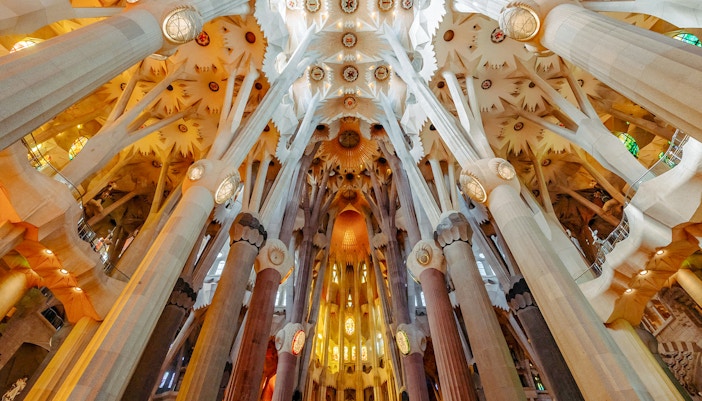
Inside, the basilica unfolds in a Latin cross plan with five aisles, soaring vaults, and intricate columns designed to mimic trees, creating a forest-like atmosphere. The stained glass windows cast colorful lights across the stone, complementing the organic feel of the interior.
Sagrada Familia today
After more than 140 years of construction, the Sagrada Família has reached one of its biggest milestones yet. On February 20, 2026, the final section of the cross was lifted into place atop the Tower of Jesus Christ, completing the exterior of the basilica’s central tower and bringing Antoni Gaudí’s vision closer than ever to reality.
Today, the basilica is no longer just famous for being unfinished. It’s famous for how far it has come, a place where worshippers, architecture lovers, and curious travelers all gather under the same soaring ceilings. And even after more than a century of work, the Sagrada Familia continues to evolve, making every visit feel like you’re witnessing a piece of history in progress.
Frequently asked questions and answers about Sagrada Familia history
The Sagrada Familia is an iconic basilica in Barcelona, renowned for its extraordinary architecture and design by Antoni Gaudí. It is one of the most visited landmarks in Spain and has become a symbol of the city. The basilica is famous for its unique blend of Gothic and Art Nouveau styles, and its construction has spanned over a century, making it a testament to Gaudí's visionary approach.
Antoni Gaudí was a Catalan architect known for his distinctive style, which combines nature, religion, and modernism. Gaudí envisioned the Sagrada Familia as a "Bible in stone," with each part of the structure telling a story from the Christian faith. His vision was to create a place of worship that would inspire awe and reflect the divine through its intricate design, use of light, and symbolic elements.
Construction of the Sagrada Familia began in 1882. Gaudí took over as the lead architect in 1883 and dedicated the latter part of his life to the project. Despite his meticulous plans, the basilica is still under construction due to its complex design and historical interruptions, including the Spanish Civil War. The ongoing work continues to follow Gaudí's original vision, with an expected completion date in the coming years.
The Sagrada Familia is known for its towering spires, intricate facades, and detailed interiors. Key features include the Nativity Facade, which depicts the birth of Christ, and the Passion Facade, which illustrates the suffering and death of Christ. The basilica's interiors are equally impressive, with columns that resemble trees, a ceiling designed to mimic a forest canopy, and stained glass windows that fill the space with vibrant colors.
The Sagrada Familia has evolved significantly since its inception. Gaudí’s original designs have been meticulously followed by successive architects, though modern construction techniques have been employed to advance the project. Over the years, new elements, such as the Glory Facade, have been added, and the interiors have been completed to reflect Gaudí's elaborate plans. The evolution of the basilica is a continuous process, making it a living piece of history.
The Sagrada Familia, along with other works by Antoni Gaudí, was designated a UNESCO World Heritage site due to its outstanding universal value. It is celebrated for its innovative architecture and as a masterpiece of modernist design. The basilica's influence on the architectural world and its cultural significance in Barcelona make it a treasured landmark.