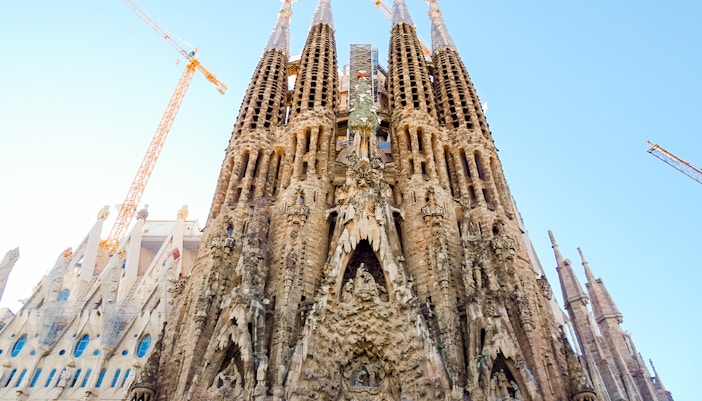
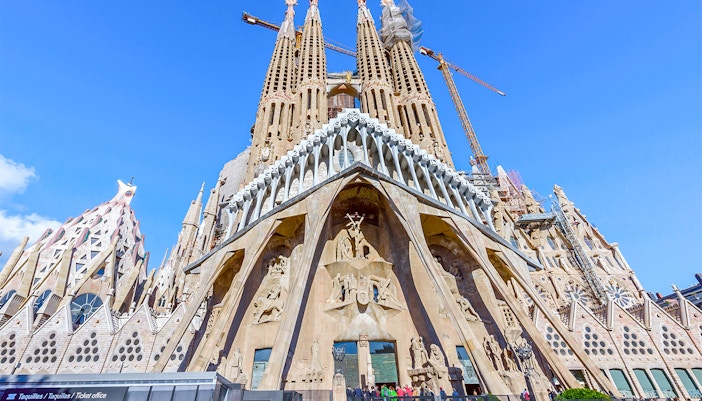
- The Glory Facade is one of the three entrances of the Sagrada Familia Basilica in Barcelona.
- Construction began in 2002 and is still ongoing, with completion expected by 2026. Once finished, it will become the main entrance to the central nave.
- It was designed by the renowned Catalan architect Antoni Gaudí. After his death, construction has continued based on his original sketches and models.
- Symbolically, the facade explores themes of the afterlife, including death, the Last Judgment, and heaven.
- It features a rich array of sculptures and intricate details, depicting angels, demons, and various biblical figures, all reflecting Gaudí's distinctive architectural style and deep spiritual vision for the basilica.
- The seven columns symbolize spiritual gifts, with the Seven Deadly Sins at the base and The Seven Virtues on top.
A comprehensive guide to Sagrada Familia's Glory Facade
What is the Sagrada Familia Glory Facade?
History of Sagrada Familia Glory Facade
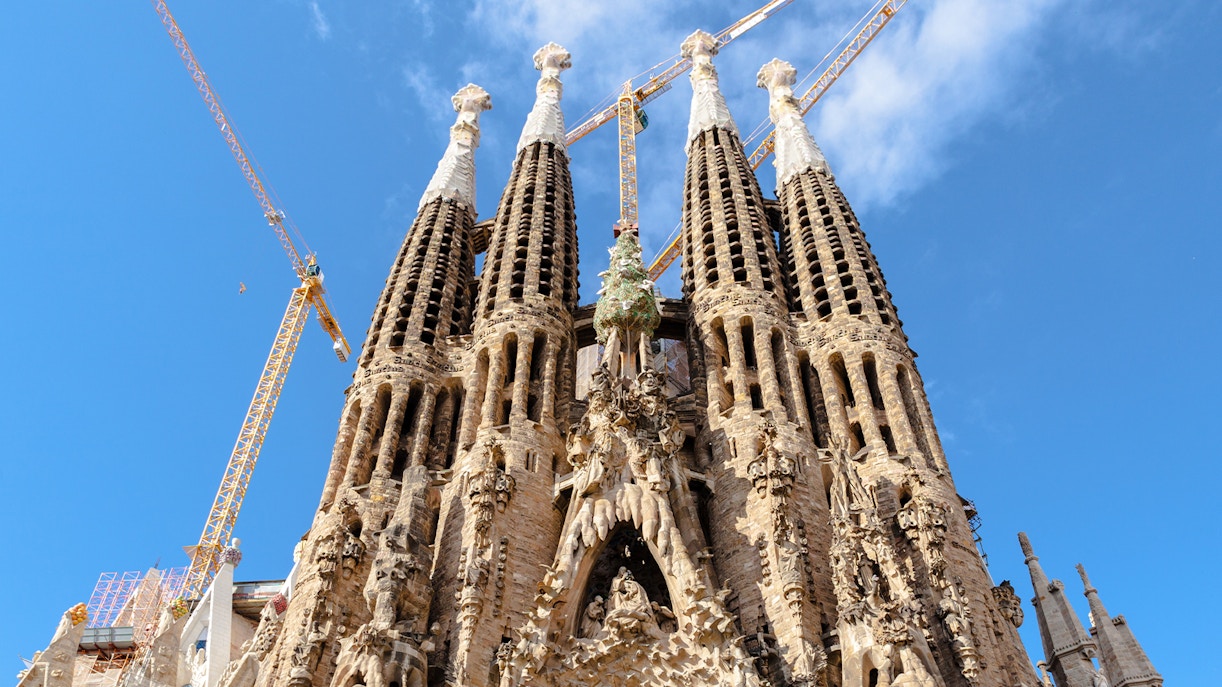
- Antoni Gaudí initiated the Glory Facade in 1914, envisioning it as the grand entrance to the Sagrada Familia.
- Construction ceased in 1926 following Gaudí's death, leaving the facade unfinished for decades.
- In the 1950s, architect Josep Maria Subirachs took over, injecting new life and progress into the project.
- Work on the Glory Facade continues, with artisans and craftsmen contributing to its intricate design and completion.
Gaudi's vision for the Glory Facade
Gaudí only left a few sketches and models for the Sagrada Familia Glory Facade before his death in 1926. However, his vision for the facade was clear: it would be a triumphant celebration of Christ's victory over death and his ascent into heaven. The facade would be adorned with sculptures and symbols that depict the themes of death, the Last Judgment, and heaven.
The symbolism of the Glory Facade
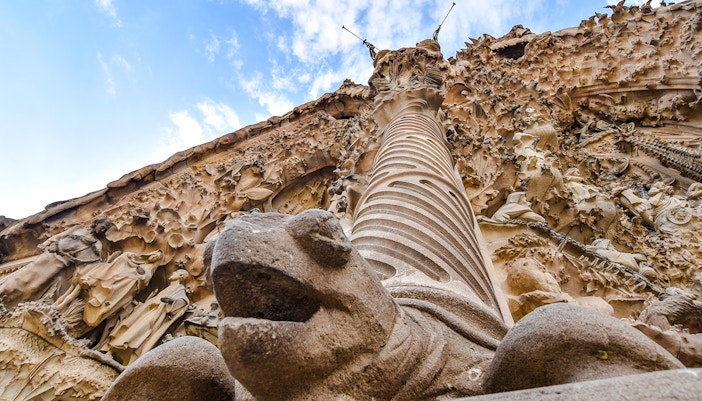
The Gate of Death
The Gate of Death is dedicated to the theme of death and the Last Judgment. It is adorned with sculptures of skeletons, demons, and other figures that represent the forces of evil.
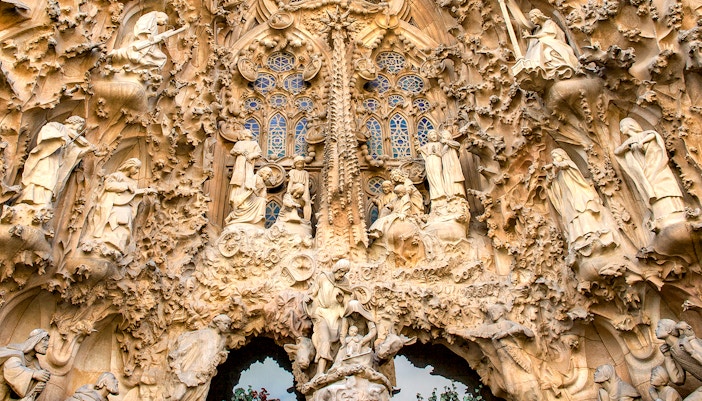
The Gate of Judgement
The Gate of Judgment is dedicated to the theme of the Last Judgment. It is adorned with sculptures of angels, saints, and other figures that represent the forces of good.
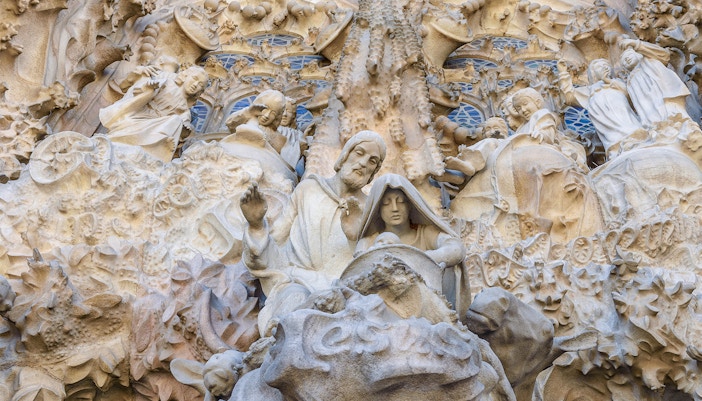
The Gate of Glory
The Gate of Glory is dedicated to the theme of heaven. It is adorned with sculptures of Jesus, Mary, and other figures that represent the joys of heaven.
Construction of the Glory Facade
Construction of the Sagrada Familia Glory Facade began in 2002, and it is expected to be completed in 2026. The facade is being built according to Gaudí's original plans, using traditional Catalan construction techniques. The facade is made of stone, concrete, and glass, and it is decorated with a variety of sculptures, mosaics, and stained glass windows.
Highlights of Sagrada Familia Glory Facade
All entry tickets include access to the Glory Facade, the grandest and most symbolic of the three facades. However, its towers are still under construction, so you won’t be able to climb them just yet.
To climb the towers, book the guided tour + tower access ticket, it lets you ascend a tower belonging to the facade of your choice: Nativity or Passion Facade.
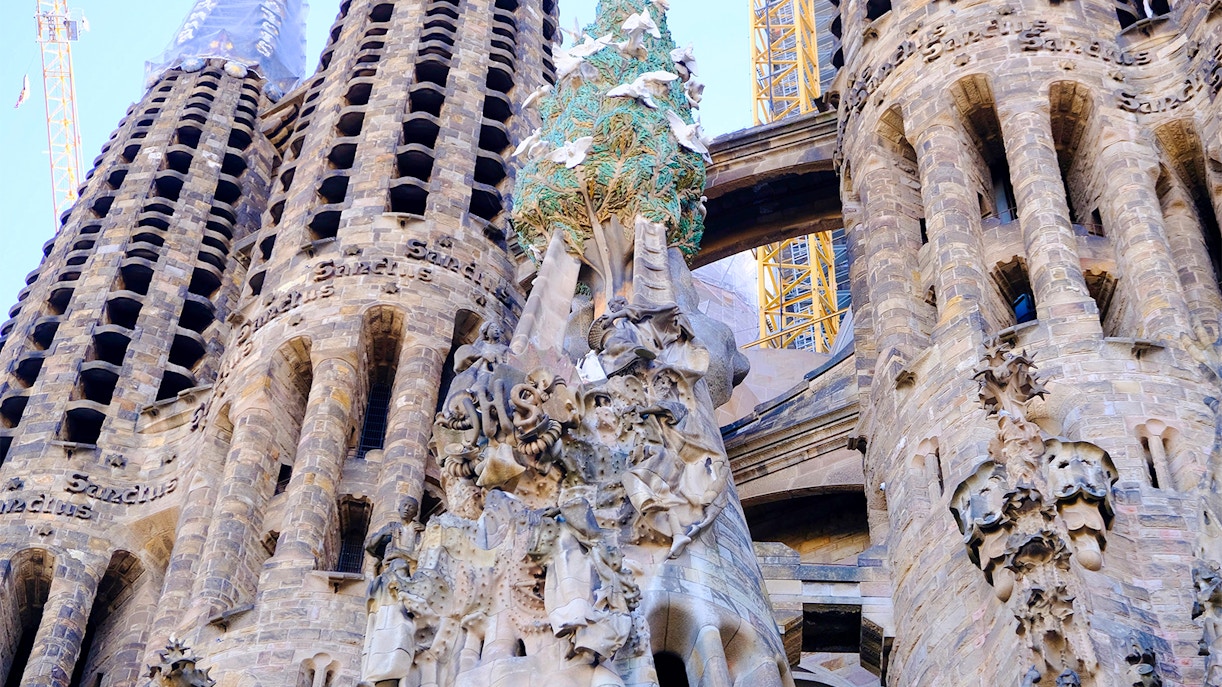
Tree of Life
The Tree of Life is the striking centerpiece of the Sagrada Familia’s Glory Facade, symbolizing eternal life and spiritual renewal. Rising from the sculpted portal, is a cypress tree, often associated with immortality in Christian tradition. Perched among its branches are white doves representing souls ascending to heaven, while beneath it stand sculptures of the faithful.
Gaudí envisioned this element as a bridge between earthly life and divine eternity, tying the narrative of salvation together. Its upward-reaching form draws the eye skyward, reflecting the facade’s overarching theme of humanity’s journey toward God.
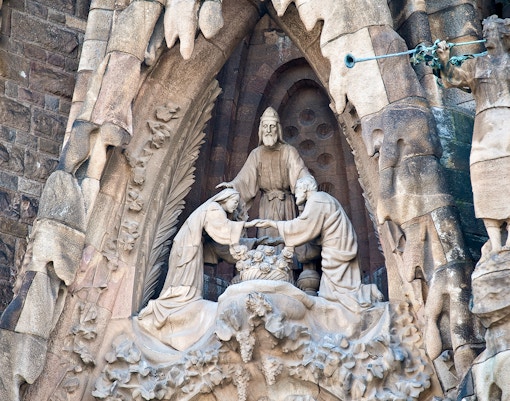
Portal of Hope
Depicts scenes of resurrection and renewal, offering a message of hope and salvation.
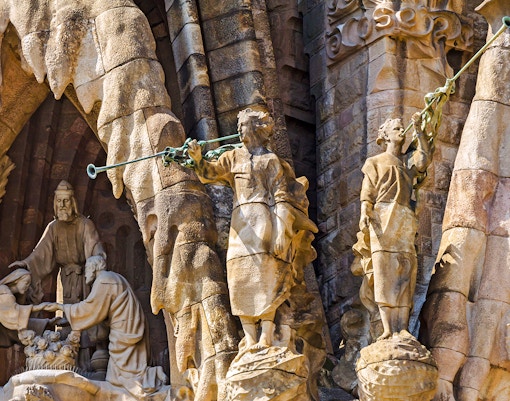
Heavenly Hosts
Elaborate sculptures of angels and celestial beings adorning the facade, evoking a sense of divine presence.
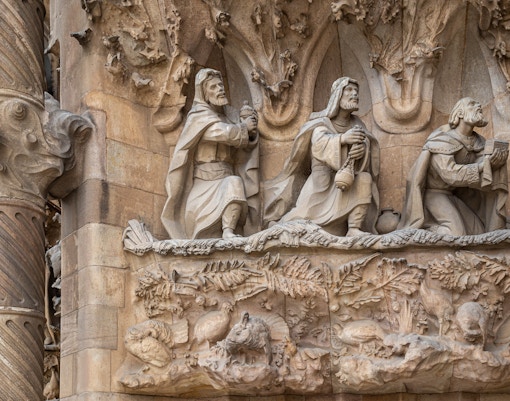
The Four Evangelists
Statues of Matthew, Mark, Luke, and John, representing the authors of the Gospels, are prominently displayed.
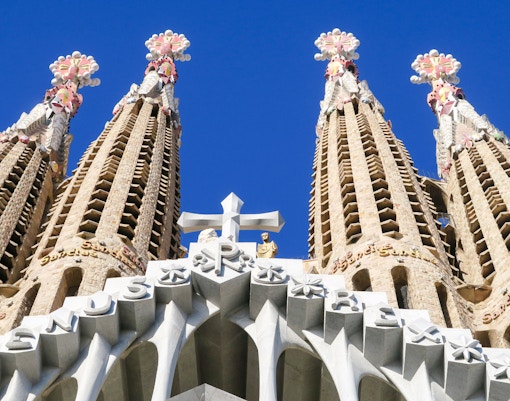
The Twelve Apostles
Life-sized sculptures of the twelve apostles stand guard, each with distinctive features and attributes.
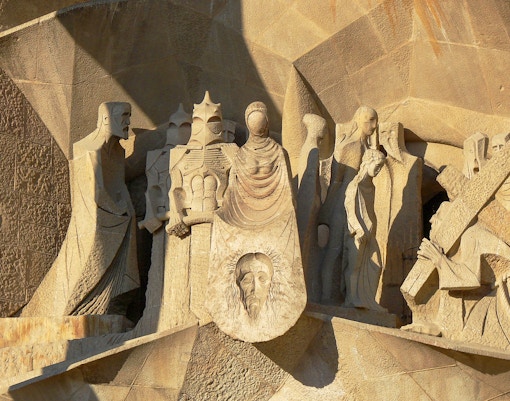
Symbolic facade towers
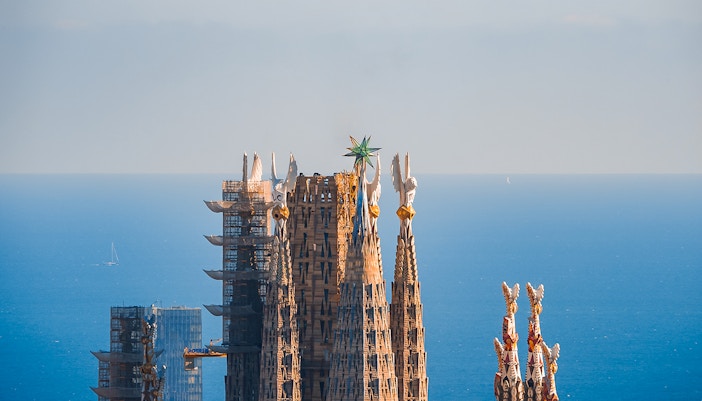
Towers featuring intricate geometrical patterns and religious symbolism, adding to the facade's grandeur and spiritual significance.
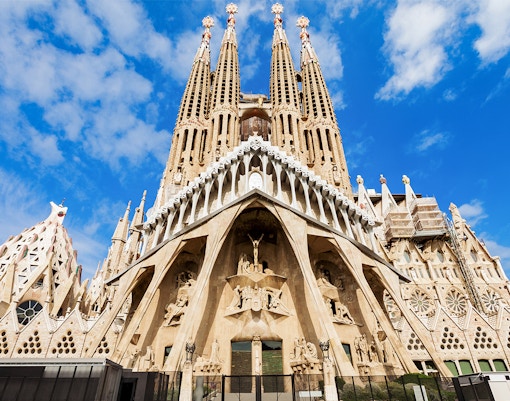
Passion Facade connection
Unique stone bridge connecting the Glory Facade to the dramatic Passion Facade, symbolizing the transition from life to death.
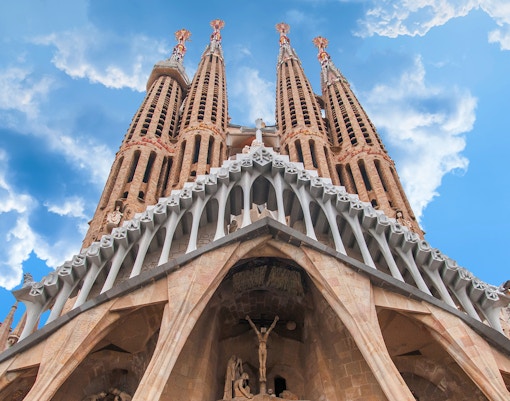
Dramatic central portico
The central entrance with soaring columns and sculptures represents the path to salvation and the Last Judgment.
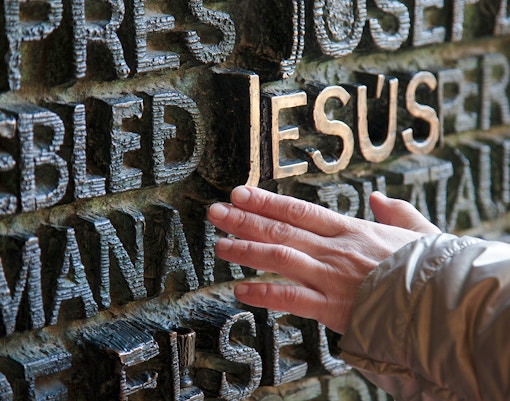
Sculpted entry doors
Ornate bronze doors adorned with biblical motifs and Gaudí's designs, provide a majestic entry point to the basilica.
Visitor tips for Sagrada Familia Glory Facade
- Arrive early to avoid crowds and enjoy the Glory Facade's intricate details and symbolism in peace.
- Join a guided tour for in-depth insights into Gaudí's vision and the facade's hidden meanings.
- Visit in the late afternoon for beautiful sunset lighting that enhances the facade's stunning features.
- Utilize the audio guide to uncover the stories behind the sculptures and the history of the Glory Facade.
- Don't miss the serene Crypt below the facade, housing Gaudí's tomb and providing a quiet space for reflection.
Frequently asked questions about Sagrada Familia Glory Facade
The Glory Facade is one of the entrances of the Sagrada Familia Basilica in Barcelona, known for its intricate sculptures and symbolism.
The preference for facades is subjective. The Nativity Facade, Passion Facade, and Glory Facade each have unique characteristics and artistic merits.
The Glory Facade symbolizes themes of the afterlife, including death, the Last Judgment, and heaven, through intricate sculptures and design.
The Glory Facade is one of the entrances, while the Nativity Tower is one of the basilica's towers, known for its distinct design and views of Barcelona.
Passion, Nativity, and Glory are the three facades of Sagrada Familia.
The Glory Facade of the Sagrada Familia was initially designed by architect Antoni Gaudí and later continued by other architects and artisans.