Quick Information

Plan your visit

Is Recinte Modernista de Sant Pau worth visiting?

The moment you step through the gate off Carrer de Sant Antoni Maria Claret, Barcelona goes quiet. Not museum-quiet. City-quiet. The Eixample traffic drops away, and you're inside a garden of mosaic-covered domes, sculpted facades, and open courtyards that make you wonder how this existed a block from your hotel without you knowing.

Domènech i Montaner built Recinte Modernista de Sant Pau as a healing city. Sunlight, garden air, and the separation of wards were medical decisions. The beauty was functional. That is what makes it feel different from a palace or a church: the grandeur served the sick, not the powerful.

Most visitors leave with an unusual feeling that architecture really can change how a person feels, and that this place has proved it for 93 years. That specific feeling is not available anywhere else in Barcelona.

Skip it: if you want a fast, content-rich museum experience with dense displays in every room. Recinte Modernista de Sant Pau rewards wandering, not checking boxes.

What to see at the Recinte Modernista de Sant Pau?

Administration Pavilion interior
Sant Pau underground tunnels
Sant Salvador Pavilion exhibits
Gardens and Exterior Pavilion Facades
Sant Rafael Pavilion Ward Space
Placeholder Image Headout Blimp
1/6

Hypostyle Hall (Administration Pavilion Entrance)

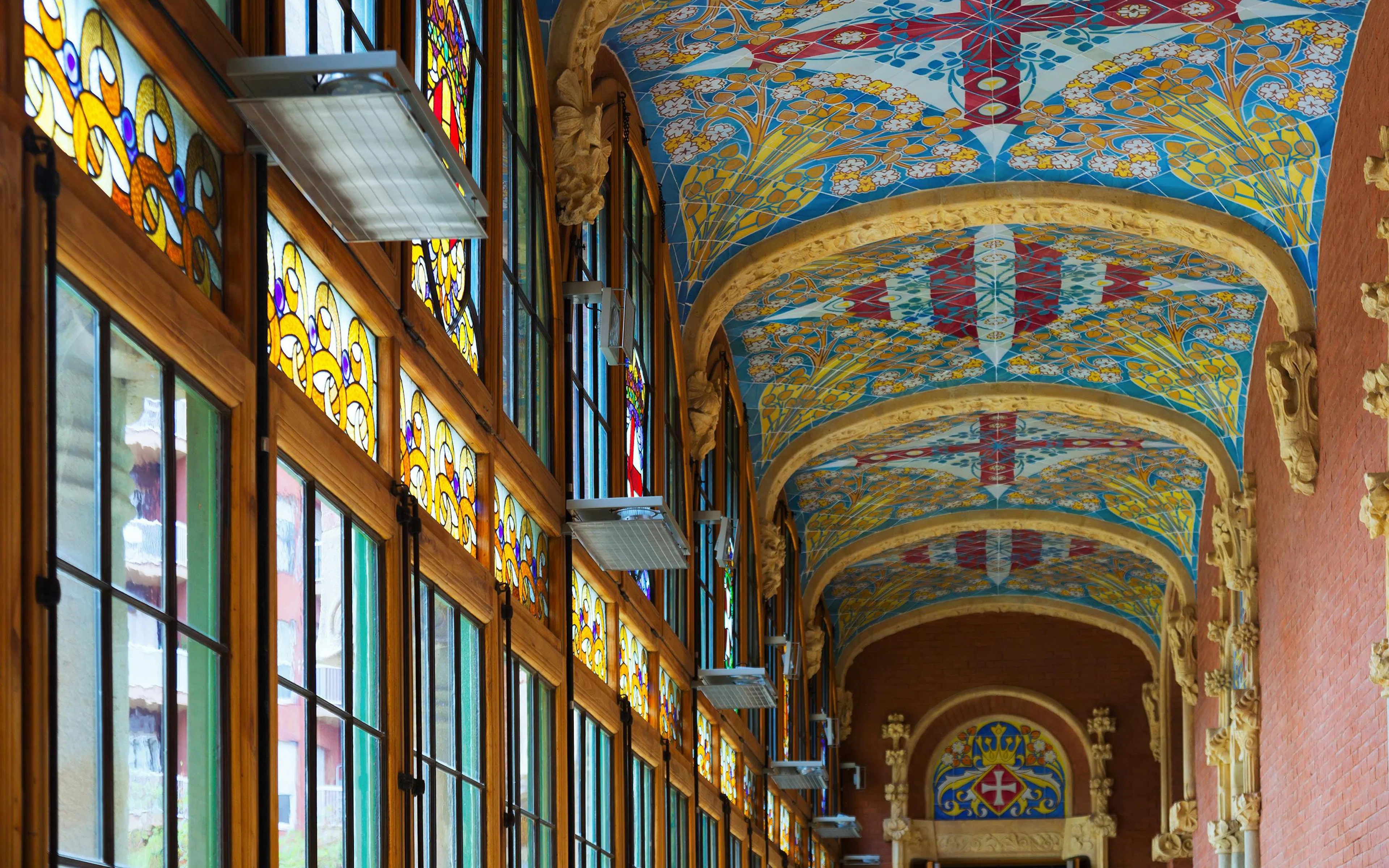
The visit begins here, in what was the hospital's original emergency entrance. Carved columns, vaulted ceilings, and trencadís mosaic work make the scale of Domènech i Montaner's ambition immediately clear. Arrive early, as this is where the mid-morning groups settle first.

Where to find it: Directly inside the main visitor entrance on Carrer de Sant Antoni Maria Claret.

Underground Tunnels

Nearly 1km of service passages link the pavilions below ground, built to move supplies and patients without crossing the open gardens. Cool, quiet, and often almost empty even when the main hall is busy. The engineering is straightforward; the experience is genuinely memorable.

Where to find them: Signposted from the Hypostyle Hall. Enter early before the garden areas pull you away.

Sant Salvador Pavilion Exhibition

The first pavilion to open in 1916, and the place where Recinte Modernista de Sant Pau's hospital history becomes legible. The displays trace the site's 93 years as a working medical complex and the five-year restoration that followed. Less visually dramatic than the main hall but essential for context.

Where to find it: South side of the central garden axis, clearly signposted from the main route.

Gardens and Exterior Pavilion Facades

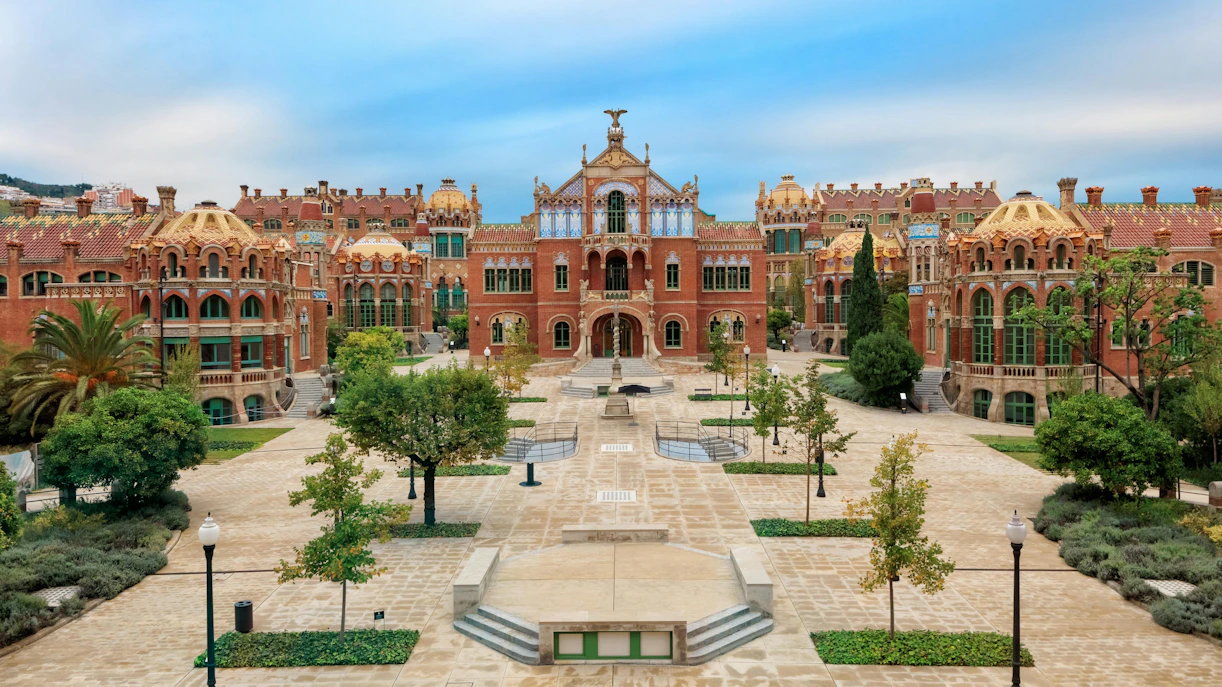
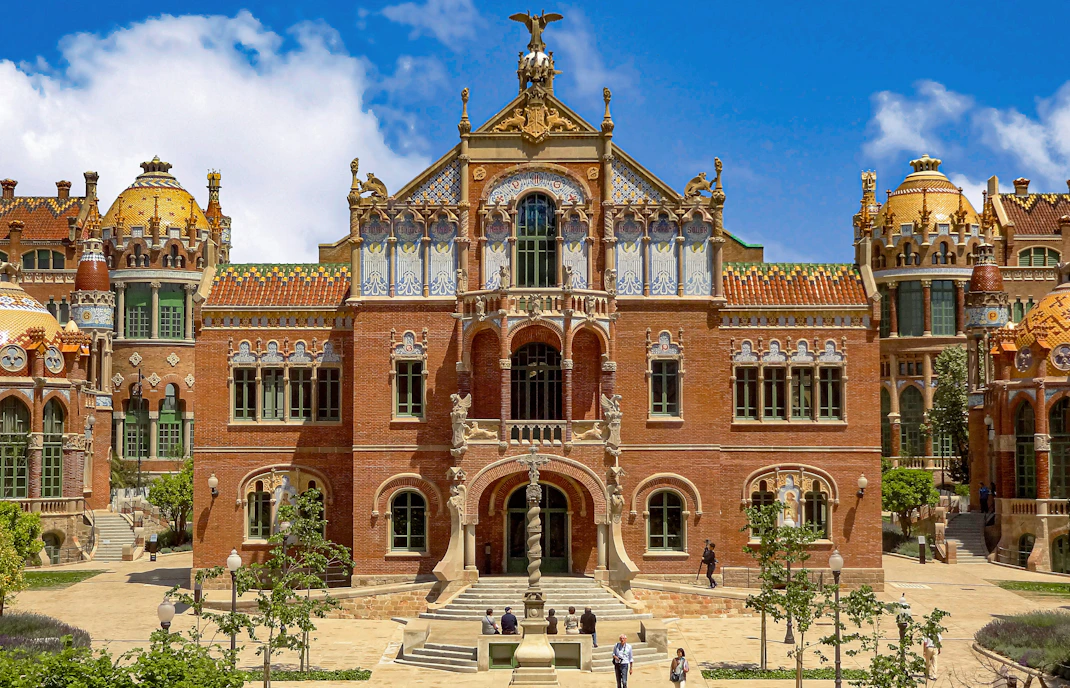
Twelve pavilions arranged around garden courtyards, each with its own mosaic dome, ceramic tilework, and sculpted stone. The full garden perimeter is where the true scale of Recinte Modernista de Sant Pau becomes clear. Late afternoon gives the best light on the facades.

Where to find them: The central garden runs the full length of the site from the main entrance.

Sant Rafael Pavilion Ward Space

A restored hospital ward showing how Domènech i Montaner's architecture translated into actual patient care. Natural light, painted ceilings, and designed air circulation were all deliberate medical tools. This is where the philosophy of the whole site becomes concrete.

Where to find it: Within the main pavilion circuit, signposted from the central garden path.

Sant Carme Pavilion

One of the quieter outer pavilions, typically less visited than the main axis. The exterior ceramic detailing and the sense of open space around it are worth the extra five minutes from the main route.

Where to find it: Northern section of the site, reachable through the garden paths.

How to explore Recinte Modernista de Sant Pau

Budget 1.5 to 2 hours to comfortably explore this massive, 16-pavilion Art Nouveau heritage site. Architecture enthusiasts wanting to read every historical exhibit will likely need 2.5 hours.

Suggested route: Start in the Hypostyle Hall while it's still quiet. Take the underground tunnels immediately after, before the garden areas become busier. Move through the Sant Salvador Pavilion for historical context, then into the garden loop, finishing with the outer pavilions.

Must-see: The Hypostyle Hall, the underground tunnels, and the Sant Salvador Pavilion exhibition. Those three cover the full picture: the beauty, the engineering, and the history.

Optional: A slow garden loop and the outer pavilions add 30 to 45 minutes. Worth it if you have time and want the best photography angles on the domed rooflines.

Self-paced vs. audio guide: Self-paced works well because the site is well signposted. An audio guide at €4 from the box office adds the most value if you want architectural symbolism and hospital history context that isn't spelled out in the rooms.
Brief history of Recinte Modernista de Sant Pau

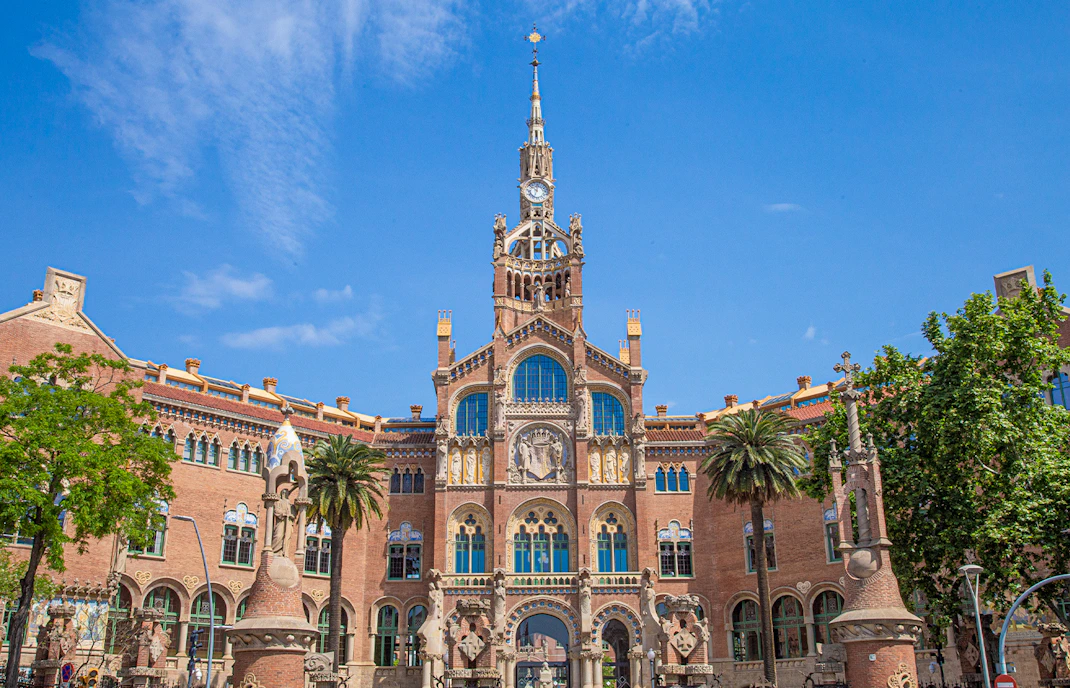
Recinte Modernista de Sant Pau sits at the end of a 600-year tradition of hospital care in Barcelona, translating medical ambition directly into breathtaking architecture.

  • 1401: The Hospital de la Santa Creu is founded in Barcelona's Raval district, successfully merging the city's medieval healthcare sites to provide free medical care to the poor.
  • 1901: Following the peaceful passing of banker Pau Gil, a generous fortune is left to build a new hospital under architect Lluís Domènech i Montaner, who designs a visionary master plan centered around natural sunlight and ventilation.
  • 1905: Construction officially begins on the new site, which is intentionally rotated 45 degrees off the standard city grid to maximize the therapeutic benefits of Mediterranean light.
  • 1916: The first pavilion opens its doors to patients, immediately earning international praise for its innovative separated ward model connected by hidden underground service passages.
  • 1923: Lluís Domènech i Montaner's life journey comes to a close, prompting his son, Pere Domènech i Roura, to lovingly assume control over the remaining building phases.
  • 1930: King Alfonso XIII officially inaugurates the completed complex, solidifying its place as one of the most structurally advanced and visually magnificent civic healthcare facilities in Europe.
  • 1991: The institution receives the prestigious St. George's Cross from the Generalitat de Catalunya in high recognition of its multi-century commitment to public health.
  • 1997: UNESCO formally recognizes the historic campus as a World Heritage Site alongside Domènech i Montaner's companion masterpiece, the nearby Palau de la Música Catalana.
  • 2009: Active medical services successfully relocate to a brand-new, state-of-the-art facility built at the northern edge of the property, effectively preserving the historic pavilions for future generations.
  • 2014: Following an extensive five-year structural restoration project, the stunning Art Nouveau campus safely reopens to the public as an open-air museum and cultural center.
  • 2015: The site transforms into a major international institutional hub, welcoming the official offices of prominent global groups including the World Health Organization and United Nations University.
  • 2021: The campus introduces its highly popular annual winter light show, "Els Llums de Sant Pau", which draws hundreds of thousands of seasonal evening visitors to the illuminated gardens.
  • 2026: The complex continues to thrive as a vibrant cultural landmark, regularly hosting community events and summer open-air concerts while maintaining its vital modern role as a global institutional campus.

Architectural vision and master plan of Recinte Modernista de Sant Pau

Design & innovation

  • Style: The campus is built in the breathtaking Catalan Art Nouveau style, rejecting cold institutional layouts in favor of a thoughtful garden-city design that promotes tranquility and healing.
  • Materials: Almost every surface features warm red brick, detailed stone carvings, delicate ironwork, and stained glass, alongside vibrant ceramic mosaics that beautifully shift color as the Mediterranean sun moves across them.
  • Scale: The expansive site features sixteen historic pavilions spread across nearly seventeen acres, all connected below ground by one kilometer of atmospheric galleries.
  • Orientation: Architect Lluís Domènech i Montaner rotated the entire campus grid exactly forty-five degrees against the surrounding Eixample streets to guarantee that every ward catches the absolute maximum amount of daily sunlight.
  • Engineering: Hidden underground tunnels safely isolate all supply and waste movement away from the patient gardens to prevent infection, while the intricate tiled dome roofs work naturally to regulate internal temperatures.
  • The Experience: Visiting the complex leaves you feeling deeply cared for, offering the rare and comforting sensation of a grand public space designed entirely around human well-being rather than imposing architectural power.

Mastermind behind Recinte Modernista de Sant Pau

Lluís Domènech i Montaner was Catalan Modernisme's most technically precise architect and, many argue, the movement's most complete mind. Where Gaudí worked intuitively, Domènech i Montaner worked with systematic logic. He designed Recinte Modernista de Sant Pau and the Palau de la Música Catalana simultaneously: the two UNESCO-listed buildings that together define his legacy. Following his peaceful passing in 1923, his son Pere Domènech i Roura lovingly completed the final phases of the campus.

What makes Recinte Modernista de Sant Pau different

What makes Recinte Modernista de Sant Pau genuinely unusual in Barcelona's cultural landscape is that the site still belongs to the city. Revenue from visits funds medical research and social programs at the adjacent Hospital de la Santa Creu i Sant Pau, continuing a 600-year tradition of healthcare for Barcelona's residents. Several pavilions house active cultural organisations and NGOs alongside the visitor circuit. This is not a frozen monument. It is a working institution and one of the most beautiful places in Europe to spend an afternoon.

Domènech i Montaner once wrote that architecture should serve life, not commemorate it. Recinte Modernista de Sant Pau is possibly the clearest proof of what he ever built.

Frequently asked questions about Recinte Modernista de Sant Pau

Yes. If Barcelona's bigger landmarks feel overrun, Recinte Modernista de Sant Pau gives you space, light, and architecture you can actually absorb. The combination of visual beauty and 600 years of hospital history is available nowhere else in the city.