Plan your visit to Recinte Modernista de Sant Pau
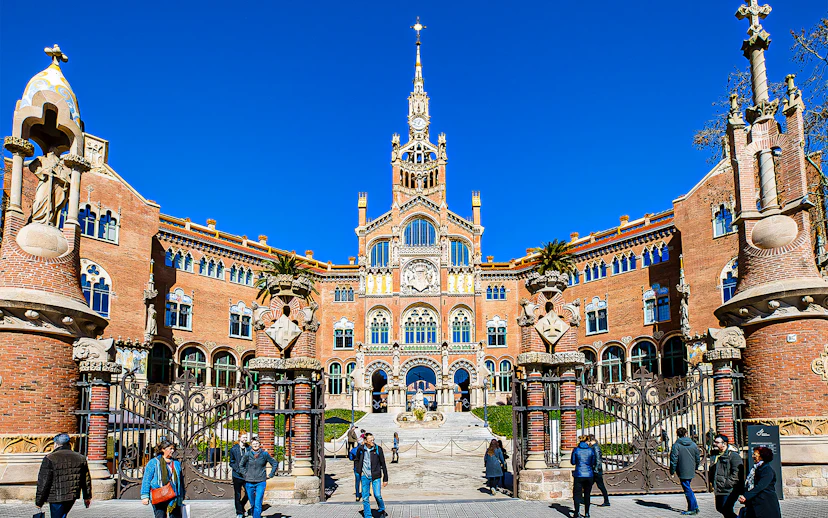
Recinte Modernista de Sant Pau is a UNESCO World Heritage site and one of the most complete examples of Catalan Modernisme anywhere in the world. Built by architect Lluís Domènech i Montaner and his son between 1902 and 1930, this former hospital campus covers ornate pavilions, sculpted gardens, and an underground tunnel network across an area equivalent to nine city blocks in Baix Guinardó. Most visits take 1.5 to 2 hours. What surprises most people is that the site was originally designed to function like a self-sustaining city garden for patients. While the medical facilities moved to a modern building nearby in 2009, walking through the historic complex without a plan means missing the underground tunnels and the quieter outer pavilions entirely.
Quick overview: Recinte Modernista de Sant Pau at a glance
- When to visit: Open daily, 9:30am to 6:30pm (April to October) and 9:30am to 5pm (November to March). The 9:30am window is noticeably calmer than 10:30am to 12pm, because Sagrada Família tour groups and cruise visitors often arrive at Recinte Modernista de Sant Pau as their second stop.
- How long to allow: 1.5 to 2 hours for most visitors. Give yourself closer to 2.5 hours if you want the tunnels, outer pavilions, and proper time for photography between buildings.
- What most people miss: The underground service tunnels connecting the pavilions below ground, and the hospital history displays in the Sant Salvador Pavilion. Both are usually empty even when the main hall is packed.
🎟️ Weekend mornings between April and September are busiest. Pre-book your self-guided entry and arrive at 9:30am to get the site nearly to yourself.
Jump to what you need
🕒 Where and when to go
🎟️ Which ticket is right for you?
🏛️ What to see
♿ Facilities and accessibility
Eat, shop and stay nearby
Where and when to go
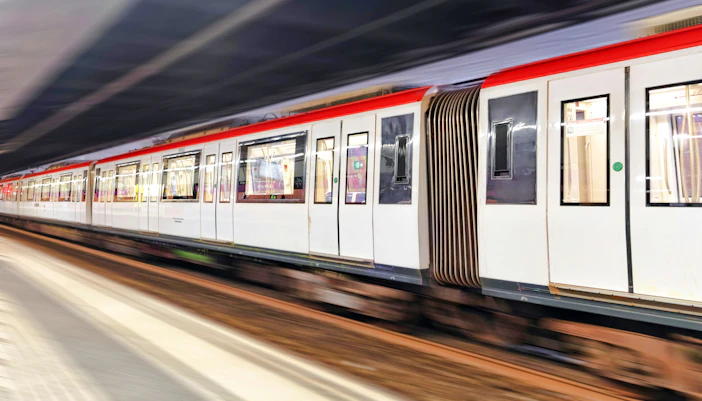
How do you get to Recinte Modernista de Sant Pau?
Recinte Modernista de Sant Pau sits in the Eixample district of Barcelona, about a 15-minute walk from Sagrada Família along Avinguda de Gaudí. It's one of the city's best-connected cultural sites.
Address: Carrer de Sant Antoni Maria Claret, 167, 08025 Barcelona |Find on Google Maps
Getting there:
- By metro: L5 (Sant Pau – Dos de Maig). Take the exit toward Carrer de Sant Antoni Maria Claret for the most direct route to the visitor entrance.
- By bus: Lines H8, 19, 47, 117, and 192 all stop close to the entrance.
- By taxi/rideshare: Drop off directly at Carrer de Sant Antoni Maria Claret, 167.
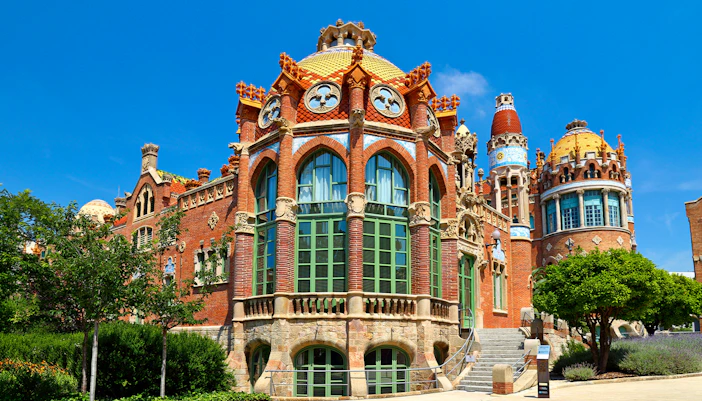
Which entrance should you use?
Recinte Modernista de Sant Pau has one main visitor entrance on Carrer de Sant Antoni Maria Claret. The most common first-time mistake is walking into the active hospital building next door. Look for the visitor signage marked "Recinte Modernista" on the correct building.
- Pre-booked tickets: Scan and enter through the dedicated lane. Expect 0 to 5 minutes outside the mid-morning peak.
- Walk-up/box office: Buy at the desk. Expect 5 to 10 minutes on weekend mornings between 10:30am and 12pm.
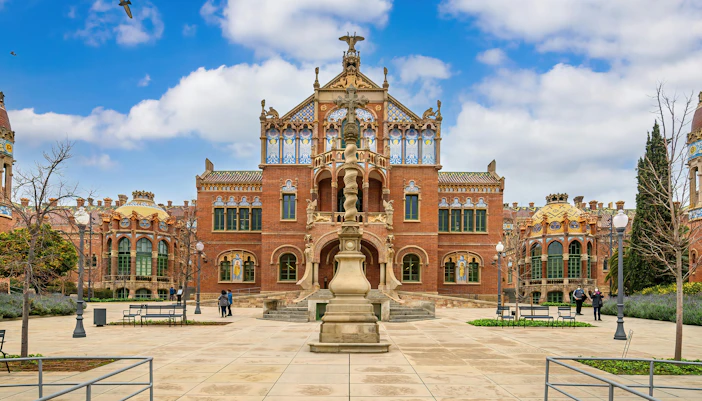
When is Sant Pau Art Nouveau Site open?
- April to October: Daily from 9:30am to 6:30pm
- November to March: Daily from 9:30am to 5pm
- Last entry: 30 minutes before closing
- Closed: December 25
- Free entry days: April 23 (Sant Jordi), Night of the Museums, and September 24 (La Mercè). No guided tours operate on free entry days.
When is it busiest? Weekends and weekday mid-mornings from April to September, particularly between 10:30am and 12pm when groups arriving from Sagrada Família converge on the Administration Pavilion.
When should you actually go? Arrive at 9:30am sharp. That first 45 minutes is genuinely the calmest window of the day. Late afternoon, the last 90 minutes before closing, is the next best option and comes with softer light on the facades and mosaics.
💡 Pro tip: Free entry days like April 23 and September 24 bring some of the year's longest queues at a site that normally has almost none. If you plan to visit on one of those dates, arrive at least 30 minutes before opening or expect a significant wait.
Which Sant Pau Art Nouveau Site ticket is best for you
| Ticket type | What's included | Best for | Price range |
|---|---|---|---|
Skip-the-line entry | Entry to open pavilions + gardens + tunnels + site map | A flexible self-paced visit with full morning time across all areas | From €18 |
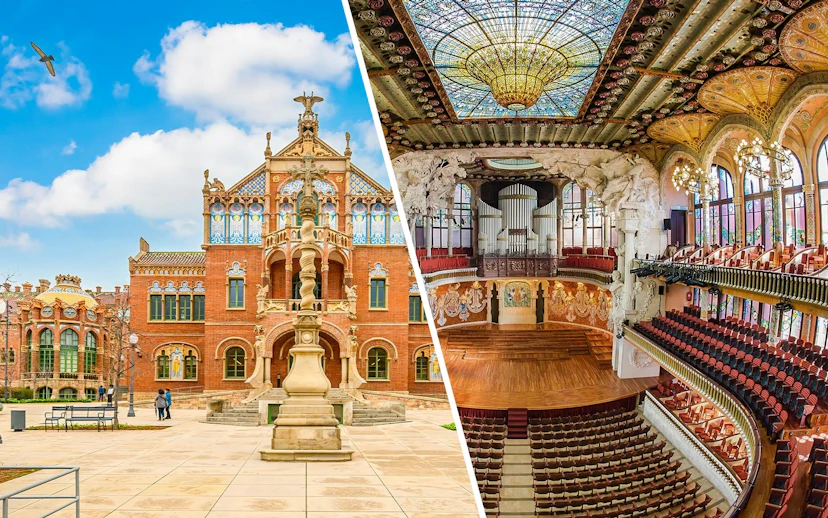
Sant Pau + Palau de la Música Combo | Entry to Recinte Modernista de Sant Pau + Palau de la Música Catalana | A full Domènech i Montaner day: two UNESCO-listed masterpieces by the same architect in one booking | From €32 |
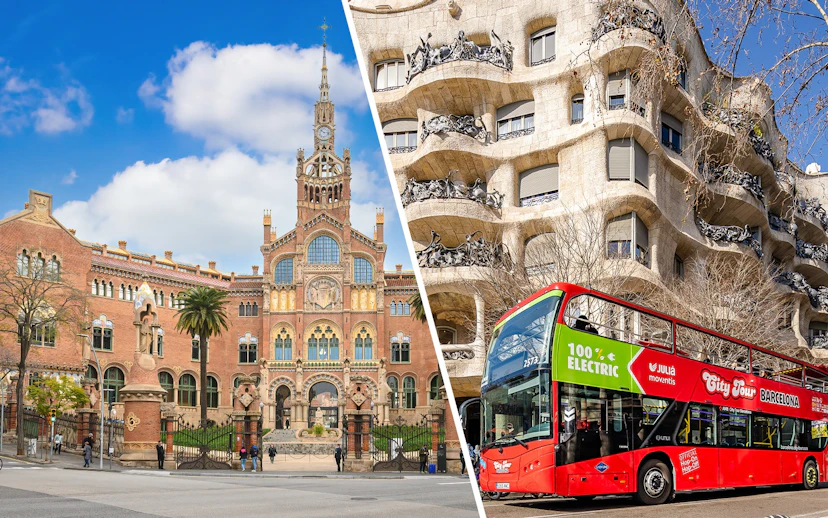
Sant Pau + Hop-On Hop-Off Barcelona | Entry to Recinte Modernista de Sant Pau + Barcelona Hop-On Hop-Off tour | A flexible day covering the city's highlights with guaranteed entry to Sant Pau included | From €47.70 |
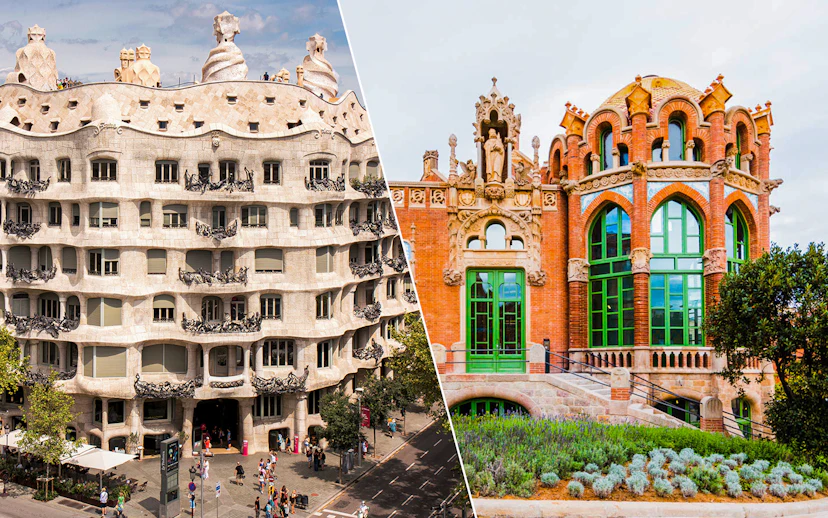
Sant Pau + Casa Milà | Entry to Recinte Modernista de Sant Pau + Casa Milà | Great for exploring Gaudí and Domènech i Montaner in a single day | From €44.65 |
How do you get around Sant Pau Art Nouveau Site?
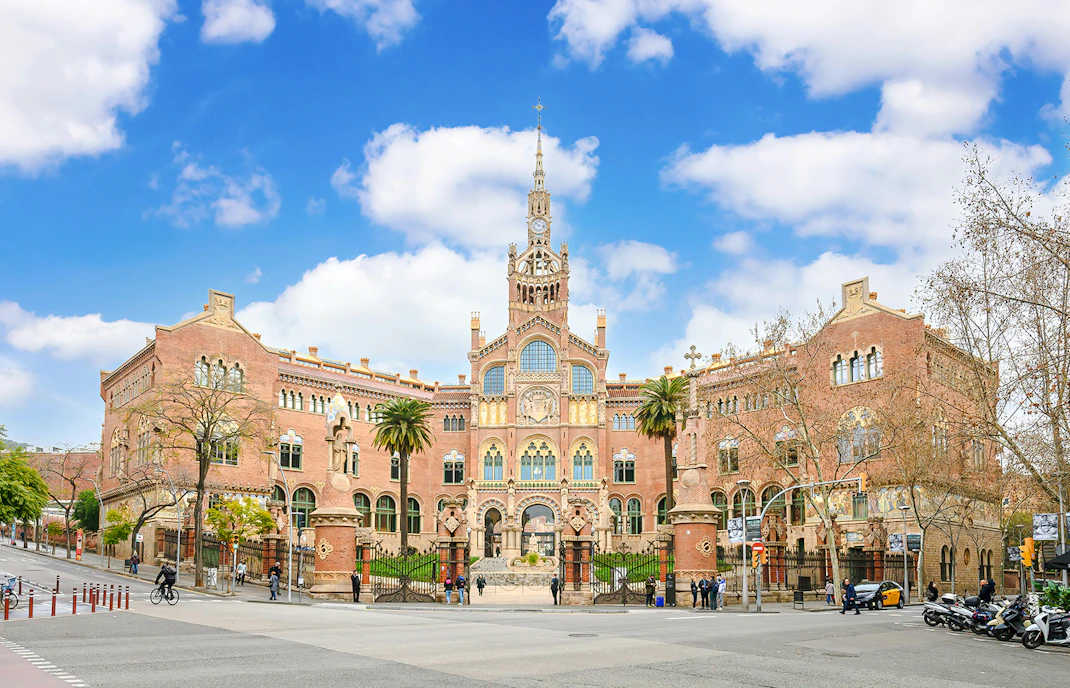
The Recinte Modernista de Sant Pau is a cluster of pavilions arranged around garden courtyards, connected above ground by paths and below by service tunnels. It is easy to stay on the central axis and miss the outer pavilions entirely.
- Administration Pavilion: The most ornate starting point with the grand staircase, mosaic work, and stained glass → budget 20–25 min.
- Sant Salvador Pavilion: The clearest place to understand the hospital’s history and medical mission → budget 15–20 min.
- Sant Rafael Pavilion: A restored hospital ward space that shows how the complex actually functioned, not just how it looked → budget 10–15 min.
- Underground tunnels: The service passages linking pavilions below ground, and one of the site’s most distinctive features → budget 10–15 min.
- Gardens and exterior facades: Best for dome views, tiled roofs, and the calm open-air atmosphere between buildings → budget 20–30 min.
Suggested route: Start fresh in the Administration Pavilion. Head down into the tunnels early before the gardens distract you with photo stops. Work your way outward through Sant Salvador and the surrounding pavilions, finishing your visit with a relaxed loop through the outer gardens.

Maps and navigation tools
- Map: Printed visitor maps at the entrance. More useful than expected once you realise the campus layout isn't obvious.
- Signage: Covers the main route well but misses side pavilions.
- Audio guide: Multilingual audio guide for €4 at the box office. Adds the most value for architectural symbolism and hospital history details not visible from the rooms.
Pro tip: Do the tunnels early, not last. They're easy to talk yourself out of once the garden views start pulling you toward the exit.
Where are the masterpieces inside Recinte Modernista de Sant Pau?
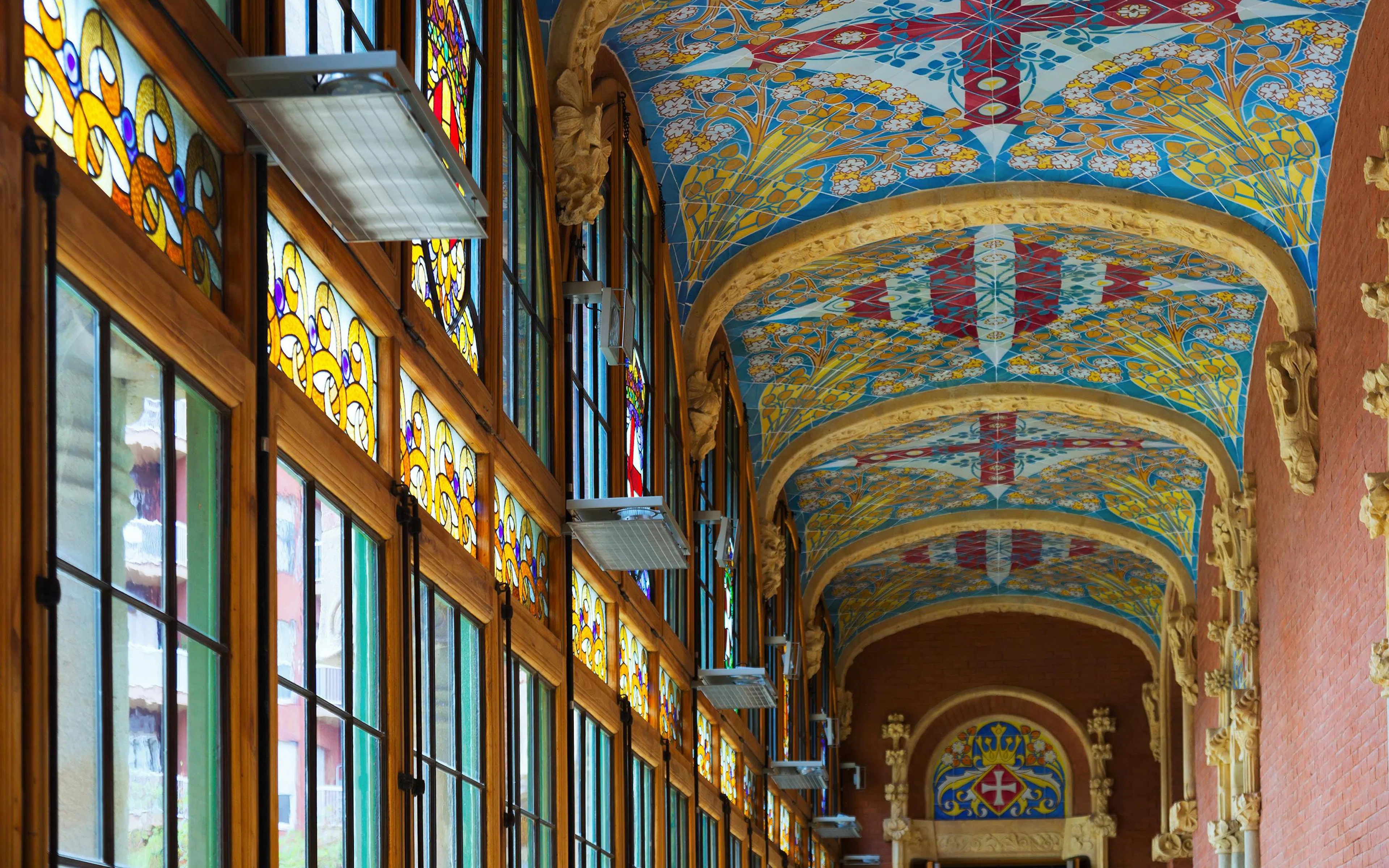
Administration Pavilion
Architect: Lluís Domènech i Montaner, early 20th century
This is the showstopper most people associate with Sant Pau, and it earns that status immediately with its grand staircase, stained glass, and layered mosaic work. It’s worth slowing down here, because visitors often take a few photos in the central hall and move on before looking up at the ceilings and side details. The entrance sequence is part of the experience, not just the way in.
Where to find it: Directly beyond the main visitor entrance on Carrer de Sant Antoni Maria Claret.
Underground tunnels
Function: 20th-century hospital service infrastructure
Built to move supplies, staff, and patients between pavilions without crossing the garden grounds. Walking through them gives the clearest sense of how Recinte Modernista de Sant Pau actually operated as a hospital for 80 years. They're cool, quiet, and often almost empty even when the main pavilion is full. Domènech i Montaner designed beauty into every visible surface, but the tunnels are where the functionality shows.
Where to find them: Signposted from the main visitor route. Enter early, before the garden areas fill up.
Sant Salvador Pavilion
Architect: Lluís Domènech i Montaner, early 20th century
If you want the visit to feel like more than an architecture walk, spend time here. Sant Salvador explains the hospital’s social mission, its medical innovations, and the human side of the complex through displays that many people treat as a quick pass-through. It adds the context that makes the tiled domes and airy wards feel purposeful rather than decorative.
Where to find it: On the main visitor route after the entrance sequence and tunnel section.
Sant Rafael Pavilion
Architect: Lluís Domènech i Montaner, early 20th century
This pavilion helps you picture how Sant Pau actually worked when it was still a hospital. It’s quieter and less visually dramatic than the Administration Pavilion, which is exactly why many visitors walk past too fast. The reward here is practical detail: proportions, light, airflow, and the patient-focused design logic that made the whole site so advanced for its time.
Where to find it: Along the central campus route among the former hospital pavilions.
Gardens and exterior pavilions
Feature: Mosaic domes, ceramic roofs, and open-air layout
Sant Pau makes the strongest impression when you stop treating the outdoor sections as just the space between buildings. The garden axis gives you the best sense of the campus plan, and the pavilion facades reveal details that don’t register from close range. Most visitors stay centered on the path, but the side angles are where the rooflines and ceramic ornament really come alive.
Where to find it: Throughout the central and outer open-air sections linking the major pavilions.
Facilities and accessibility
- Audioguide: Multilingual audioguides are available as a paid add-on and are useful if you want architectural and medical-history context without joining a live tour.
- Restrooms: Available at multiple points along the visitor circuit, including accessible toilets.
- Seating: Benches in the gardens and open areas make it easy to pause between pavilions, especially on warm afternoons.
- Elevators: Elevators operate in key visitor buildings, though short waits of a few minutes can happen when only one lift is serving a pavilion.
- Visitor map: Printed maps at the entrance. Covers all pavilions, the gardens, and tunnel connections.
- Lockers: Accessible luggage storage is available at the entrance. The tunnels and interior spaces are far more comfortable without a large backpack.
- Shop: The Recinte Modernista de Sant Pau has an on-site shop.
- Mobility: Most of the public route is manageable with ramps, paved paths, and elevators, but some historic upper levels and terrace-style viewpoints are not part of a fully step-free visit.
- Visual impairments: The audioguide adds useful descriptive context, but this is still a visually led site and tactile interpretation is limited.
- Cognitive and sensory needs: Opening time and the last 1.5–2 hours of the day are the easiest low-stress windows, while 10:30am–12 noon is the loudest and busiest group-tour period.
- Families and strollers: The outdoor paths, gardens, and main route are broadly stroller-friendly, though some tighter interior spaces and stair-access viewpoints reduce full end-to-end ease.
Sant Pau works best for children who are comfortable walking through beautiful spaces rather than expecting hands-on exhibits or a play-focused attraction.
- Time: 60–90 minutes is realistic with younger children, and the tunnels plus the biggest open-air courtyard are the parts most likely to hold attention.
- Facilities: The gardens and benches make it easier to break up the visit than in a standard indoor museum route.
- Engagement: Turn the visit into a detail hunt by asking children to spot mosaic domes, stained-glass windows, and repeated tile patterns across different pavilions.
- Logistics: Bring a small bag, water, and sun protection in warmer months, and aim for the 9:30am opening if you want room to move without tour groups around you.
- After your visit: Sagrada Família is close enough to pair with Sant Pau if your group still has energy for one more landmark.
Rules and restrictions
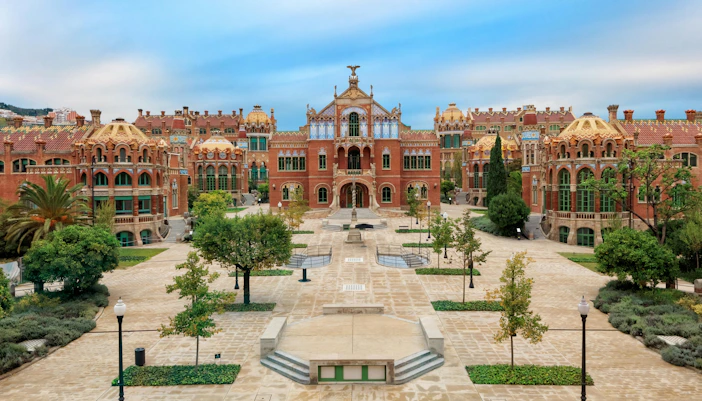
What you need to know before you go
- Entry requirement: A valid ticket is required. Children under 12 enter free with an accompanying adult. Children under 16 must be accompanied by an adult.
- Bag policy: A small day bag is the easiest option here, because the visit includes light security and moving between pavilions and tunnels.
- Re-entry policy: Treat Sant Pau as one continuous visit, as re-entry is not permitted once you leave the premises.
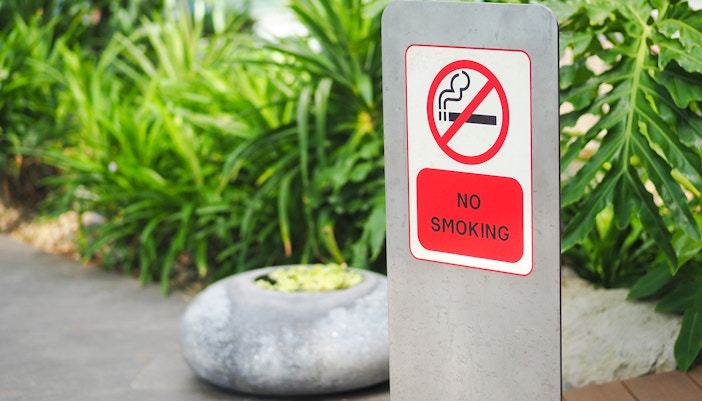
Not allowed
- Food and drink: Save meals for before or after your visit, because Sant Pau works best as a walking route through heritage interiors and gardens rather than a picnic stop.
- Smoking / vaping: Smoke only where on-site rules permit, and don’t expect the heritage pavilions or enclosed visitor areas to allow it.
- Pets: Leave pets at home unless they are service animals accompanying a visitor.
- Touching exhibits / climbing: Don’t touch decorative elements or climb on architectural features, because many surfaces are original and fragile.
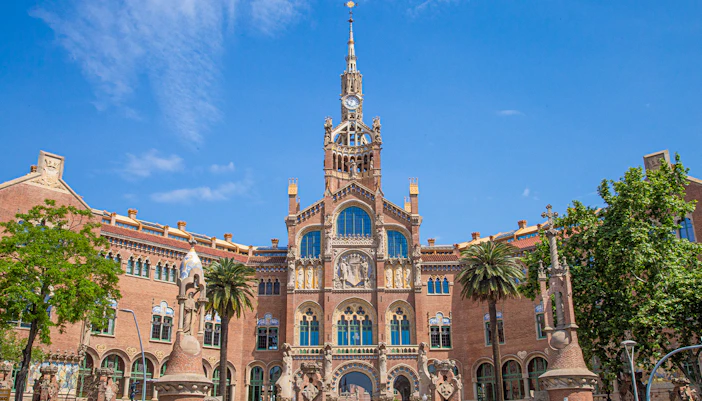
Photography
Personal photography is one of the best parts of a visit to Recinte Modernista de Sant Pau, particularly in the gardens, tunnels, and main pavilion. Flash, tripods, and selfie sticks are not permitted inside the pavilions. Temporary exhibition areas may carry additional restrictions. Late afternoon gives the best natural light on the mosaic facades, and the main hall is most photogenic before 10:30am.
Practical tips
- Booking and arrival: Book ahead only if you want the official weekend guided tour or you’re visiting on free-entry dates like April 23 or around La Mercè, because standard entry usually doesn’t need the same planning.
- Pacing: Give the Administration Pavilion your first 20 minutes while you still have fresh attention, then save at least 30 minutes for the tunnels and outer pavilions, which are the parts most people shortchange.
- Crowd management: The best window is 9:30–10:15am, because by roughly 10:30am groups arriving from Sagrada Família start thickening the main route.
- What to bring or leave behind: Bring a small bag and keep it light, because the visit includes a short security check and the tunnels are much more comfortable without bulky backpacks.
- Photography: If photos matter to you, late afternoon usually gives softer light on the facades and avoids the washed-out look that midday sun can create on mosaics and glass.
- Route choice: If the entrance hall feels busy, don’t wait for it to clear; move into the tunnels early and let the crowd flow reverse itself while you explore the quieter end first.
- Food and drink: Eat before you go or plan a proper meal afterward, because Sant Pau is most rewarding when you can walk it in one uninterrupted 90-minute to 2-hour stretch.
What else is worth visiting nearby?
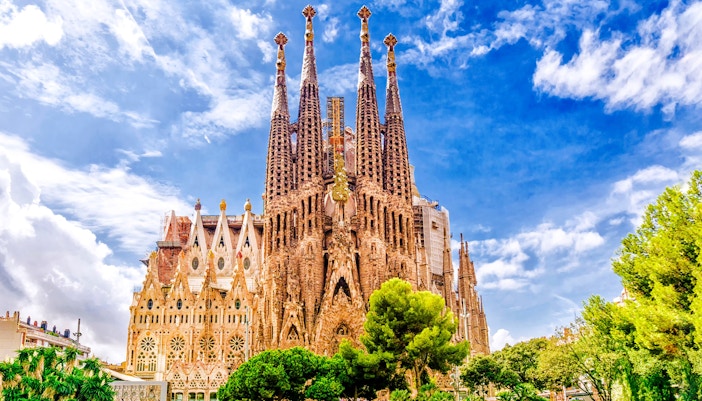
Commonly Paired: Sagrada Família
- Distance: 1 km — 15-min walk
- Why people combine them: They make a natural same-day pair because both are major Modernisme landmarks, but Sant Pau gives you the calmer, more spacious half of the day.
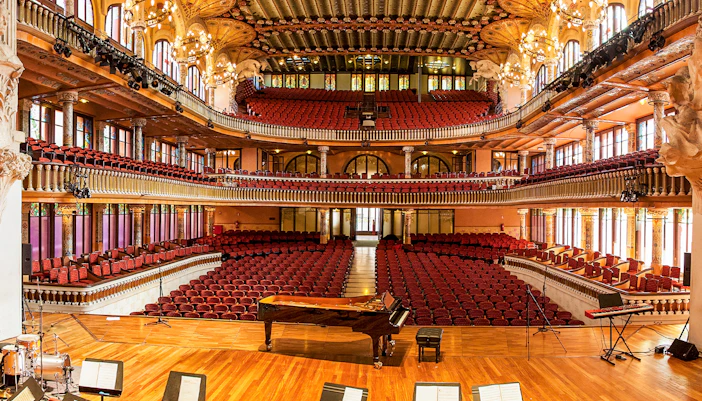
Commonly Paired: Palau de la Música Catalana
- Distance: approx. 3km, around 25 minutes by metro or taxi
- Why people combine them: Both are UNESCO-listed works by Domènech i Montaner. The combo ticket covers both sites in one purchase and connects the architect's two greatest achievements.
Recinte Modernista de Sant Pau and Palau de la Música Catalana are the most natural Domènech i Montaner pairing and the simplest to do on a combo ticket. One purchase, two UNESCO sites, one architect's full range.
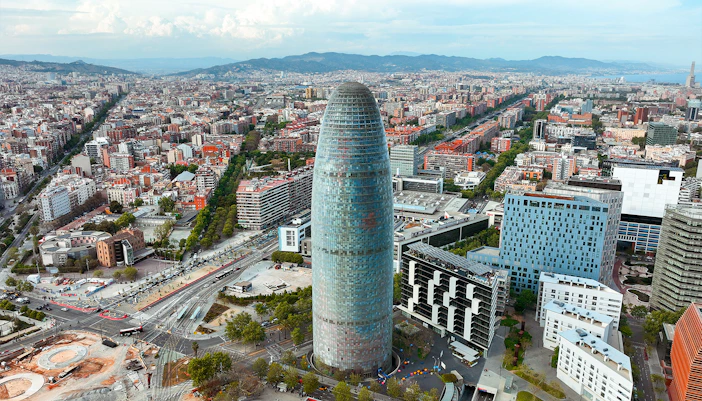
Also nearby
Torre Glòries
Distance: 1.8km, 22-min walk (or a direct 5-minute taxi ride down Carrer de los Castillejos)
Worth knowing: A modern contrast to Sant Pau. The 30th-floor glass dome offers 360-degree skyline views, a suspended art installation, and interactive city exhibits.
Book / Learn more
Park Güell
Distance: 2.1km, 25-min walk (or a quick 8-minute ride on the H6 bus line right outside the campus)
Worth knowing: A perfect open-air match. This whimsical, UNESCO-listed park showcases Antoni Gaudí’s famous mosaic art and organic structures blended into nature.
Book / Learn more
Eat, shop and stay near Recinte Modernista de Sant Pau
- On-site: There isn’t a destination meal stop inside the standard visitor route, so most visitors are better off treating nearby cafés and restaurants as the practical option.
- La Paradeta Sagrada Família (15-min walk, Passatge de Simó, 18): Seafood, mid-range, and a good post-visit choice if you want something more memorable than a quick coffee.
- BelleBuon (18-min walk, Carrer de Sicília, 366): Italian, mid-range, and worth considering if you want a longer sit-down lunch after a slower architecture-heavy morning.
- Puiggros (8-min walk, Avinguda de Gaudí area): Bakery and sandwiches, low to mid-range, and the easiest fit if you want a quick breakfast or light bite before entry.
Pro tip: If you’re doing Sant Pau and Sagrada Família on the same day, eat between 1pm and 2pm or after 3pm, because that avoids the tightest lunch rush around Avinguda de Gaudí.
The streets around Recinte Modernista de Sant Pau are residential Eixample: quieter than the Gothic Quarter, well-connected by metro and bus, and a practical base if you want easy walking access to both Recinte Modernista de Sant Pau and Sagrada Família.
- Price point: Mid-range by Barcelona standards, with better value a few blocks back from the Sagrada-facing streets.
- Best for: Visitors who want walkable mornings, quieter evenings, and easy access to Sant Pau without crossing the city.
- Consider instead: El Born or Gràcia if you want a livelier neighbourhood with more independent restaurants, bars, and a more lived-in Barcelona feel.
Frequently asked questions about visiting Recinte Modernista de Sant Pau
Most visits take 1.5–2 hours. That’s enough time for the main pavilion, tunnels, gardens, and the medical-history exhibits. If you like architecture, photography, or slower pacing, give it closer to 2.5 hours, because the quieter outer pavilions are usually the first part people cut short.
No, you usually don’t need to book standard entry far in advance. Sant Pau is much lower-pressure than Barcelona’s biggest attractions, and many visitors buy same-day. The main exceptions are the official weekend guided tour and free-entry dates, when availability and entrance lines become noticeably less forgiving.
Yes, a small bag or daypack is usually fine. The practical advice is to keep it compact, because the security check is faster and the tunnels are much easier to enjoy without a bulky backpack. Sant Pau is not the sort of site that pairs well with large luggage or an overloaded sightseeing bag.
Yes, personal photography is one of the best parts of the visit. The main caution is that flash, tripods, selfie sticks, and commercial-style setups are restricted, and any special exhibition areas can apply different rules from the open pavilions and gardens. The best light is usually at opening or later in the afternoon.
Yes, as long as expectations are right. It works better for children who enjoy walking through unusual spaces, tunnels, and gardens than for kids expecting interactive exhibits. Most families will find 60–90 minutes realistic, with the underground sections and open courtyards doing more of the work than the historical displays.
Mostly, yes, for the main public route. The gardens, central paths, and key visitor buildings are manageable, and elevators support the standard circuit, but some upper-level or terrace-style spaces are not fully step-free. It’s a site where ‘mostly accessible’ is more accurate than ‘everything accessible.’
Yes, there are plenty of places to eat nearby, especially between Sant Pau and Sagrada Família. Most visitors treat Sant Pau as a 1.5–2-hour architectural visit and plan food before or after rather than during. That timing works better anyway, because the site is most rewarding when you can move through it without interrupting the route.
The best time is right at 9:30am opening. That first 45 minutes is the clearest quiet window before groups arriving from Sagrada Família start thickening the main pavilion around 10:30am. Late afternoon is also good, especially if you care more about space and softer light than maximum exhibit-reading time.