Casa Mila Architecture | What to See, Highlights, Construction History & More

Barcelona is home to many stellar buildings designed by Antoni Gaudí. Casa Milà, a Modernista building built as a private residence, is just one of them. The building was commissioned by wealthy couple Pere Milà and his wife Roser Segimón in the year 1906 as their private residence. It took four years to complete the building.

There are many Catholic elements found in the architecture of the building, as the architect was a devoted Catholic. When it was built, Casa Milà was applauded and criticised. Its unconventional architectural style raised many eyebrows, while critics lauded Antoni Gaudí for his innovation and bold ideas that he brought to fruition. Today, Casa Milà is among the most celebrated works of Antoni Gaudí and has become an iconic landmark in Barcelona, visited by more than 1,000,000 tourists each year.

Architecture & Design of Casa Milà | Quick Overview

Casa Mila Architecture - Architecture & Design of Casa Milà
  • Official Name: Casa Milà 
  • Status/Function/Attraction Type: Private Residence
  • Location: Pg. de Gràcia, 92, 08008 Barcelona, Spain
  • Founded: 1905
  • Area: 1323 m2 per floor (9 floors)
  • Architectural Style: Modernisme
  • Main Architect: Antoni Gaudí

Who Designed Casa Milà?

Antoni Gaudí

Antonia Gaudí has designed many buildings in Barcelona. He is one of the most celebrated Spanish architects whose genius was often questioned by the people of his time. Critics called his work unconventional, but Spanish noblemen commissioned most of their works to Antoni Gaudí. Some of the most known landmarks in Barcelona, like Park Guell, Casa Battlo, Casa Vicens, Palacio Guell and Casa Milà, were designed by him. He also significantly contributed towards designing the Nativity Facade and the Crypt of La Sagrada Familia. Though not much appreciated when he was alive, Antoni Gaudí gained fame posthumously and became a known figure who would inspire architects in the future.

Architectural Style of Casa Milà

Casa Mila Architecture - Architectural Style of Casa Milà
  • Casa Milà was designed in the Modernisme style of architecture, also known as Catalan modernism.
  • It is known as La Pedrera or the Stone Quarry, as it looks like it has been carved out of stone.
  • The cultural shift inspired the Modernisme style of architecture in Catalan, where buildings artists and sculptors contributed to the design process. In many Antoni Gaudí buildings, you can see a lot of cultural significance that shaped the Catalan identity from 1888 to 1911. 
  • Casa Milà was the last personal residence built by Antoni Gaudí. He used geometry to design the interior and exterior sections of the building and incorporated many Catholic symbolisms.
  • Casa Milà is a combination of two buildings and nine floors, including a basement that was intended to be used as a garage. The roof has staircase exits, chimneys and skylights that add to the uniqueness of the structure.

Structure of Casa Milà

Casa Mila Architecture - Structure of Casa Milà

Casa Milà stands on a plot of 1620 m2, with each floor occupying 1323 m2 of area. The house is built in curves, both inside and outside. It has a stone facade that is connected to each floor. Antoni Gaudí wanted the owners to have the freedom to repair any floor without worrying about damages to other floors. The facade is self-supported and built so that an ample amount of light enters each window.

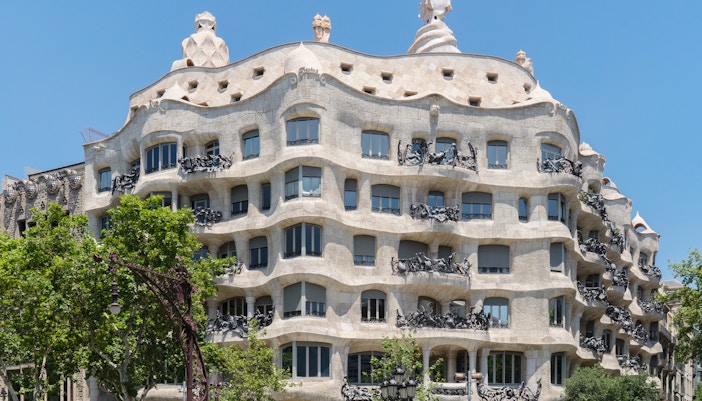
If you view Casa Milà from the outside, you will see that the structure is divided into three parts. The main part consists of six floors with identical curves. The second part includes two floors in bright white colours, while the roof is the third part.

Stages of Construction Of Casa Milà

Beginnings

Pere Milà and Roser Segimón married in 1905 and purchased land. Soon, they commissioned Antoni Gaudí to build a private residence. This would be the last project Antoni Gaudí undertook before completely devoting himself to building an expiatory temple inside La Sagrada Familia.

Raw Materials

Antoni Gaudí used lime, bricks, marble pieces and ceramics to build the structure. Iron grilles, sheets, bars and chains were used to build a strong foundation to ensure the structure was well-supported. Marble was intricately used in the design, while the stone was sourced in bulk from Vilafranca del Penedès.

Construction

The final design was presented to the couple by Antoni Gaudí. He started working on Casa Milà with his team of engineers, artists, painters and sculptors. It took four years to complete the project. The roof was added in the end. By 1911, the couple had moved in on the main floors with the intention of renting out the other floors.

Criticism and controversy

Due to its unusual style of architecture, people in the neighbourhood feared that Casa Milà would bring down the property rates of other houses in the building. The couple blocked the final payment that was supposed to be made to Gaudí. He eventually went to court and won the case. Casa Milà went on to become Antoni Gaudí’s most celebrated work.
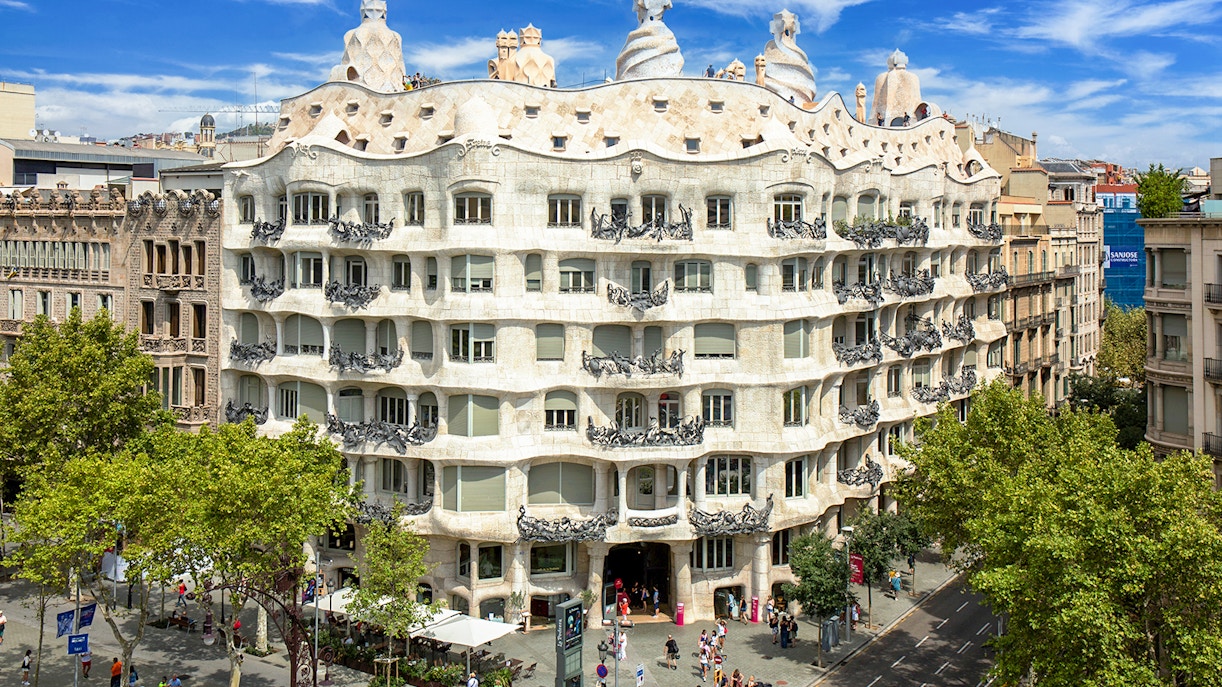
The Exterior of Casa Milà

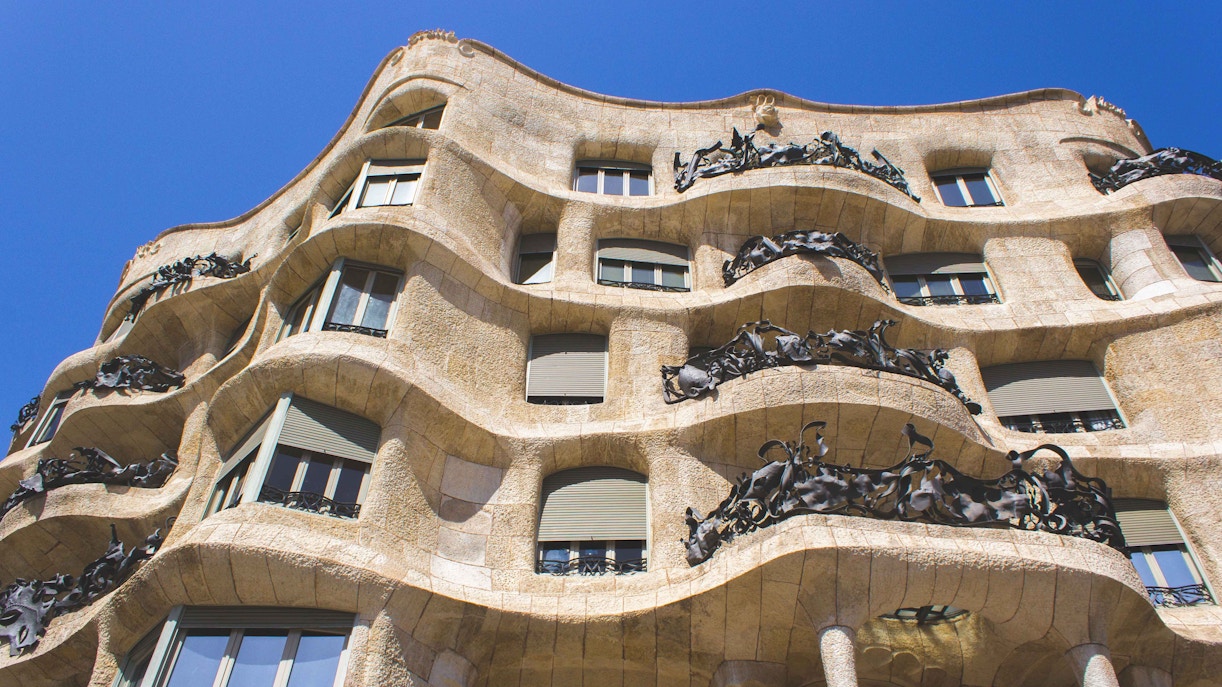
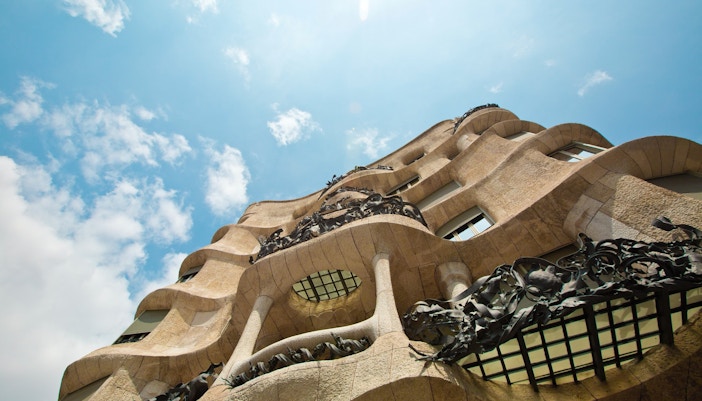
Casa Milà’s windows look like a wave from the outside. It is beautifully designed, with a huge facade made out of stone. There are three parts to the exterior of Casa Milà. Here is how each of them is designed.

Facade

Cut out of stone, the facade is a self-supporting structure that is connected to all the internal structures of the floors by curved iron beams. Limestone and stones were used to build the facade of Casa Milà. Due to the curtain wall-like structure of the facade, the large windows stay intact.

Entrance

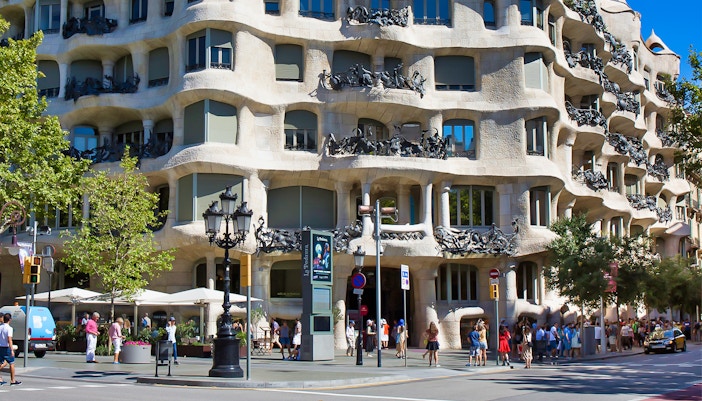
Antoni Gaudí used a lot of natural elements while designing Casa Milà. It is quite evident when you walk through the entrance door of this structure. Built using glass and iron grilles, the doors are shaped like branches of a tree expanding upwards. They were built to allow entry to both vehicles and human beings.

Patios

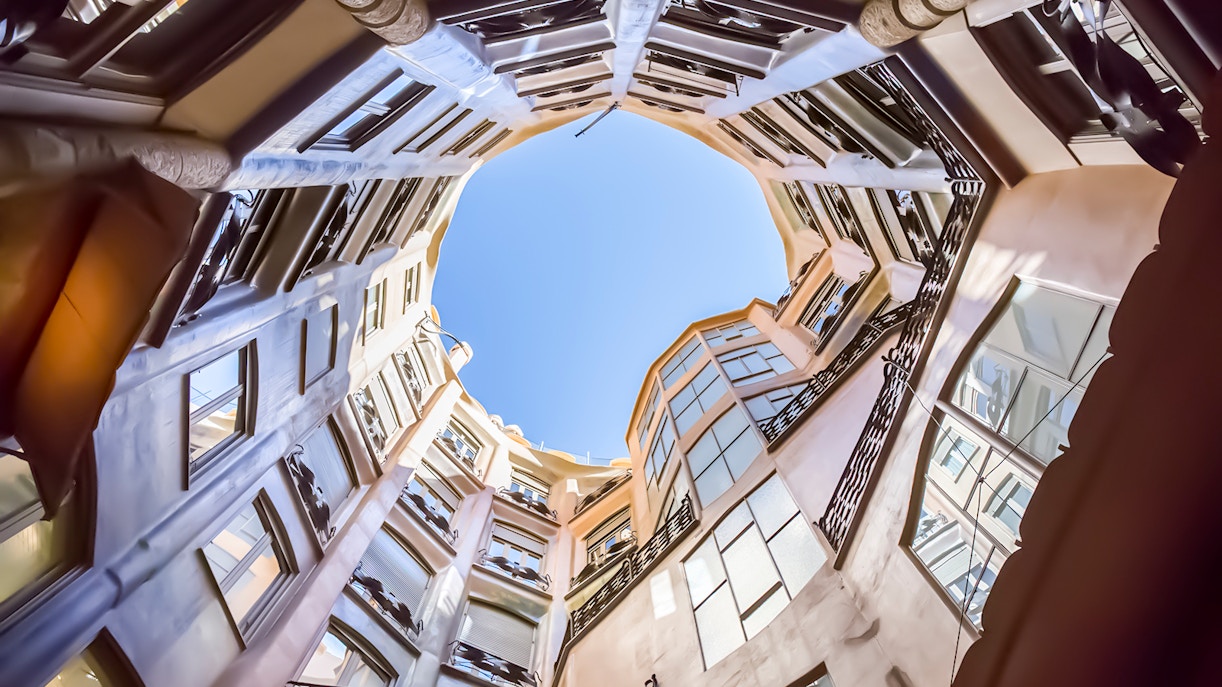
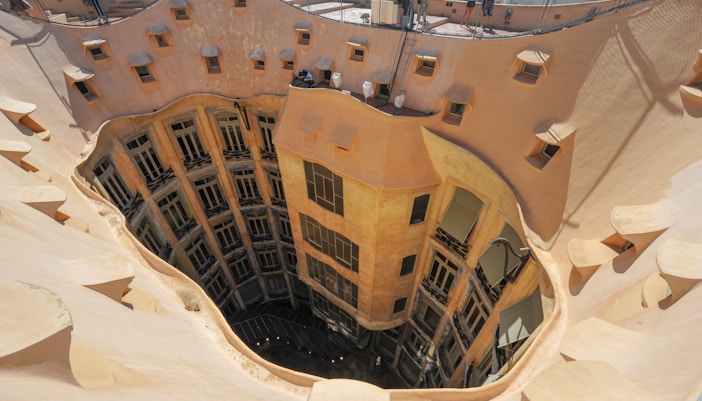
Two large patios at Casa Milà were built to provide enough ventilation and natural lighting inside all the rooms. When it was built, most buildings only had one patio to provide ventilation to the kitchen and toilets. But as Casa Milà has 16 apartments, Antoni Gaudí added two patios to make sure none of the rooms would be suffocating.

Casa Milà Interior

Casa Milà is just as spectacular from the inside as it is from the outside. With extravagant furniture, entrance halls, a well-designed roof and 16 apartments, including the apartment floor of the couple, let’s take a look at what is inside Casa Milà.

Entrance Halls

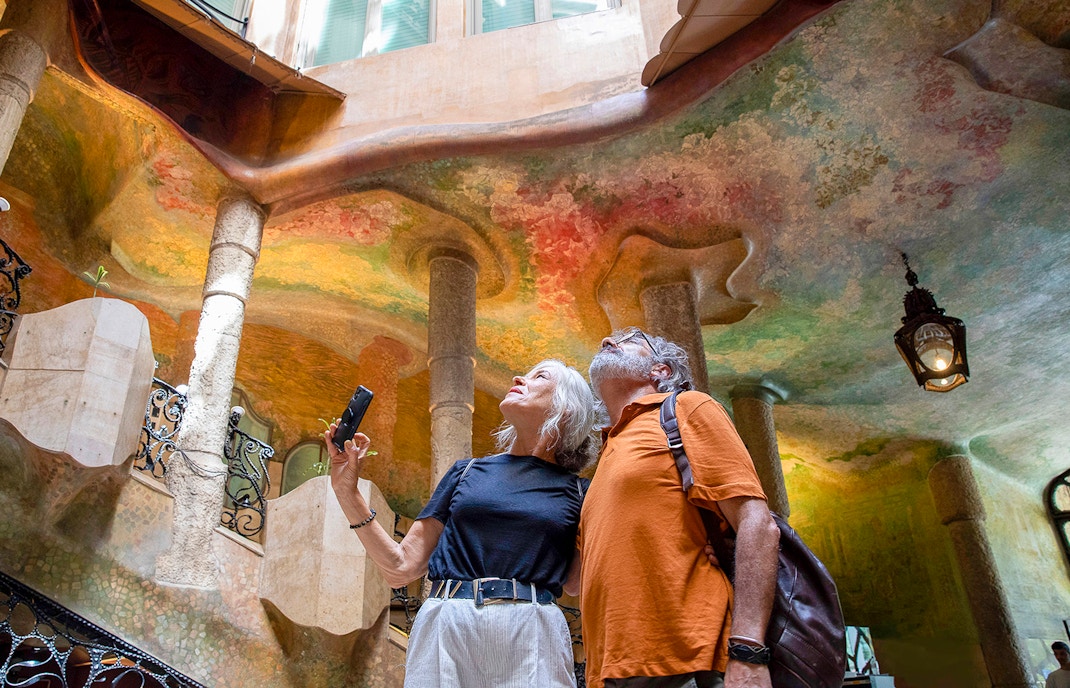
The entrance halls of Casa Milà are decorated with wall paintings and tapestries depicting different moments from mythology. Even the columns were by renowned artists of the era to achieve the desired flamboyancy, which the owners of Casa Milà preferred.

The Apartment

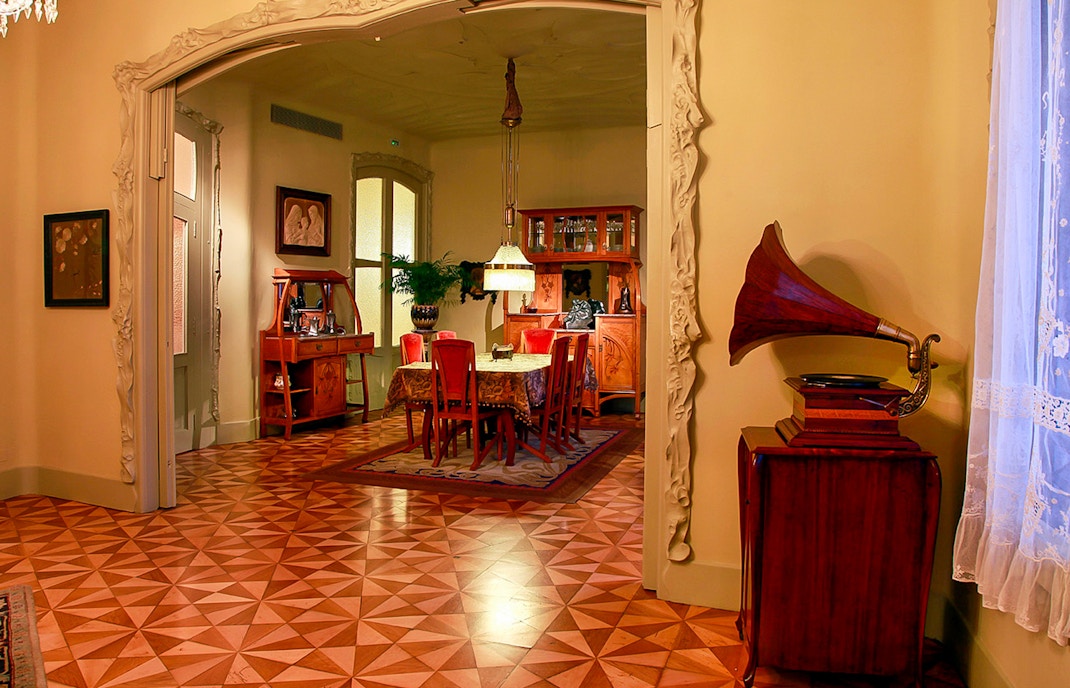
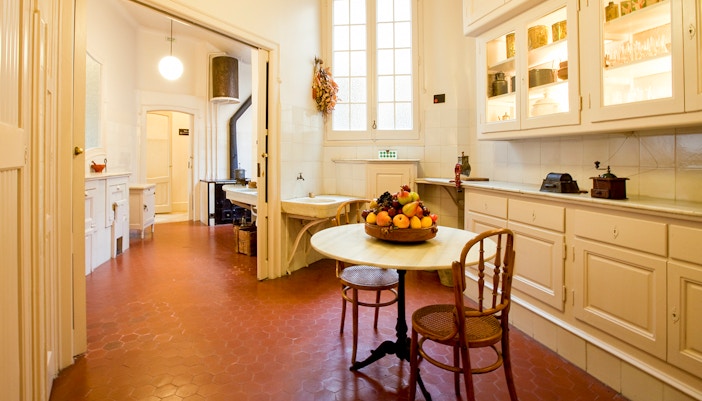
The main floors became the couple's residence while other rooms were rented out. This main floor had antique furniture that suited the taste of the owners. The ceilings were also decorated, giving the whole apartment a rich and luxurious feel. Other rooms were designed in siMilàr ways.

The Roof

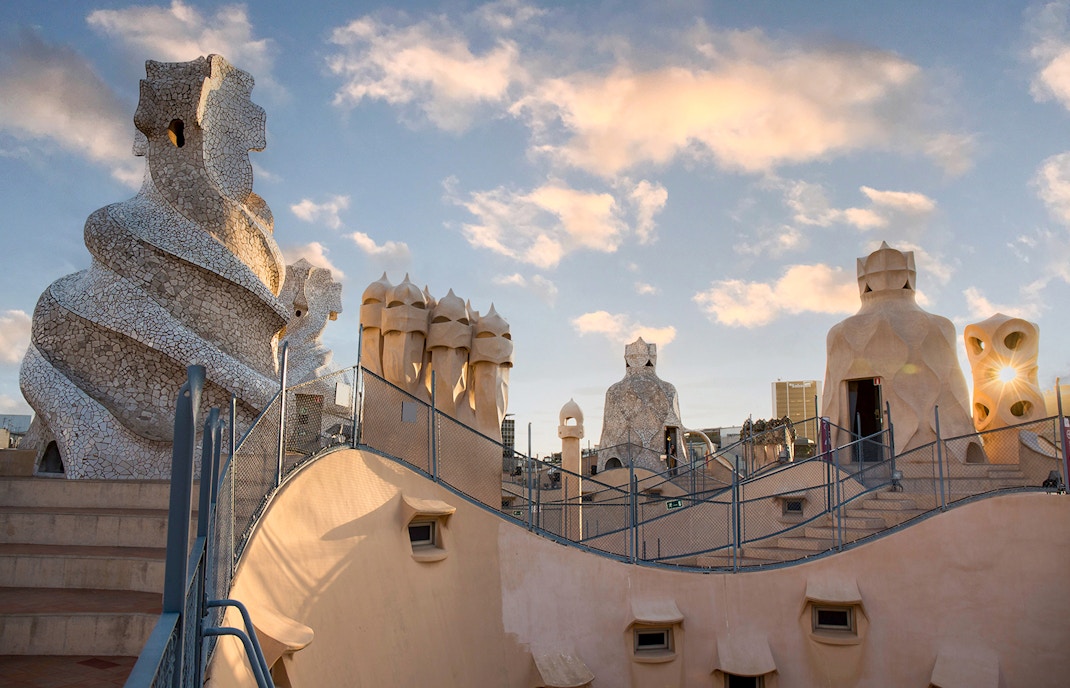
The rooftop is perhaps the most extraordinary area of Casa Milà. Marble sculptures, skylights, chimneys and round staircases add to its beauty. It was decorated using glass, broken pieces of pottery and marble to give the roof a sort of bohemian feel, which was not commonly seen in buildings in Barcelona.

Casa Mila Rooftop

Espai Gaudí

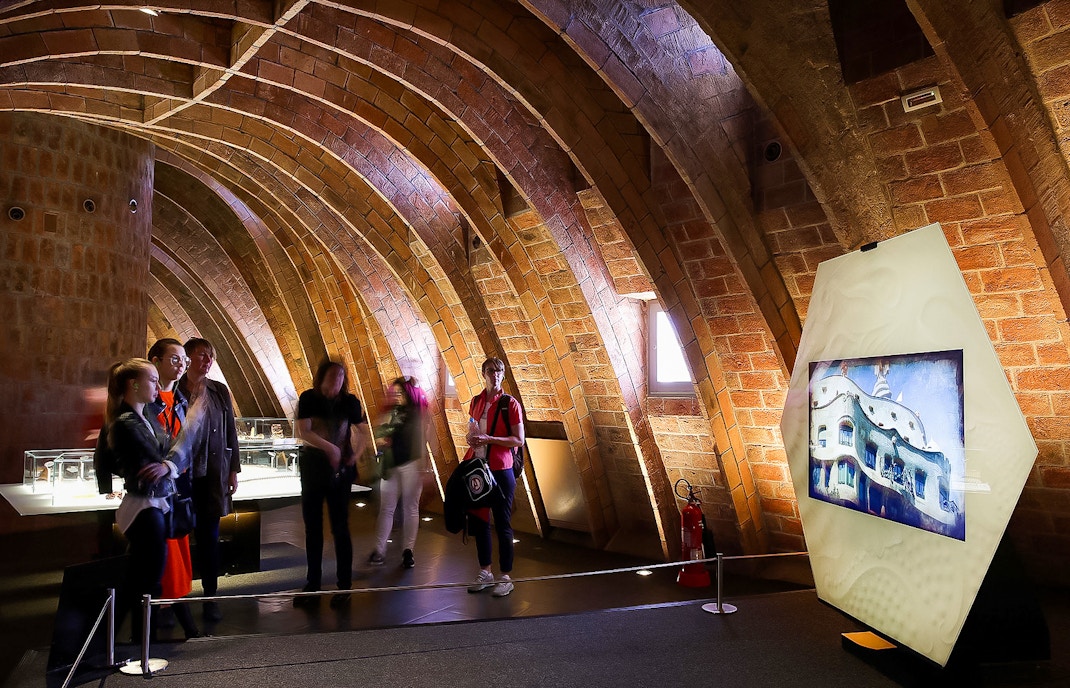
The Espai Gaudí used to be an attic with rib-like arches built around the washing rooms. Today, it has been converted into a museum honouring the iconic works of Antoni Gaudí, his life and his original collection of pictures, building plans, videos and models.

Casa Milà | An Architectural Masterpiece

Casa Milà may not have been appreciated much when it was built, but it is a living example of Antoni Gaudí’s genius. On your trip to Barcelona, there is no way you can miss this. Book your entrance tickets and explore every corner of Casa Milà to the fullest.

Frequently Asked Questions About Casa Milà Architecture

A. Casa Milà in Barcelona was built in the Modernisme style, also known as Catalan modernism architecture.

More Reads

Inside

Rooftop

Book Now

History

Book Now