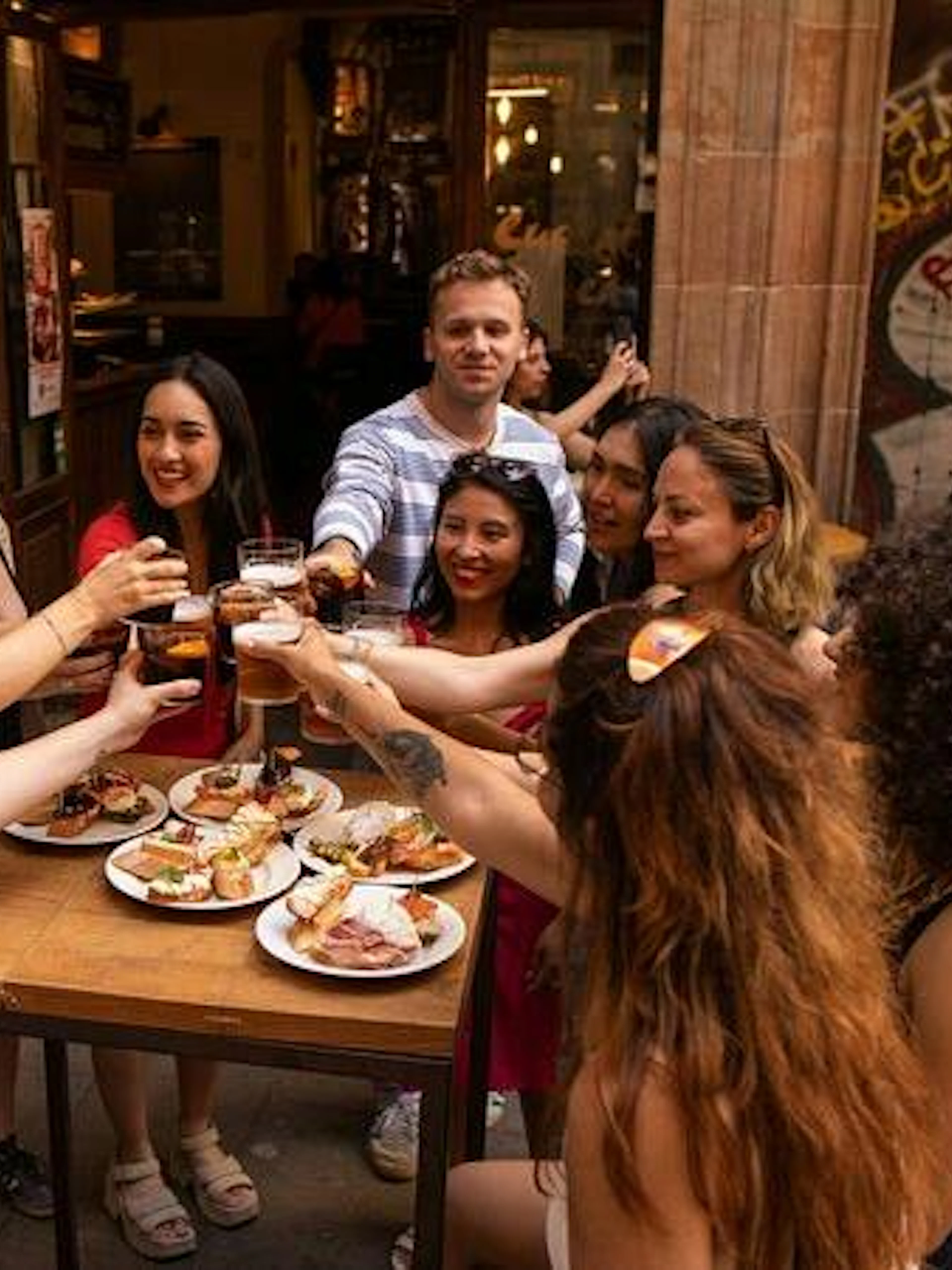
In Barcelona, you don't "order tapas"; you go for them. One small plate and one drink per bar, then you move. A tapas food tour in Barcelona teaches you the rhythm, so you stop sitting through a nine-plate dinner at the first place you found on your phone.
How Headout makes choosing experiences effortless
We curate the best ways to experience
We research and organise all unique experiences - from tickets to tours to special combos - so you get all the choices without the clutter.
We partner with the best
Every supplier is vetted for quality, reliability, and value so you only get top rated experiences. No surprises, no disappointments.
All the best options, in one place
Each experience is thoughtfully organised to give you maximum availability, great value and an easy way to choose.
Book with complete peace of mind
Free cancellations, Flexible payments, and 24/7 support - thoughtfully designed for flexibility, assurance, and total peace of mind.
Slide 1 of 41/4
Slide 1 of 4
Why a food tour is a must-do in Barcelona
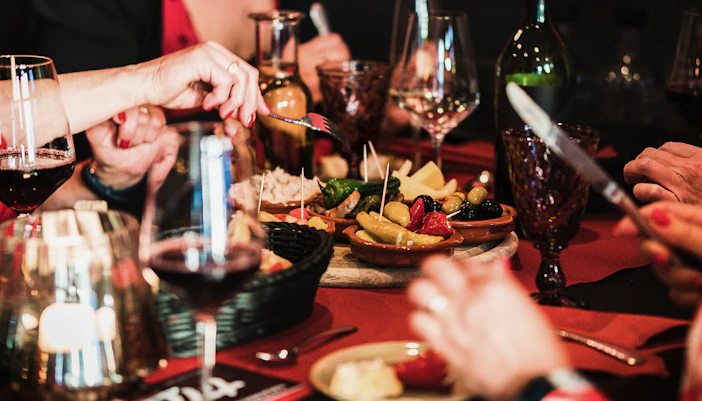
Tapas here is a verb, not a menu
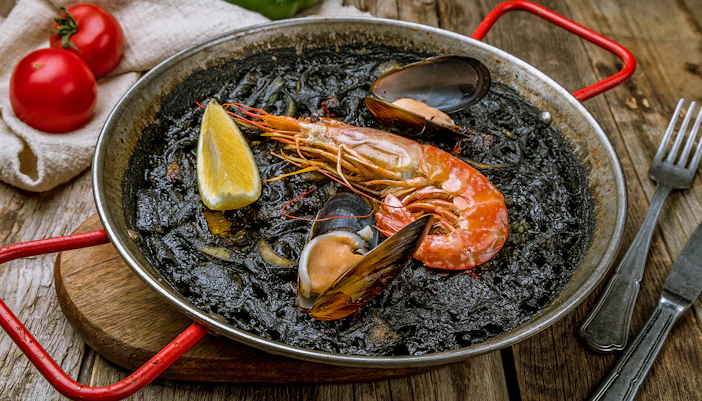
Catalan food is its own language
This is not generic "Spanish food." It's pa amb tomàquet, cava from the Penedès vineyards an hour away, vermouth on a Sunday before lunch, and pastry traditions that have zero interest in what other cities are doing. A guide translates the dishes and the attitude.
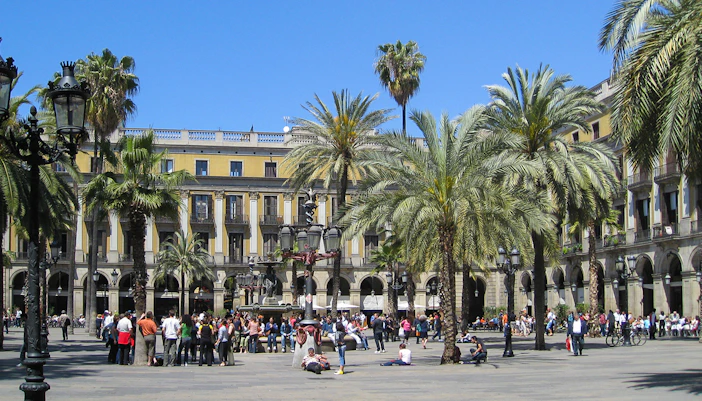
The Old Town is a medieval maze
The Gothic Quarter and El Born were built for donkeys and gossip, not for Google Maps. The family bars worth your euros are tucked into alleys you'll walk past twice without noticing. On a walking food tour, Barcelona's side streets finally make sense.
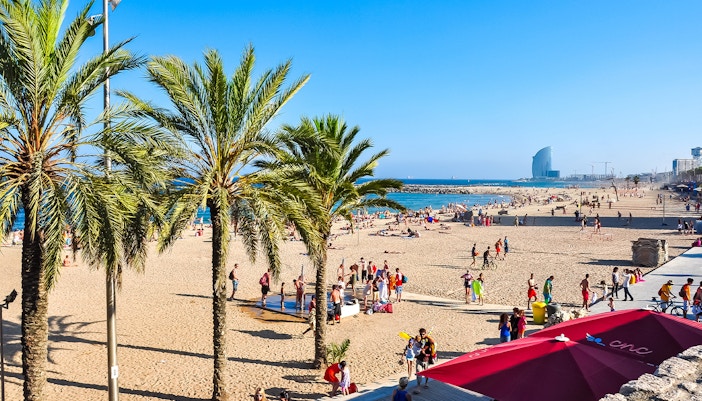
Barceloneta is where the sea shows up on your plate
The old fishermen's quarter is where the bomba was born and where rice gets taken very, very seriously. Some of the best tapas in Barcelona live here, and many food tours in Barcelona end up in the neighborhood, so you get seafood with an actual pedigree instead of a beachfront paella that came out of a freezer bag.

You drink like a local, not like a tourist
Porrón, vermut, cava, homemade sangria. Locals mostly drink the first three; visitors mostly drink the fourth. A good Barcelona tapas and wine tour lets you try all of them and pick your team.
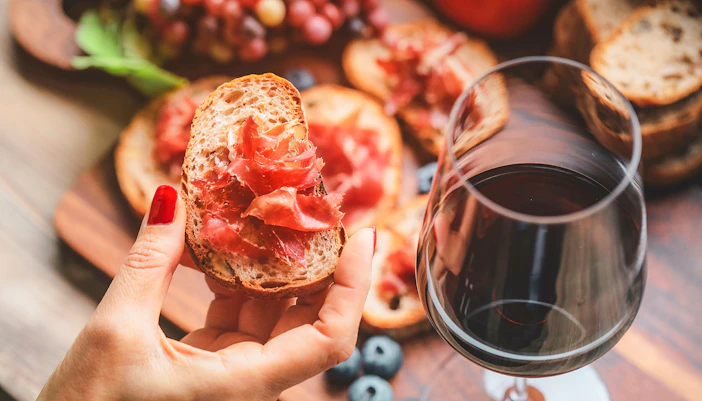
The stories come free with the ham
Why Catalans rub tomatoes on bread? Why a three-generation family bar still hasn't changed its menu? Why dinner at 7pm makes a waiter's eyebrow go up? That context from your expert guide makes all the difference.
Which Barcelona food tour is best for you
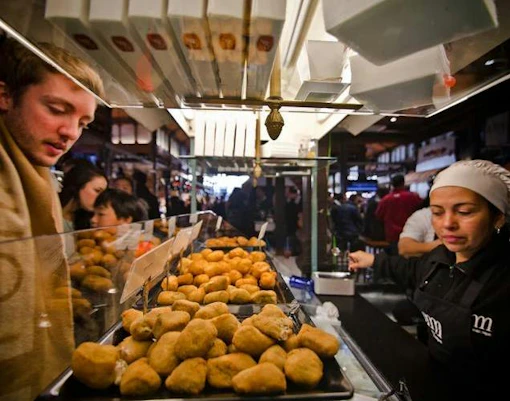
First time in Barcelona?
- Go for: an old town tapas walk that ends with paella
- Duration: 3 to 3.5 hours
You want the best food without the guesswork, and you want to finish full. This Barcelona tapas tour moves from El Born to Barceloneta over four stops: Catalan pastry, Spanish cheeses, Iberian ham and cured sausages, tapas, a seasonal pastry or cake, and a proper paella, plus one secret dish they won't tell you about until it's in front of you. Sangria keeps the conversation going. It's more than 8 tastings, so skip the big breakfast.
Only one free afternoon?
- Go for: the tour that doubles as your main meal
- Duration: 3 to 3.5 hours
If your itinerary looks like a spreadsheet, don't book a "snack tour" and then go hunting for dinner. The Old Town tour ends with paella in Barceloneta, so it counts as lunch, a neighborhood orientation, and a beach-adjacent stroll in one go. Efficiency!
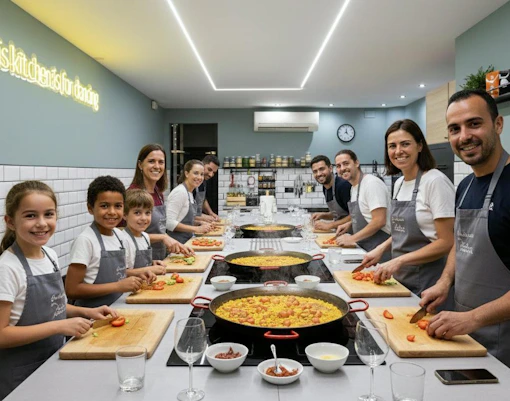
Traveling with kids?
- Go for: a hands-on cooking class
- Duration: 3 hours
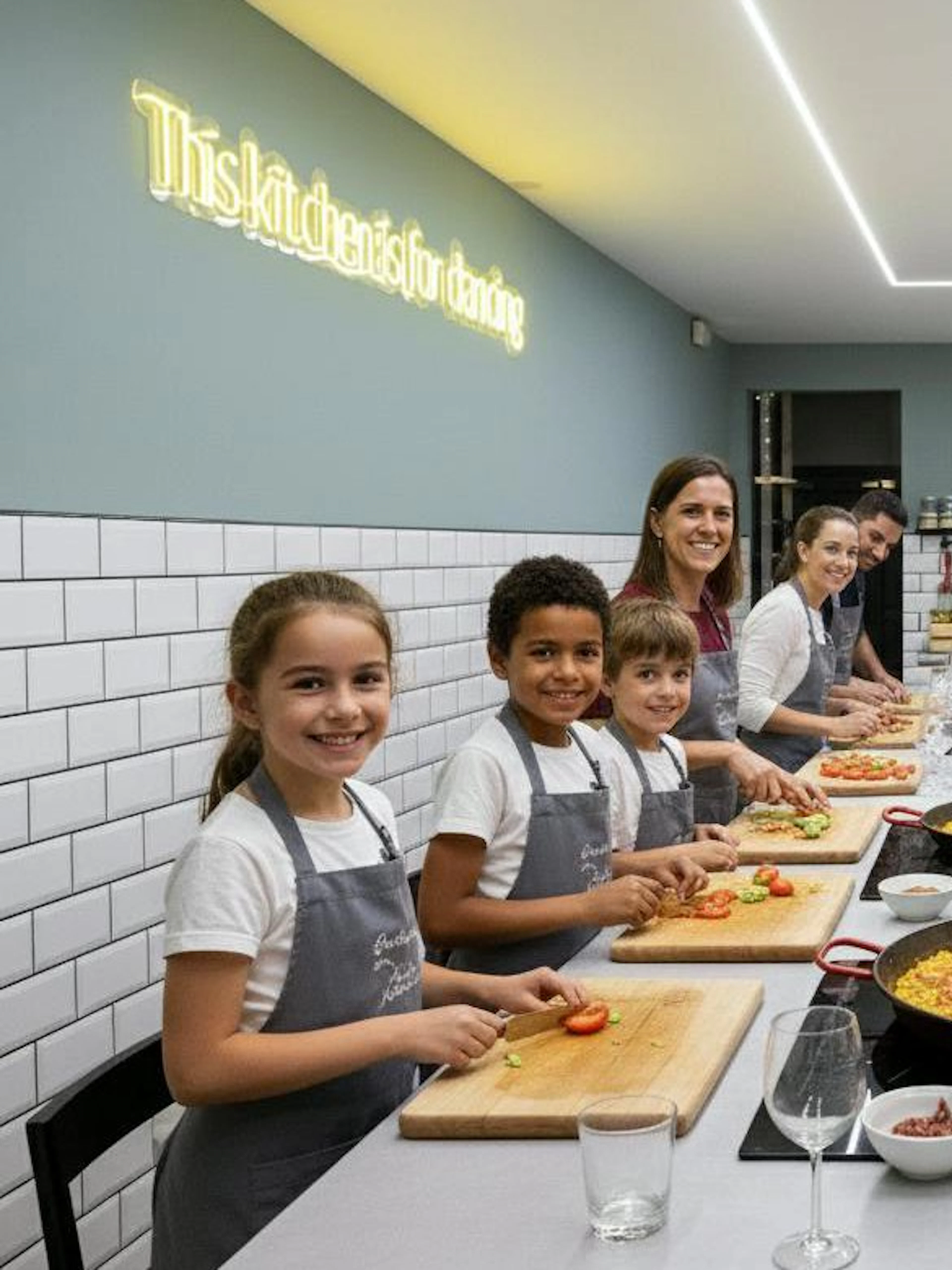
Kids who whine through a walking tour will happily spend three hours cracking eggs for a Spanish omelette and swirling chocolate for churros. This cooking class in Barcelona gives every child an apron, a chef's hat, fruit juice, and a "Junior Chef" certificate to wave around at dinner for the rest of the trip. Grown-ups get unlimited homemade sangria, which is frankly the real reason parents book it.
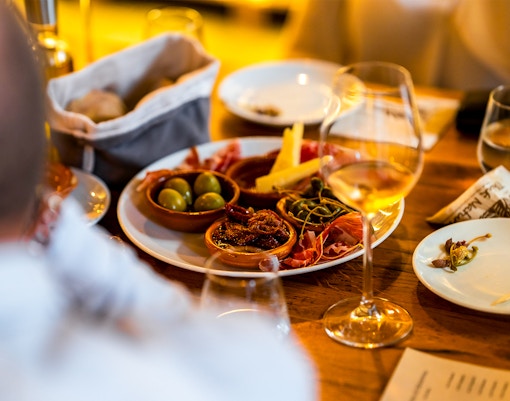
Wine on your mind?
- Go for: a tapas and wine crawl through three neighborhoods
- Duration: 3.5 hours
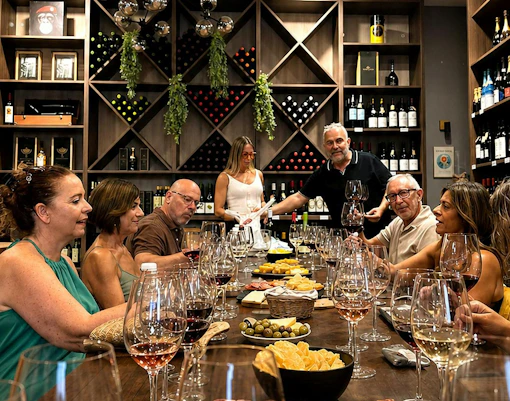
If wine tasting Barcelona-style sounds like your kind of day, then the Barcelona wine tasting tour is for people who find the word "flight" a little too fancy. You'll pour white wine from a porrón (the glass jug with a spout; aim for your mouth, not your shirt), sip a vermut cocktail, and toast with cava, Catalonia's own sparkling wine. Five stops across the Gothic Quarter, El Born, and Barceloneta, paired with six tastings, from pintxos and a bomba de Barceloneta to fideuà, the noodle cousin of paella.
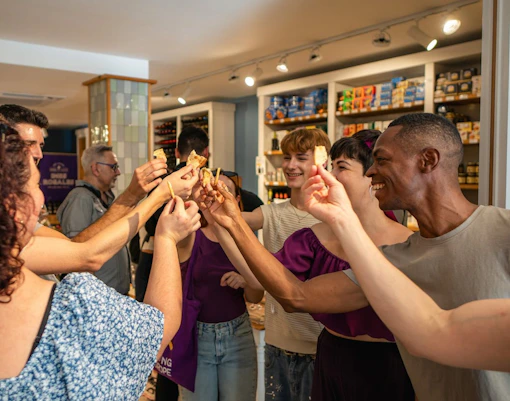
You hate crowds and love back alleys
- Go for: a side-streets tour of old family restaurants
- Duration: 3.5 hours
If La Rambla at noon gives you hives, this one's yours. The Side Streets tour sticks to places spanning three generations of the same families, capped at 12 guests so you can actually hear your guide. It's the tapas food tour Barcelona regulars would design for their own visiting friends, and the closest thing to having a Barcelona friend who knows which bartender to wave at.
You want to take Barcelona home
- Go for: a 5-course paella and tapas cooking class
- Duration: 3 hours
Souvenir magnets are fine. Being able to make seafood paella for your in-laws is power. A bilingual local chef walks you through tomato bread, Spanish omelette, chorizo in red wine, seafood paella, and Catalan coca, finished with churros and chocolate. The digital recipe book lands in your inbox afterwards, so you don't have to take notes with sangria hands.
What to eat in Barcelona
1/10
Pa amb tomàquet
Toasted bread rubbed with ripe tomato, olive oil, salt. It sounds like nothing and tastes like summer. Catalans put it under everything, like a very delicious coaster.
Bomba de Barceloneta
A fried ball of mashed potato and seasoned pork, crowned with spicy bravas sauce and garlicky aioli. Invented in Barceloneta, and eating it anywhere else feels slightly like cheating.
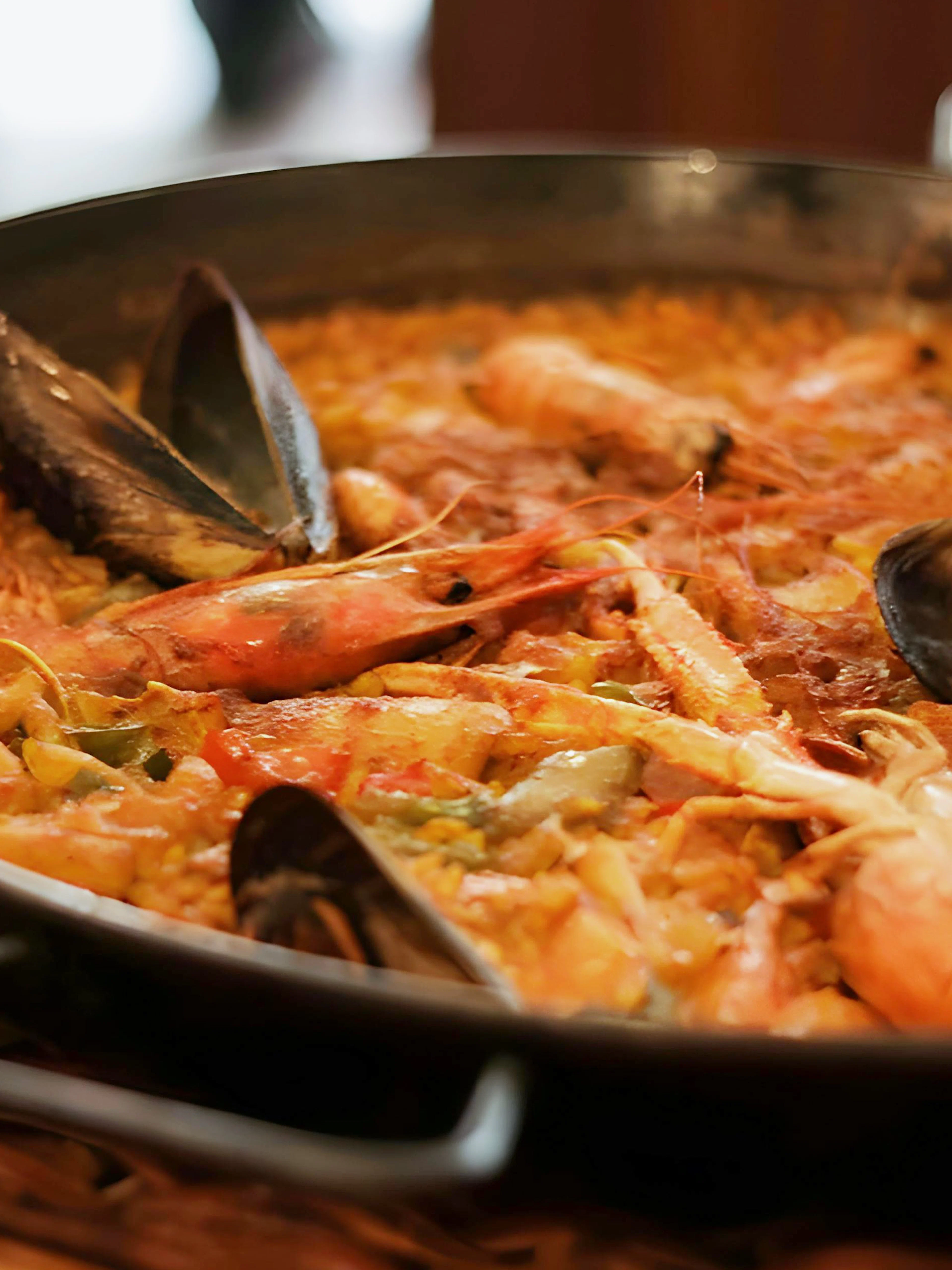
Paella de marisco
Saffron rice cooked flat and wide with seafood. The crispy bit stuck to the pan is called socarrat, and it is the whole point. Do not let anyone scrape it away from you.
Fideuà
Short, thin noodles toasted and cooked in seafood stock the way you'd cook paella rice, often with a dollop of aioli. It's a coastal favorite, and the one dish most visitors have never heard of.
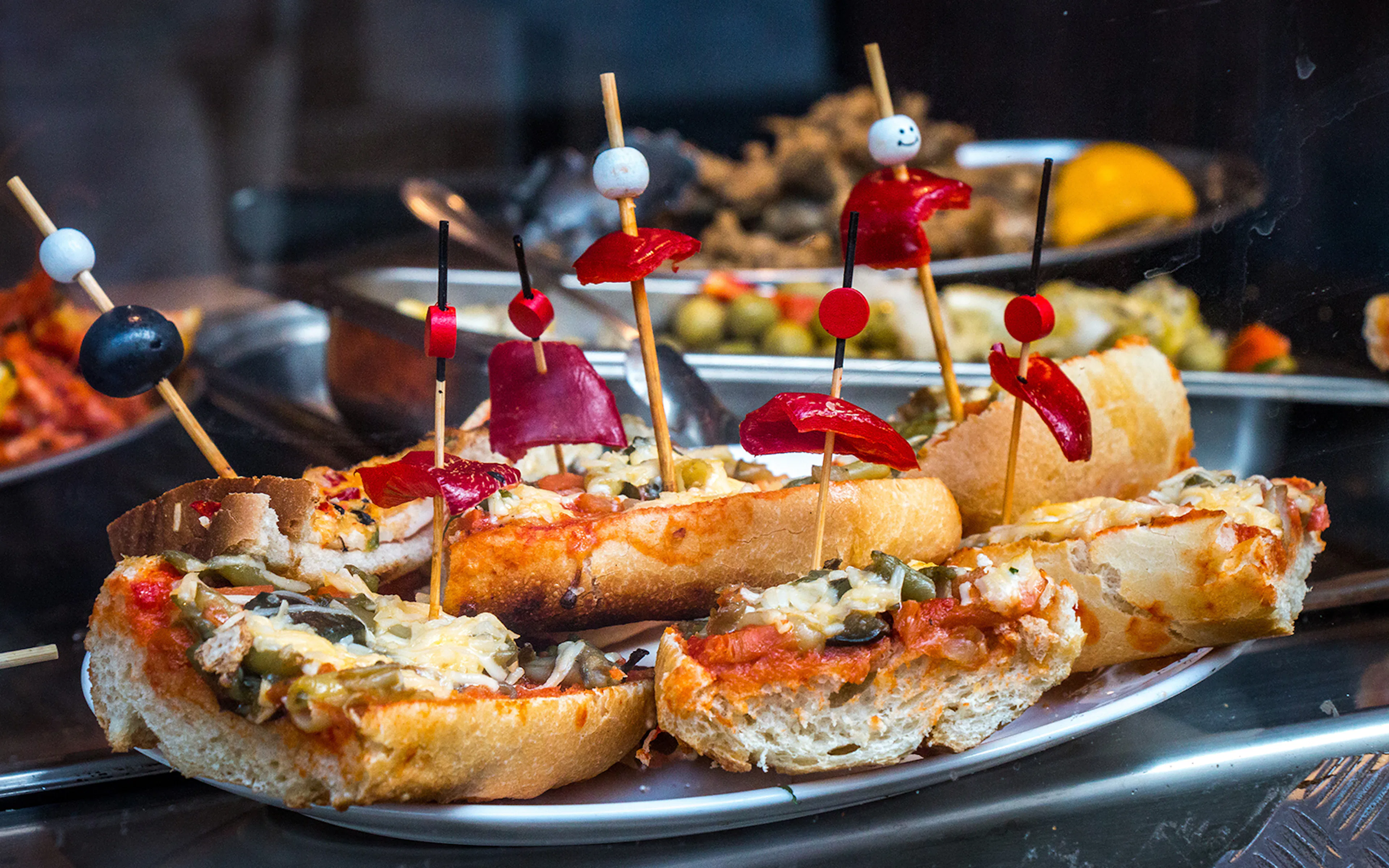
Pintxos
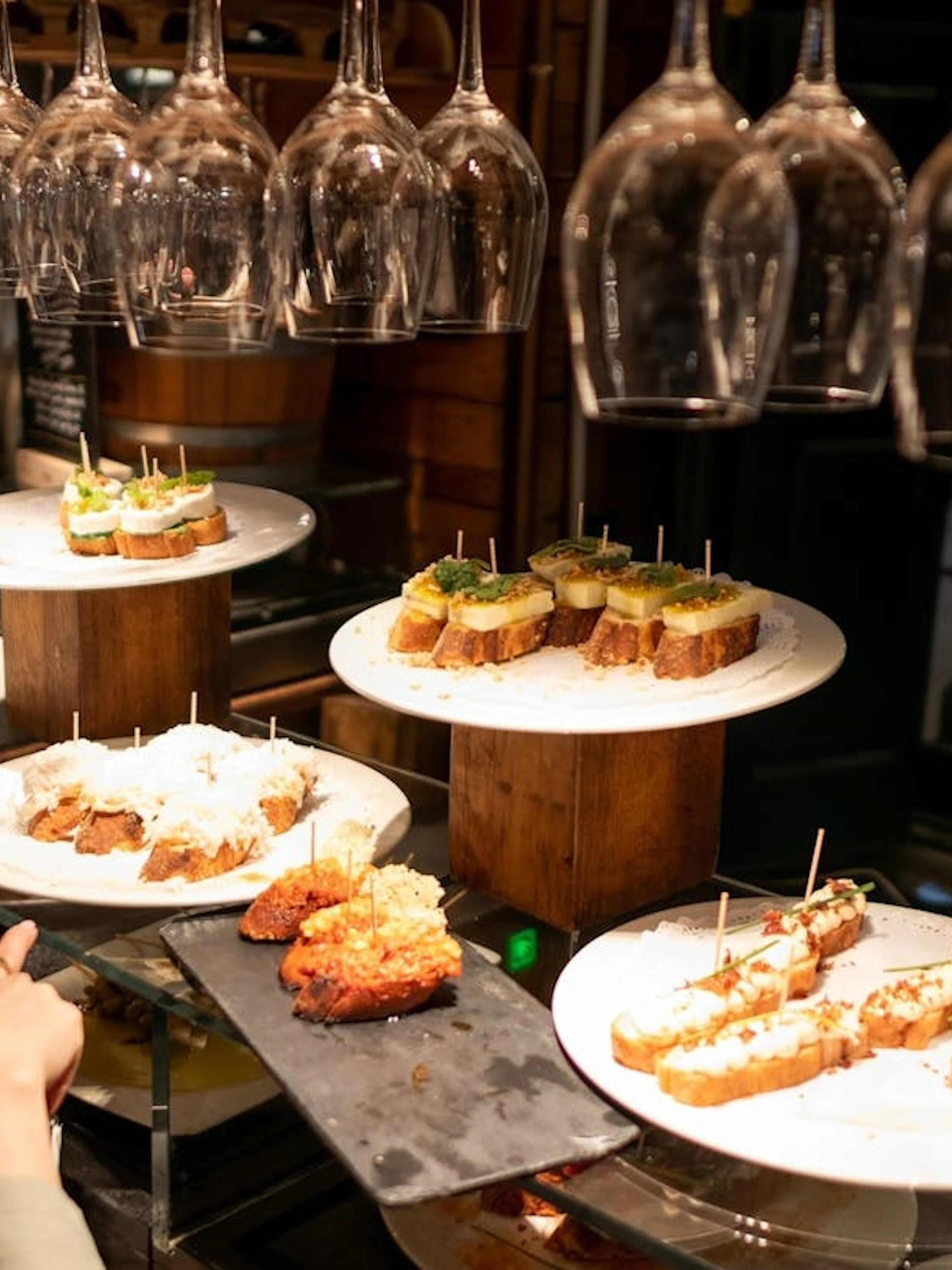
Toppings speared to a slice of bread with a toothpick. They're Basque, not Catalan, but Barcelona adopted them enthusiastically. In some bars, the toothpicks are how they count your bill.
Jamón ibérico & embutidos
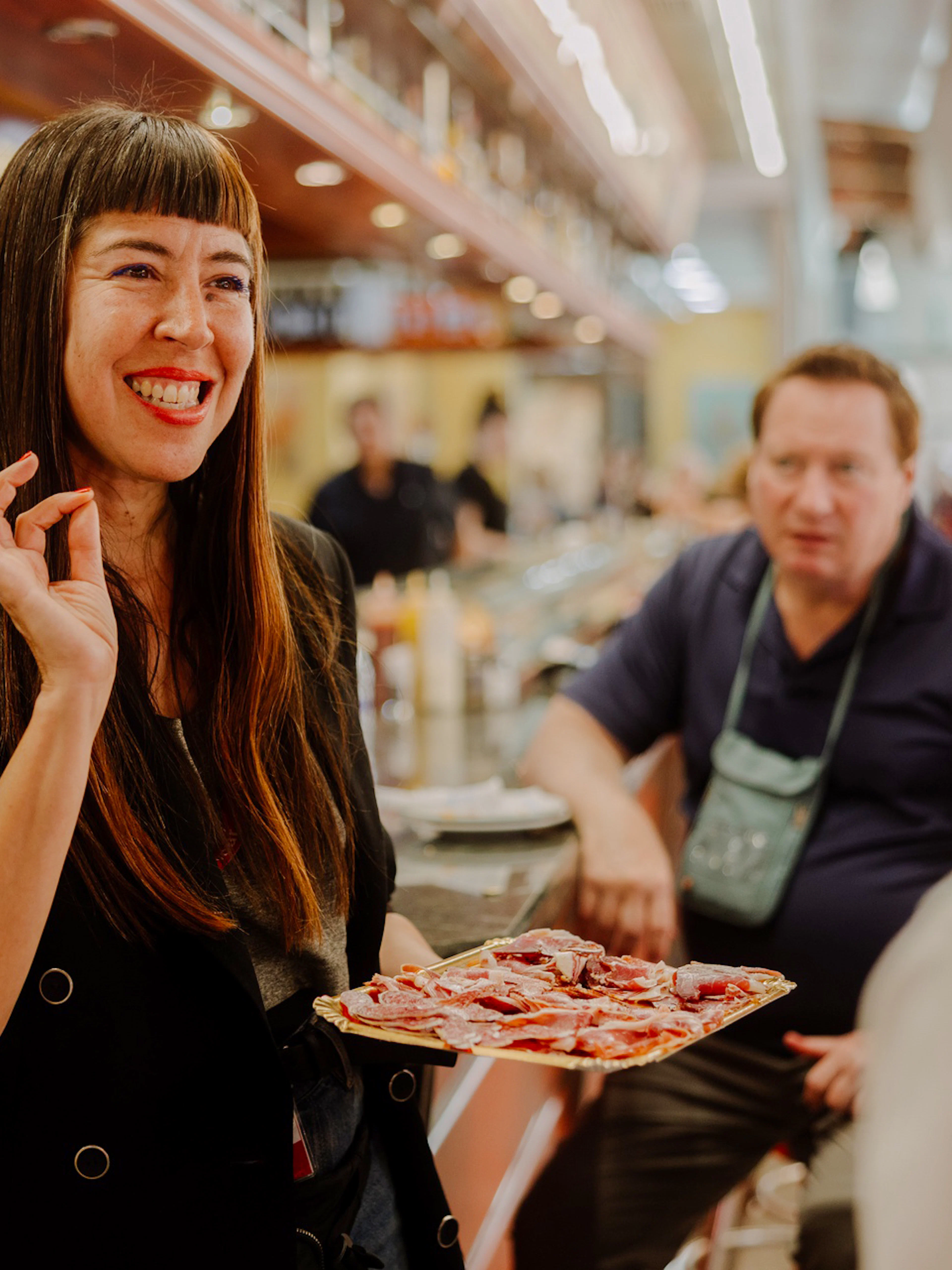
Silky ham from acorn-loving black Iberian pigs, sliced whisper-thin, plus sausages like fuet. Let it sit on your tongue for a second. It melts. You'll get emotional. That's normal.
Tortilla española
Potato and egg cooked into a thick, custardy cake, flipped with a plate and some nerve. Whether it should contain onion is Spain's longest-running family argument.
Chorizo al vino
Smoky paprika sausage simmered in red wine until the sauce turns glossy. Bread is non-negotiable for mopping. You'll cook this one yourself in the class.
Coca
Catalonia's answer to the flatbread, savory with roasted vegetables or sweet with sugar and pine nuts. It shows up at every celebration, including the midsummer Sant Joan festival.
Churros con chocolate
Ridged fried dough dunked in chocolate so thick your spoon considers standing up in it. Locals eat it for breakfast or an afternoon snack. Adopt this lifestyle immediately.
Barcelona culinary culture
- Everything happens later than you think: Lunch is the big meal and runs roughly 2pm to 4pm. Dinner starts around 9pm, and 10pm is completely normal. Show up at 7pm, and you'll have the restaurant, and the confused staff, all to yourself. A mid-afternoon tapas stop is how locals bridge the gap.
- Coffee is short and fast: Order a cafè amb llet (with milk) in the morning, a tallat (espresso with a splash of milk) after lunch. Coffee is drunk standing at the bar in about four minutes.
- Vermouth hour is sacred: Fer el vermut, "doing the vermouth," is the pre-lunch ritual, especially on weekends: a glass of sweet red vermouth over ice with an orange slice and an olive, plus chips, olives or tinned seafood. The Side Streets tour includes a vermut cocktail, so you'll get the idea.
- Wine is local and bubbly: Wine tasting, Barcelona style, is less about swirling and more about sharing. Cava comes from the Penedès region just outside the city, and locals drink it with food, not just at weddings. The porrón, a spouted glass pitcher, is passed around and poured straight into your mouth from a height. Lean forward. Trust me.
- Tipping is small and optional: Service is included in prices, so no one expects 20%. Locals round up or leave a few coins for a drink, and around 5 to 10% for great service at a sit-down meal. Your guide, of course, will not object to being thanked in euros.
- Nobody rushes you: The waiter won't bring the bill until you ask for it; that's respect, not neglect. Wave and say "el compte, si us plau." And if there's a terrace, sit on it. Barcelona eats outdoors most of the year.
Best time to take a Barcelona food tour
Barcelona feeds you well all year, but the calendar changes what's on the plate and how comfortable you are walking between plates.

April to June
The sweet spot. Warm enough for terraces, cool enough to walk for three hours happily. Spring vegetables arrive, and on 23 April, Sant Jordi fills the streets with roses and books.
July and August
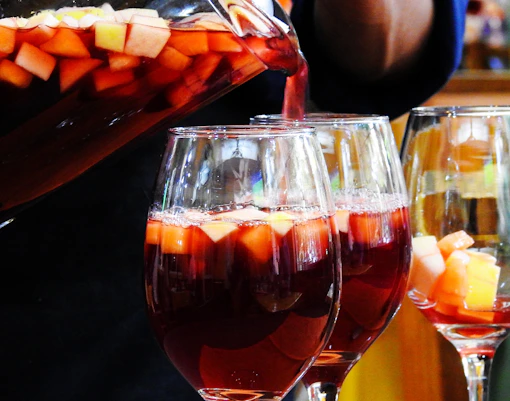
Hot, humid and busy. Book early, wear linen, and embrace sangria as hydration (plus the actual water). On 23 June, the Sant Joan festival means fireworks and a sweet coca on every table.
September to October
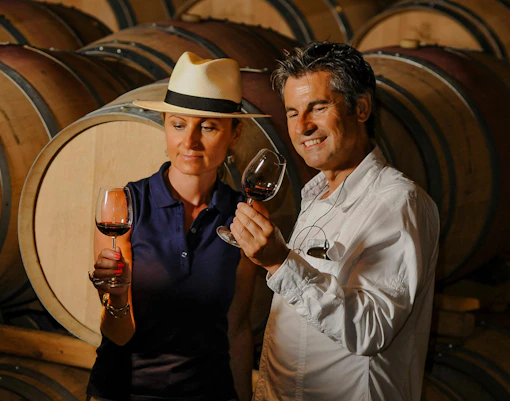
Our personal favorite. The sea is still warm, the crowds thin out, and harvest season in the nearby wine regions make wine tasting Barcelona's favorite autumn hobby. Late September brings La Mercè, the city's biggest street festival.
November to March
Mild and quiet, with shorter queues and cozier bars. Winter is calçot season, when Catalans grill giant spring onions and dunk them in romesco. Churros and thick chocolate hit different in January.
Time of day: Book midday if you want your tour to be lunch; a paella finale at 2pm is exactly how Barcelona intends it. Afternoon and early-evening slots line up with the local tapas hour, and golden light on the old town stone makes everyone's photos look expensive. For a cooking class in Barcelona, a midday session means you've cooked and eaten a five-course meal before siesta. Plan nothing strenuous after.
Tips for your Barcelona food tour
- Flag dietary needs before you book: These menus lean heavily on ham, pork, seafood, cheese and wheat. Contact the operator with allergies or restrictions in advance so they can tell you what can be swapped; don't count on changes on the day.
- Pace yourself: 8+ tastings sound like snacks until you meet the paella. On any tapas food tour Barcelona bartenders will keep the bread coming, and bread is a trap. Take a few bites of everything early on, and save room for the last stop. Nobody has ever regretted skipping breakfast before a Barcelona food tour.
- Wear shoes you'd happily walk 3 hours in: Any walking food tour Barcelona offers means around 3 hours on uneven old town stone. Bring a light layer for air-conditioned bars, sunscreen in summer, and a small bag you can keep in front of you in crowded spots.
- Book a few days ahead, or more in summer: The best Barcelona food tours here cap at 12 guests, so spring and summer dates fill quickly. Schedule your food tour early in your trip, and you'll spend the rest of it eating at places your guide tipped you off about.
- Get a transport card: The T-casual card gives you 10 journeys on the metro and bus. For the old town and Barceloneta, the Jaume I and Barceloneta stops on the yellow L4 line are handy. Better yet, walk; the neighborhoods connect easily.
- Say yes to the weird one: The secret dish, the porrón, the bomba with two sauces: on a Barcelona tapas tour, try it. The best tapas in Barcelona are rarely the ones you would have ordered on your own.
- Ask your guide everything: Where they eat on their night off, what to order at the market, which "famous" place is overrated. It's the most valuable free extra on any walking food tour in Barcelona.
- Mind the booze math: Sangria, vermut, cava, porrón: it adds up on an empty stomach. Alternate with water, which is included on every walking tour. Porrón pouring is harder after the third round, as your shirt will testify.
Frequently asked questions about Barcelona food tours
There are three of the best Barcelona food tours to choose from here. The Old Town Tapas, Sangria & Paella Tour is a walking food tour through Barcelona's El Born and Barceloneta with 8+ tastings ending in paella. The Side Streets Tapas & Wine Tour is a Barcelona tapas and wine tour across five stops in the Gothic Quarter, El Born and Barceloneta, pairing six tastings with porrón wine, vermut and cava. And the Paella and Tapas Cooking Class is a 3-hour cooking class in Barcelona where you cook a five-course meal with a local chef.
It depends on the restriction. The tastings feature ham, pork, seafood, cheese, eggs, and wheat, so vegetarians, vegans, and people with seafood or gluten allergies should contact the operator before booking to check what's possible. Please don't assume substitutions can be made on the spot.
Yes. The Side Streets Tapas & Wine Tour includes white wine from a porrón, a vermut cocktail and cava, which makes it the best pick for wine tasting in Barcelona while you snack. The Old Town tour includes sangria along with water and non-alcoholic drinks. The cooking class includes unlimited homemade sangria for adults and fruit juice for kids.
Midday works beautifully if you want your Barcelona food tour to replace lunch, since both walking tours finish with a filling dish. A Barcelona tapas tour in the afternoon lines up with the local tapas hour. Check the available start times on each tour page, and book the earliest days of your trip so you can use your guide's recommendations later.
The cooking class is the most kid-friendly choice: children get fruit juice, an apron, a chef's hat, and a "Junior Chef" certificate. The Old Town tour includes non-alcoholic beverages, but a 3 to 3.5-hour walking food tour, Barcelona cobbles and all, suits kids who are happy on their feet. The Side Streets tour is built around wine tasting, so it's best for adults.
In the cooking class, you cook alongside a local bilingual chef and instructor. On the Side Streets tour, you eat in restaurants run across three generations, and on both walking tours an expert guide shares the story behind each stop, from Catalan pastry to the bomba of Barceloneta.
The Side Streets Tapas & Wine Tour. It's a Barcelona wine tasting tour built around three very local drinks, porrón white wine, vermut and cava, each paired with tapas from three-generation family restaurants.