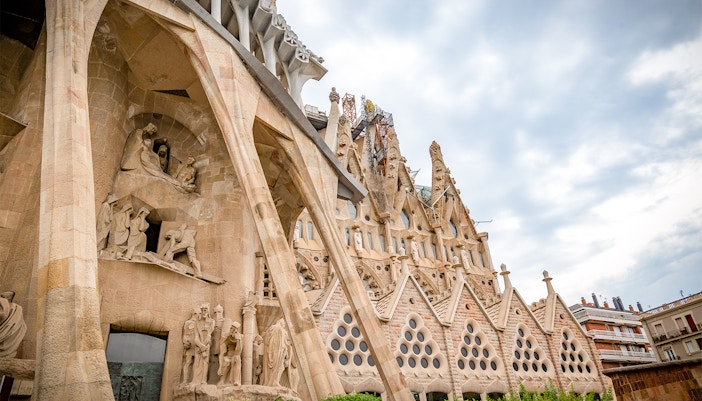
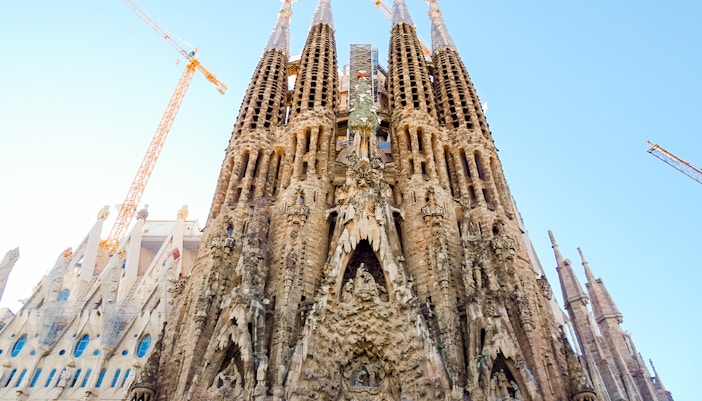
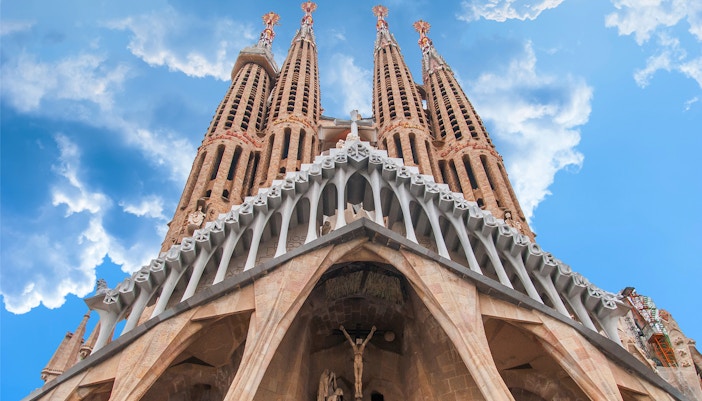
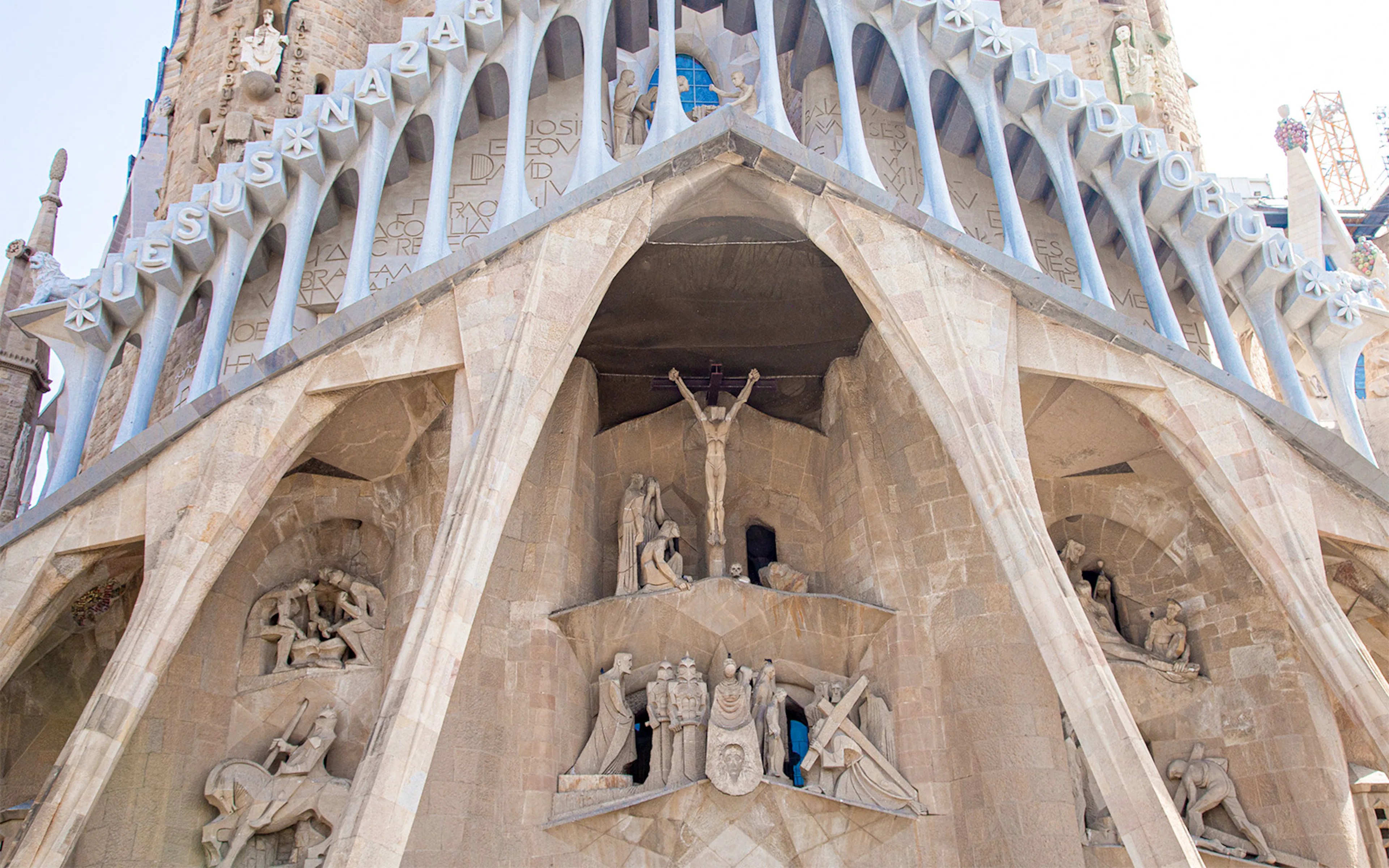
- The Passion Facade is one of the three facades of the Sagrada Familia Basilica in Barcelona, Spain.
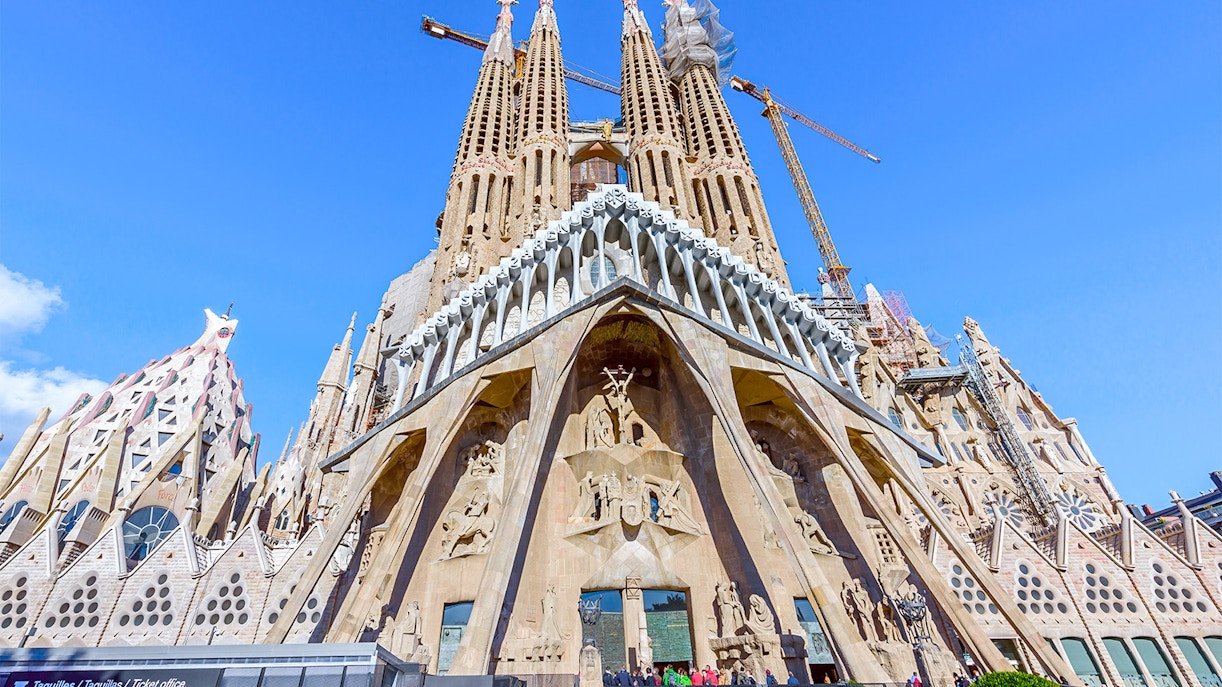
- Designed by Antoni Gaudi, the facade represents the Passion of Jesus Christ, depicting scenes from the final days of Christ's life.
- The Passion Facade has a stark and austere design, opposite to the vibrant Nativity Facade and Glory Facade.
- Per Gaudi’s vision, the facade feels like a skeleton, with pillars resembling bones holding it together.
- The Passion Facade is guarded by four stark, elongated towers, their angular lines echoing the drama of Christ’s final days. Take the elevator up one and see Barcelona from a striking new angle with the tower access tickets.
Everything you need to know about Sagrada Familia's Passion Facade
What is the Sagrada Familia Passion Facade
History of Sagrada Familia Passion Facade
- Sagrada Familia’s Passion Facade dates back to the mid-20th century, with construction beginning in 1954.
- It was conceived as a tribute to the Passion of Jesus Christ.
- The facade was guided by drawings made by Gaudi, with the initial design created by architect Francesc Quintana.
- Once construction was completed in 1976, Catalan sculptor Josep Maria Subirachs was handed the responsibility to add his unique modernist style in the 80s.
- Subirach's interpretation stirred controversy as it conveyed intense emotions about Christ's final days.
Architectural highlights of the Passion Facade
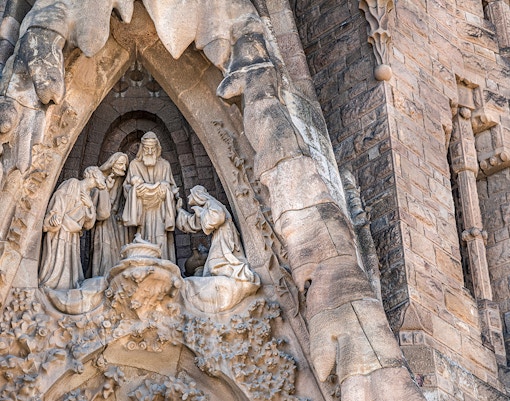
Daunting architecture
Gaudi wanted to woo visitors with the daunting architecture of the Passion facade. He achieved it easily thanks to the sculptures inspired by the Bible.
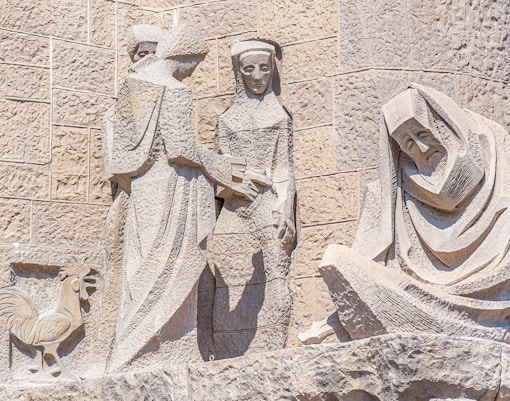
The Shame of Peter
The Shame of Peter, who disowned Jesus after the Last Supper, is one of the standout sculptures on the Passion Facade.
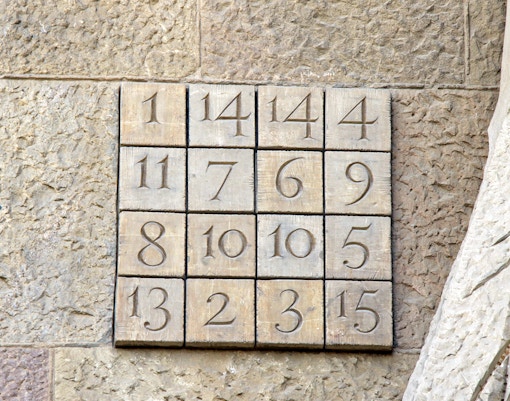
Magic Square
Next to the Kiss of Judas is the Magic Square. Add up the rows and columns and you get 33 – Jesus’ age when he died.
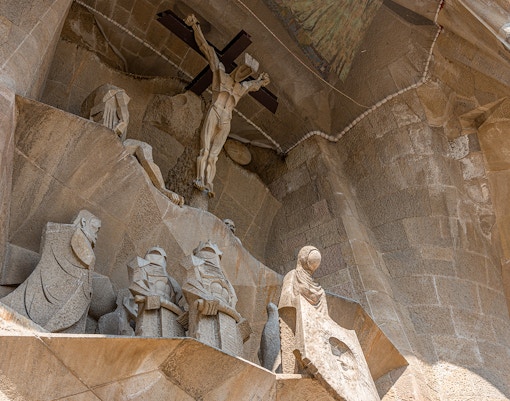
Jesus’ suffering
Head to the Passion Facade to see Christ’s suffering. You’ll see him wearing a crown of thorns.
Views from Sagrada Familia Passion Facade
1/4
Skeleton sculptures
The Passion Facade’s skeletal sculptures come alive from the top of the tower.
Mediterranean Sea
Stand atop the Passion Facade to catch moving views of the deep blue Mediterranean Sea.
Nearby towers
Catch a glimpse of the Nativity Tower and Glory Tower as you move around Passion Facade’s peak.
Beautiful Barcelona
The Passion Facade captures Barcelona’s beauty, allowing you to enjoy the city from a privileged vantage point.
Tips for exploring Sagrada Familia's Passion Facade
- The Passion Facade faces west, which means the best light hits in the afternoon. Time your visit right to watch the afternoon sun enhance the dramatic sculptures and shadows that Gaudí envisioned to represent the suffering and crucifixion of Christ.
- Tower tickets sell out fast. Book early if you want to ride the elevator up one of the towers. Note that only one tower access is included per visit—either Passion or Nativity—so plan accordingly.
- While there’s an elevator to take you up, you’ll need to walk down a narrow spiral staircase. It’s steep and can feel tight, so wear good shoes and avoid if you’re claustrophobic.
- Don't skip over the beauty of the lower level. Most people rush to the top, but the base of the Passion Facade features some of the most powerful sculptures, like the Kiss of Judas, the Flagellation, and Peter’s denial, all carved in sharp, angular style to evoke pain and sacrifice.
Frequently asked questions about Sagrada Familia Passion Facade
The Passion Facade represents the resurrection and death of Jesus Christ.
All facades at Sagrada Familia have their charm. The Passion Facade is one of the more popular ones as it narrates the troubled life of Jesus Christ.
The Passion Facade symbolizes life, death, and betrayal.
The Passion Facade focuses on the resurrection and death of Christ while the Nativity Tower narrates Christ’s birth.
Passion, Nativity, and Glory are the three facades of Sagrada Familia.
Architect Francesc Quintana designed the Passion Facade using Gaudi’s drawings.