







Experience only the best of Santa Maria Del Pi

Crafted by Headout, a global experiences brand offering curated tours, tickets & experiences. Discover with ease, book with peace.
Headout is an authorized and trusted partner of this venue


How Headout makes choosing experiences effortless

We curate the best ways to experience

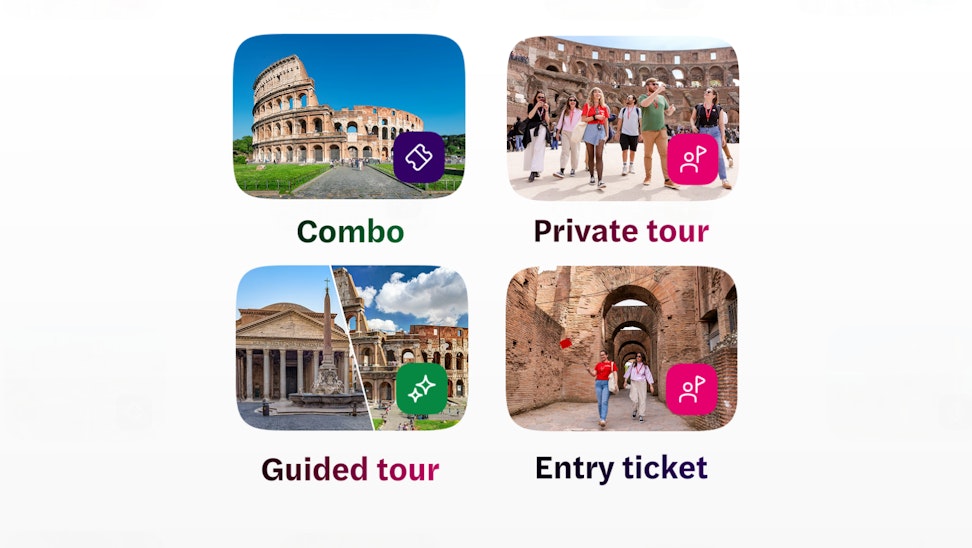
We research and organise all unique experiences - from tickets to tours to special combos - so you get all the choices without the clutter.

We partner with the best

Every supplier is vetted for quality, reliability, and value so you only get top rated experiences. No surprises, no disappointments.

All the best options, in one place

Each experience is thoughtfully organised to give you maximum availability, great value and an easy way to choose.

Book with complete peace of mind

Free cancellations, Flexible payments, and 24/7 support - thoughtfully designed for flexibility, assurance, and total peace of mind.

1/4

Slide 1 of 4
We curate the best ways to experience
We partner with the best
All the best options, in one place
Book with complete peace of mind

Quick overview

  • Ways to visit: Ticketed cultural visits cover nave and chapels, with skip-the-line guided tours in English or Spanish. Free entry is reserved for worship during scheduled services.
  • Worship hours: Tourist access may pause during Masses, weddings, and special services; check the basilica calendar for current timings.
  • Queues & security: All visitors pass entry control and possible bag checks. Guided tours skip only onsite ticket-purchase lines, not security.
  • When to book: Guided tours run with limited spots; pre-book to secure language and start time in busy periods.
  • Dress code: Modest clothing required: shoulders and knees covered, no beachwear. Bring a scarf or light layer if needed.
  • Best upgrade: Choose a skip-the-line guided interior tour for context and coordinated entry.

Know your visit options ↓

Compare your ticket options

Ticket typeEntrance usedLines skippedSecurityIncludesGuideWhy pick thisCancellation policyPrice fromRecommended experience

Skip-the-Line Guided Tour of Santa Maria del Mar Interior – Spanish Guided Tour

Main west entrance (Plaça de Santa Maria)

Ticket-purchase line for cultural visits

Mandatory screening

Skip-the-line entry plus guided cultural visit of interior (no rooftop)

Live Spanish-speaking guide inside basilica

• Guided interior visit covers nave and chapels in ~20–40 minutes • Skips onsite ticket line; Spanish commentary throughout the basilica

See ticket details

See ticket details

Skip-the-Line Guided Tour of Santa Maria del Mar Interior – Spanish Guided Tour

Skip-the-Line Guided Tour of Santa Maria del Mar Interior – English Guided Tour

Main west entrance (Plaça de Santa Maria)

Ticket-purchase line for cultural visits

Mandatory screening

Skip-the-line entry plus guided cultural visit of interior (no rooftop)

Live English-speaking guide inside basilica

• Same skip-the-line interior tour, guided in English • Interior visit typically lasts ~20–40 minutes with guide

See ticket details

See ticket details

Skip-the-Line Guided Tour of Santa Maria del Mar Interior – English Guided Tour

What to expect at Santa Maria del Mar

Carousel image for Finding the basilica in El Born
Carousel image for First steps into the Gothic nave
Carousel image for Guided stories in every arch
Carousel image for A quiet pause in the nave
Carousel image for Stepping back into El Born
Carousel image for Linking it with nearby El Born sights
1/6

Finding the basilica in El Born

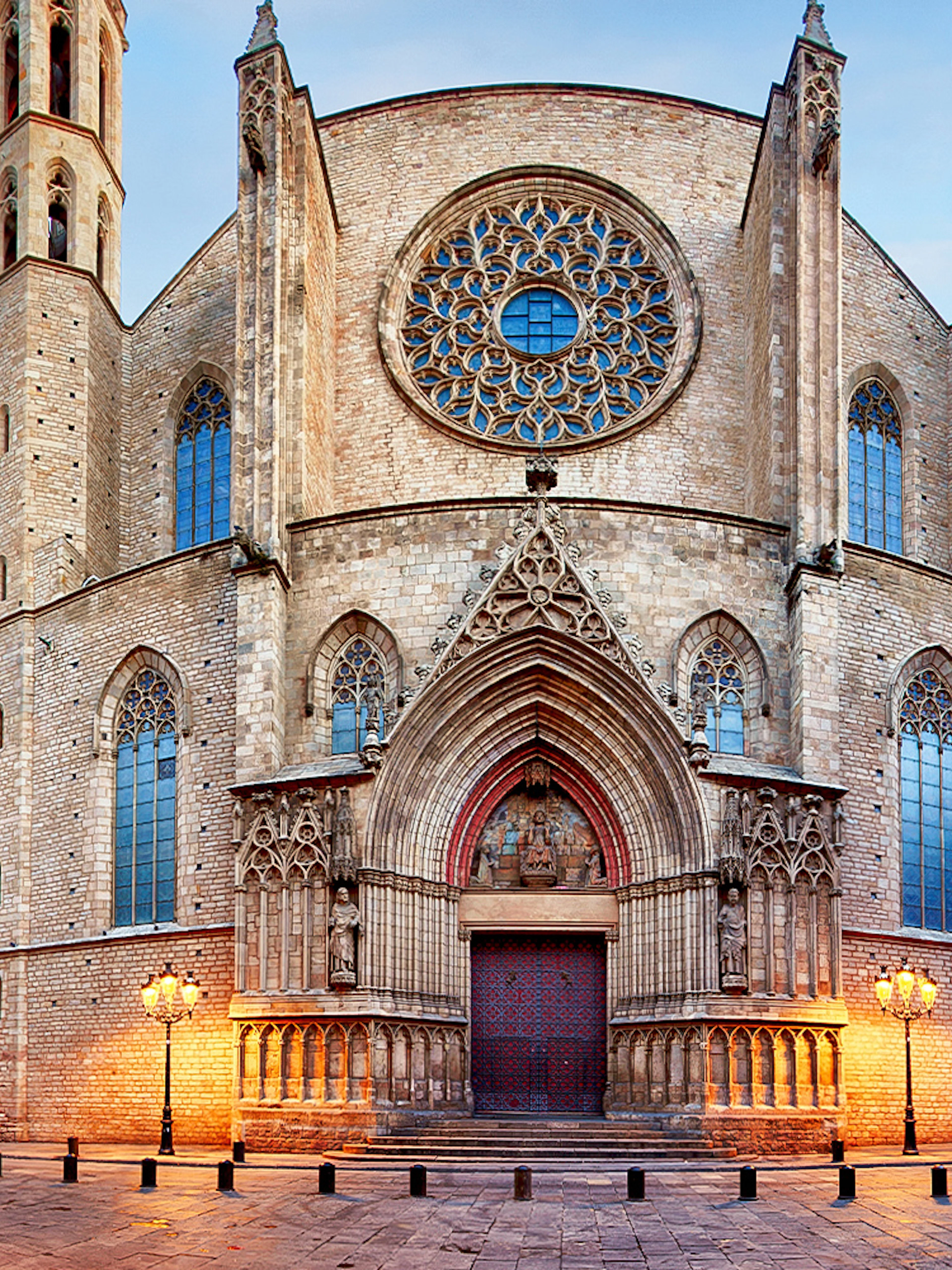
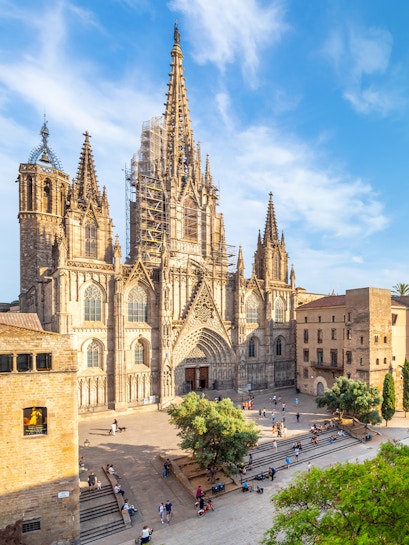
Step in from Plaça de Santa Maria, where the façade’s twin towers and Gothic portal rise above café terraces. The square hums with chatter and clinking glasses, but as you approach the heavy wooden doors, street sounds soften into a low stone echo.

First steps into the Gothic nave

Inside, a single wide nave opens ahead, framed by slender octagonal columns spaced about thirteen meters apart. Light filters through tall stained-glass windows and the west rose window, casting patches of color across bare stone, wooden pews, and small guild chapels tucked between buttresses.

Guided stories in every arch

You join a small group with an expert guide (Guided only), pausing beneath each bay of the vaults. They point out ship, anchor, and family crests, Civil War fire scars, and earthquake repairs—turning a quick walkthrough into an hour of layered, ready-made context.

A quiet pause in the nave

Take a seat halfway down the nave and look back toward the entrance. The rose window glows above the organ pipes while candlelight flickers in side chapels. Occasional organ notes or murmured prayers carry softly under the ribs of the stone vaulting.

Stepping back into El Born

Leaving through the main portal, you emerge straight into Plaça de Santa Maria again. Your eyes readjust as you swap cool stone for warm pavement, Gothic carvings for street art, incense for coffee and grilled seafood drifting from nearby tapas bars.

Linking it with nearby El Born sights

From the square, narrow streets lead you deeper into El Born. In just a few minutes’ walk you can reach the Picasso Museum, El Born Centre de Cultura i Memòria, or Parc de la Ciutadella, turning the basilica visit into a relaxed half‑day route.

Things to know before booking your Santa Maria del Mar tickets

What’s included

• Access for Mass and private prayer is generally free but limited to specific areas and times, while full cultural visits to the nave and side chapels are ticketed. This distinction explains why some visitors enter freely and others need a paid ticket.

• Standard cultural tickets cover a self-guided interior visit. Guided products add a live guide, and some official tours also include rooftop/terrace access; these roof sections are only included when explicitly mentioned and are not part of basic entry.

Booking window

• Walk-up cultural entry is often feasible outside peak times, but official rooftop visits and small-group guided tours run on fixed slots with limited capacity. These structured options tend to sell out faster on weekends and in high season, especially popular language departures.

Entry & access

• Tourist access usually runs through the main west portal on Plaça de Santa Maria, where staff differentiate worship-only access from ticketed cultural visits. Pre-booked guided or rooftop tours typically bypass onsite ticket-purchase lines but still follow the same entrance control and bag checks.

Ways to explore

• Core formats are a flexible self-guided interior visit, official guided tours that focus on the basilica (sometimes including rooftop terraces), and broader Gothic Quarter/El Born walking tours where Santa Maria del Mar is one stop among several. The choice shifts time commitment, narrative depth, and whether rooftop access is included.

Policies

• Tickets for guided and rooftop experiences are linked to specific start times and generally allow one-time entry, so late arrivals risk missing part or all of the visit. Re-entry with the same ticket is not standard for these structured formats.

• Rooftop tours involve multiple staircases without lift access and are unsuitable for wheelchairs or serious mobility or vertigo issues. As an active church, modest dress is expected, and tourist access can be reduced or paused during Masses, weddings, and special liturgical events.

Explore Santa Maria Del Pi

Main Nave and Octagonal Columns

Step into the wide single nave framed by slender octagonal columns and soaring vaults.

Access: Included in all cultural visits and guided tours.
Rose Window and Stained Glass

Look up to the rebuilt rose window and tall stained-glass panels glowing with color.

Access: Visible from the main nave on any interior visit.

Side Chapels and Guild Symbols

Walk chapel to chapel spotting ship, anchor, and trade emblems from medieval patrons.

Access: Included in cultural visits and interior guided tours.

Rooftop Terraces

From the terraces, see flying buttresses up close and panoramas over El Born.

Access: Only on official rooftop tours; stair access, ticketed separately.

Plaça de Santa Maria

Pause in the square outside to photograph the façade and watch El Born life.

Access: Free public square, always outside the ticketed area.

Highlights of Santa Maria del Mar

Carousel image for Main nave and central space
Carousel image for Octagonal columns and ribbed vaults
Carousel image for Rose window
Carousel image for Side chapels between buttresses
Carousel image for High altar and presbytery
Carousel image for Stained-glass windows along the nave
Carousel image for Organ and music area
Carousel image for Rooftop terraces
Carousel image for Bell towers
Carousel image for Plaça de Santa Maria
Carousel image for Commemorative plaques and restoration traces
Carousel image for Guild-related iconography
Carousel image for West façade and main portal
Carousel image for Exterior buttresses and roofline
1/14

Main nave and central space

Location: Main Nave
Here the basilica’s hall-like Catalan Gothic design feels most unified. Stand near the entrance and notice how the wide single nave, open sightlines, and distant altar pull your gaze straight through the building.

Octagonal columns and ribbed vaults

Location: Nave and Aisles
These slender octagonal pillars carry the immense stone ceiling. Look up where the ribs branch from each column, forming a web that guides your eyes along the nave and emphasizes the building’s height and rhythm.

Rose window

Location: West End / West Façade
This large circular stained-glass window anchors the west end. From inside, notice how its colored light fans across the nave; from the square, study its stone tracery set above the main portal.

Side chapels between buttresses

Location: Side Chapels
Small chapels tucked between the outer buttresses line both sides of the nave. Step into a few and observe altars, statues, and heraldic shields that reveal which medieval guilds and families once sponsored each space.

High altar and presbytery

Location: Sanctuary (East End)
This raised eastern area is the basilica’s liturgical center. Notice the relative simplicity of today’s altar and furnishings, a result of rebuilding after the 1936 fire destroyed many earlier baroque decorations.

Stained-glass windows along the nave

Location: Upper Nave and Apse
Rows of tall stained-glass windows line the upper walls and apse. Watch how shifting daylight changes their colors; some panels are centuries old, others 20th-century restorations, differences you can spot in style and tone.

Organ and music area

Location: West End Gallery
High above the nave near the west end, the organ supports the basilica’s music. When it plays, notice how sound lingers under the vaults and fills the hall in a broad, resonant wash.

Rooftop terraces

Location: Rooftop Terraces (Guided Tour Area)
Accessible on guided tours, these terraces run along the upper outer walls. From here, observe the flying buttresses, tower tops, and roof tiles while taking in wide views over El Born and toward the sea.

Bell towers

Location: Exterior Bell Towers
Two square bell towers frame the basilica’s silhouette. From the square or rooftop, compare their upper sections and notice how their simple profiles rise cleanly above El Born’s low rooftops and narrow streets.

Plaça de Santa Maria

Location: Front Square
This compact square fronts the west façade and introduces the church’s scale. Step back here to photograph the full height, then turn around and notice how surrounding cafés contrast with the basilica’s austere stone walls.

Commemorative plaques and restoration traces

Location: Interior Walls and Chapels
This basilica carries visible memories of damage and repair. As you walk, look for plaques referencing earthquakes or the 1936 fire, and for darker stone patches that subtly reveal where restoration work took place.

Guild-related iconography

Location: Side Chapels and Decorative Details
Many chapels and decorations reflect the merchant and craft guilds that funded construction. Search carvings and shields for ships, anchors, or trade symbols, small details tying the church closely to Barcelona’s medieval working community.

West façade and main portal

Location: West Façade
The west façade facing the square is plain but monumental. Notice the tall Gothic doorway beneath the rose window and how its strong vertical lines contrast with the livelier scale of Plaça de Santa Maria.

Exterior buttresses and roofline

Location: Exterior Walls and Roof
Walk around the exterior to see the buttresses projecting from the walls. Observe how they mark the position of interior chapels and carry the weight of the vaults, while the roofline keeps the silhouette understated.

Plan your visit to the Basílica de Santa Maria del Mar

Timings

  • Visiting hours for cultural/tourist access vary by day and season; check the official website’s calendar before you go.
  • Opening times for sightseeing are different from the times reserved for Mass and private prayer.
  • Last entry for cultural visits is typically shortly before closing, as indicated on the day’s posted schedule.
  • Tourist access can be paused or reduced during Masses, weddings, funerals, and other special liturgical events.
  • Most visitors spend around 20–40 minutes inside on a self-guided visit to the nave and chapels.
  • Weekday mornings and shoulder seasons usually feel calmer and less crowded than summer afternoons.

Checked: May 2026

Mass

  • Regular Catholic Masses are celebrated; specific days and times are listed on the basilica’s website and may change with the liturgical calendar.
  • Services are generally held in Catalan or Spanish, depending on the day and particular celebration.
  • Visitors, including non-Catholics, are usually welcome to attend Mass quietly and respectfully, without walking around to sightsee.
  • During Mass, tourist access is restricted; some areas may be closed and movement in the nave can be limited.
  • If you wish only to pray briefly, look for signs indicating areas reserved for private prayer separate from tourist circulation.

Location

In Barcelona’s El Born/La Ribera district, a short walk east of the Gothic Quarter.

Address: Plaça de Santa Maria 1, 08003 Barcelona, Spain (https://maps.app.goo.gl/6auMFHGgNFx1bvtM7)

Getting there

  • Metro: Take line L4 to Jaume I; walk about 6–7 minutes along Carrer de l’Argenteria to Plaça de Santa Maria.
  • Metro: Take line L4 to Barceloneta; walk roughly 9–10 minutes northwest through El Born toward the basilica.
  • Bus: Lines stopping at Via Laietana–Argenteria leave you around a 5–6 minute walk from the church.
  • Taxi/ride-hail: Ask to be dropped near Via Laietana or Passeig del Born, then follow pedestrian signs to Santa Maria del Mar.
  • Walking: From Plaça de Catalunya, it’s roughly a 15-minute walk via Via Laietana or through the Gothic Quarter streets.
  • Driving/parking: Several paid public car parks operate within walking distance; exact locations, hours, and prices vary by operator.

Entrances

  • The main west entrance on Plaça de Santa Maria, beneath the large rose window, is used by most cultural visitors and many guided tours.
  • At some times, there is a designated access for worshippers or private prayer, which may be signposted separately from the tourist entrance.
  • Pre-booked guided and rooftop tours typically start after you enter through the main door, gathering at a marked meeting point inside.
  • Tickets for cultural visits are checked at an internal control point, distinct from any area reserved solely for free access to prayer.
  • All visitors pass through a basic entry/security control; on busy weekends or high season afternoons, queues can extend into the square.
  • Door usage and routing can change during major services or events, so always follow posted signs and staff directions when you arrive.

Facilities

  • Restrooms are available within the basilica complex for visitors; exact locations are not heavily signposted, so ask staff if needed.
  • A small shop or counter sells religious items, souvenirs, and books or leaflets about the basilica’s history and architecture.
  • Benches and pews throughout the nave provide plenty of seating for rest, quiet reflection, or prayer during your visit.
  • Designated candle-lighting areas in some side chapels let you make offerings in line with local devotional customs.
  • Basic information panels and signage inside share key historical and architectural details, often in more than one language.
  • Cloakrooms, luggage lockers, public Wi‑Fi, and stroller or wheelchair rental are not clearly documented; plan to keep belongings with you and rely on personal mobile data.

Accessibility

  • Interior floors are mostly level stone, but the official information does not clearly describe a fully step-free entrance or complete step-free route.
  • Wheelchair users can likely access at least part of the nave, though minor thresholds or small steps may be encountered in some areas.
  • Rooftop and terrace tours require climbing multiple flights of narrow stairs and are not suitable for wheelchair users or those unable to manage stairs.
  • No elevators or lifts to the roof are documented in official or tour descriptions; rooftop access should be assumed stair-only.
  • Specific aids such as hearing loops, Braille materials, or structured audio-description resources are not clearly mentioned in available sources.
  • Policies on guide or service animals are not explicitly detailed; contact the basilica in advance if you plan to visit with a service animal and need clarification.

Dress code

  • As an active Catholic basilica, visitors are expected to dress modestly and avoid beachwear, swimwear, or very revealing clothing.
  • Plan to cover shoulders and knees; short shorts, mini skirts, strapless tops, or very low-cut garments may be considered inappropriate.
  • Carrying a light scarf, shawl, or cardigan makes it easy to cover bare shoulders or adjust your outfit before entering.
  • Head coverings are not generally required for women, but men may be asked to remove hats or caps once inside the church.
  • Staff and signage can refuse entry, or limit where you may go inside, if your clothing is judged disrespectful to the sacred setting.
  • Note: Dress expectations and enforcement can vary, but arriving conservatively dressed is the safest way to avoid being turned away or restricted.

Rules

  • Please maintain a quiet, respectful atmosphere; speak softly, and avoid phone calls or loud conversations inside the basilica.
  • Follow staff instructions, especially during Masses, weddings, funerals, or special events, when certain areas may be closed to tourists.
  • Photography is often restricted during services; flash, tripods, and taking close-up photos of people at prayer may be prohibited at any time.
  • Eating, drinking, and smoking (including e‑cigarettes and vapes) are not allowed anywhere inside the church.
  • Large luggage, bulky backpacks, sharp objects, and any items considered unsafe can be refused at security, and bags may be inspected.
  • Children are welcome, but accompanying adults must ensure they move calmly, avoid running or shouting, and respect the prayerful environment.

Tips & guidelines

  • For a calmer visit, aim for the first cultural-visit slot of the day; mornings usually mean fewer tour groups and softer light through the stained glass.
  • On entry, walk directly to the high altar, then return along each side, stepping into every chapel; it’s the easiest way to catch guild symbols and historic plaques.
  • For rose-window photos, stand halfway down the nave facing the main doors; for ceiling shots, stand at the very center and shoot straight up to include columns and ribs.
  • Check the online calendar before you go; weddings, funerals and major Masses can limit sightseeing access. If you want to attend Mass, arrive early and skip photography entirely.
  • Combine the basilica with the Picasso Museum and El Born Centre; start at the church, then walk through Passeig del Born so you’re always moving eastward without backtracking.
  • From Jaume I metro, follow Carrer de l’Argenteria straight until the square; this avoids the most confusing alleys and brings you directly to the main façade.
  • Even on a tight schedule, give yourself at least 30 minutes inside, including five to sit quietly; rushing straight through the nave means missing details in the chapels and windows.

Frequently asked questions about Santa Maria del Mar tickets

Tourist visits to the nave and chapels are generally ticketed. Access for Mass or private prayer may be free but limited to specific areas and times.