- Distance: 3-min walk (≈200 m)
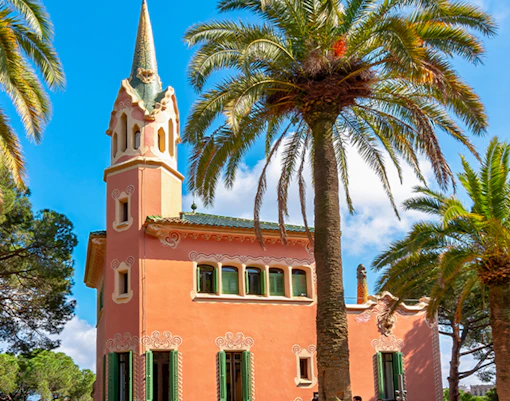
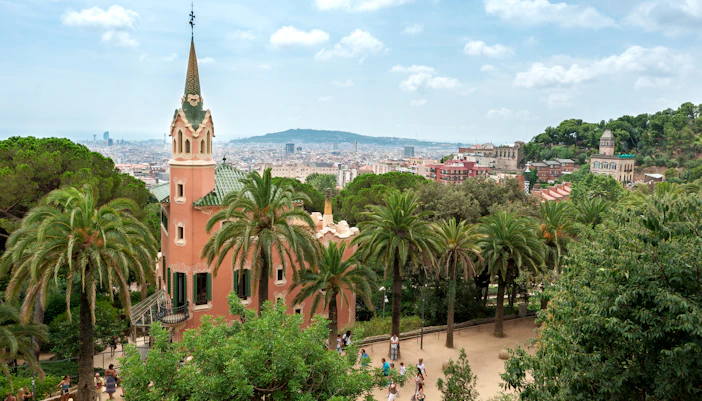
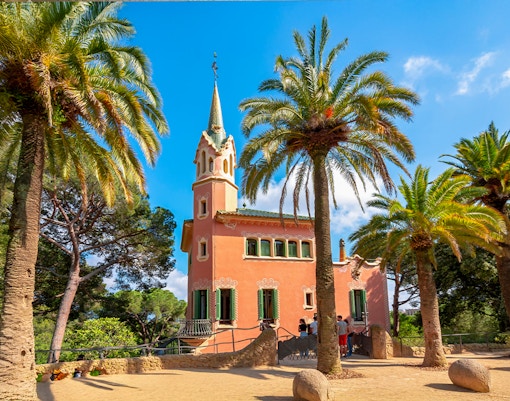
- Peek into Gaudí’s domestic world inside the park
- Cost: From €6
Top things to do near Park Güell
Park Güell sits high above Barcelona between Gràcia, El Carmel, and the upper edge of Eixample, so you’re well placed to keep exploring after your visit. Close to Park Güell, you’ll find Gaudí houses, neighborhood squares, viewpoints, and green spaces, many within 20 min on foot or a short ride downhill. If you plan the next stop well, the area feels far less isolated than it first appears, and much easier to explore efficiently.
Top things to do near Park Güell
See more Gaudí with one pass
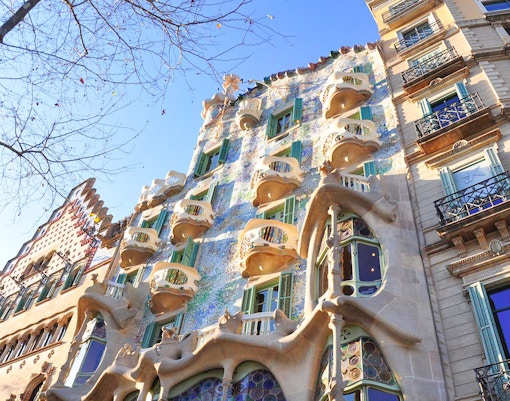
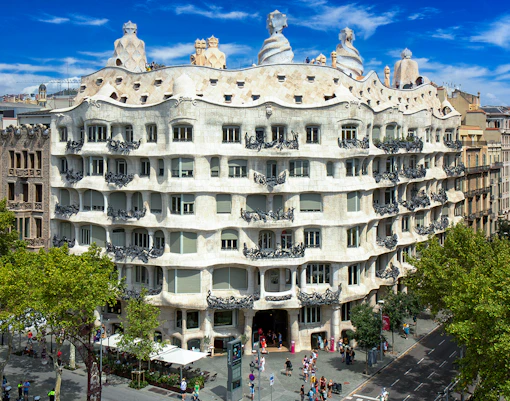
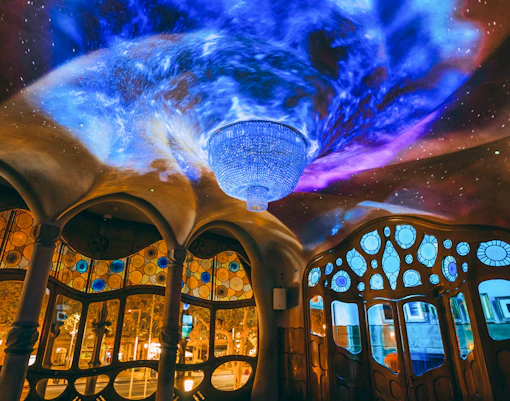
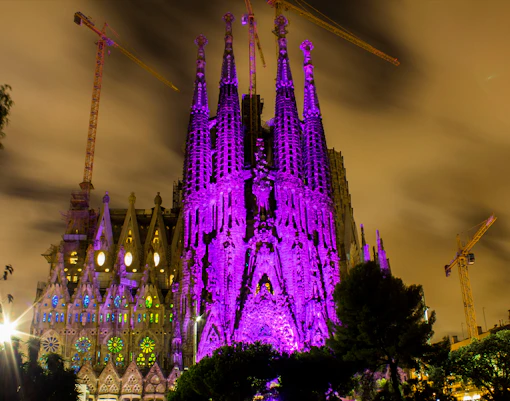
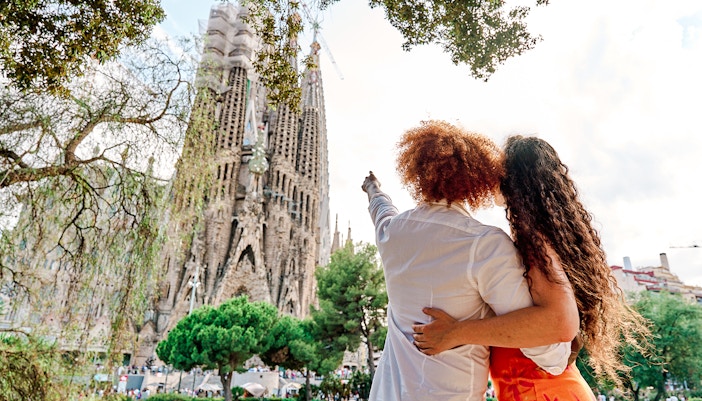
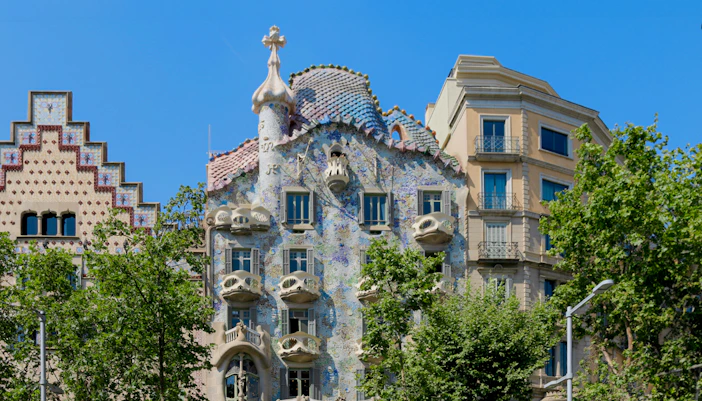
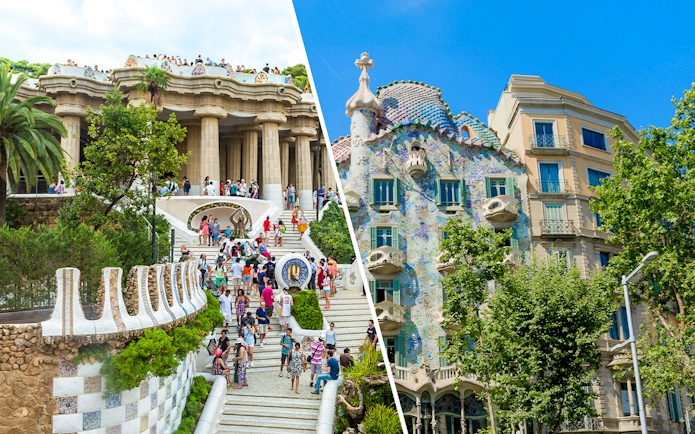
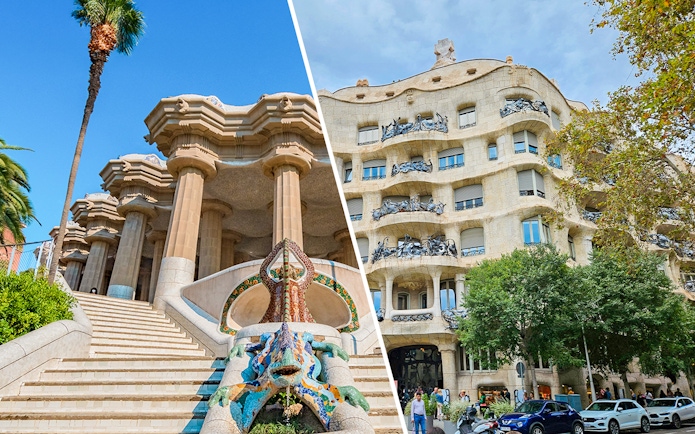
The Headout Barcelona Pass lets you combine Park Güell with big-hitters like Sagrada Familia, Casa Batlló, and La Pedrera-Casa Milà on one flexible pass. It’s the simplest way to keep your Gaudí day going without juggling separate bookings and transport decisions.
Landmarks near Park Güell
Taste Gràcia after your park visit
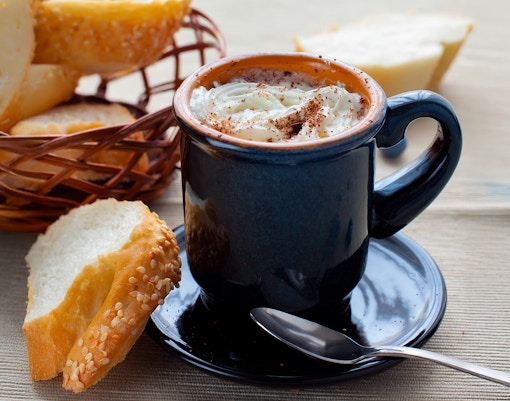
The steep lanes around Park Güell open into one of Barcelona’s best eating neighborhoods. Head downhill into Gràcia for vermouth bars, chocolate cafés, and proper Catalan lunch spots that feel more local than the souvenir-heavy strips nearest the main entrance.
Where to eat & drink near Park Güell
Budget friendly things to do near Park Güell
Gardens and parks near Park Güell
Public squares, streets, and more
Nightlife and evening activities
Family-friendly experiences
Shopping near Park Güell
How to plan your day near Park Güell
Path: Park Güell → Gaudí House Museum → Carrer Verdi coffee stop → Plaça de la Virreina
- Park Güell highlights – 45 mins
Start with the Monumental Zone, then linger briefly at the terrace and serpentine bench before the largest photo bottlenecks build. Book tickets →
- Gaudí House Museum – 25 min
Add a short interior visit for context on the architect’s personal world without leaving the park area. - Walk downhill to Carrer Verdi – 20 min
This descent feels easier than returning toward the metro and gives you a smoother neighborhood transition. - Coffee or pastry stop – 20 min
Pause on Carrer Verdi or nearby before continuing. - Plaça de la Virreina – 15 min
Finish in one of Gràcia’s calmer squares before deciding whether to stay local or head central.
Alternative: If the park feels crowded, skip the house museum and go straight to Jardins del Turó del Putxet for a quieter second viewpoint.
Path: Park Güell → Bunkers del Carmel → Gràcia lunch → Casa Vicens
- Park Güell – 1.5 hrs
Give yourself time for the Monumental Zone, the main staircase, and the terrace. Guided visits help if you want a deeper context. See options → - Walk to Bunkers del Carmel – 35 min
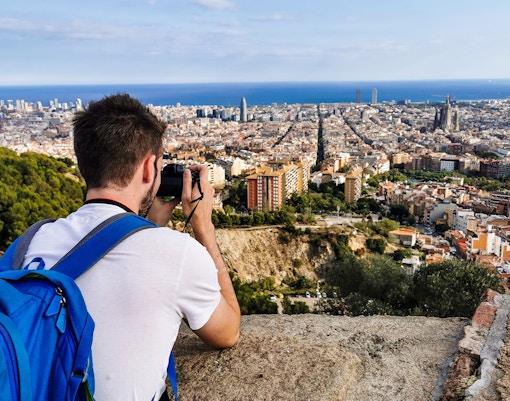
The route is short but hilly; the payoff is one of Barcelona’s broadest views. - Viewpoint pause – 30 min
Stay long enough to read the city’s layout, not just snap a photo and leave. - Lunch in Gràcia – 1 hr
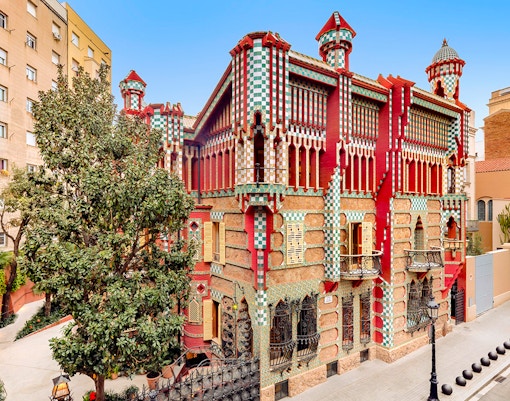
Head downhill to Bar Casi or another neighborhood favorite for a proper meal. - Casa Vicens – 1 hr
Finish with Gaudí’s first major house, which feels especially coherent after Park Güell.
Alternative: If the hill to the Bunkers feels like too much after the park, swap it for Turó del Putxet and keep the rest of the route intact.
Path: Park Güell → Sagrada Familia → Sant Pau → Gràcia lunch → Casa Batlló or La Pedrera
- Park Güell – 1.5–2 hrs
Begin early to avoid the busiest uphill rush and security bottlenecks. - Transfer to Sagrada Familia – 30 min
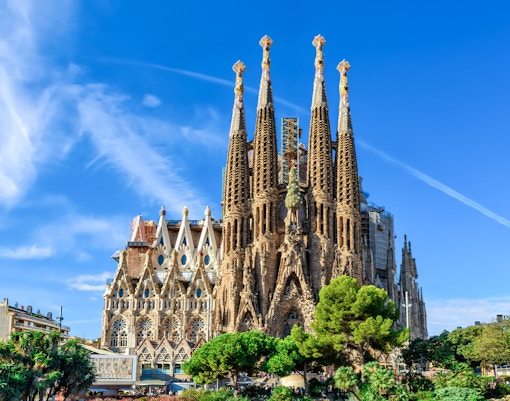
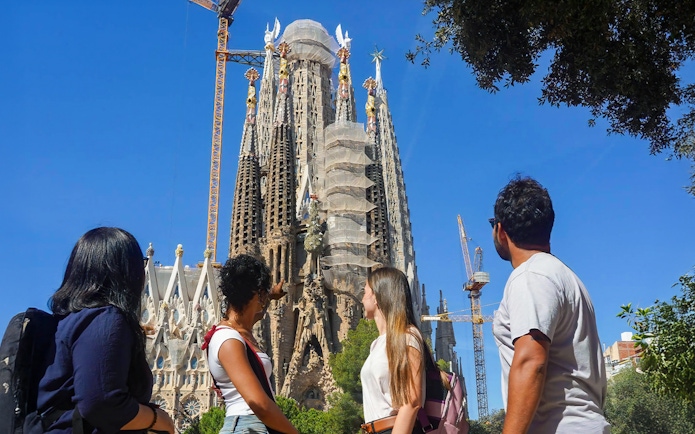
Use a taxi, bus, or metro, depending on energy level. The simplest same-day pairing is Park Güell + Sagrada Familia Fast-Track Tickets. - Sagrada Familia – 1.5 hrs
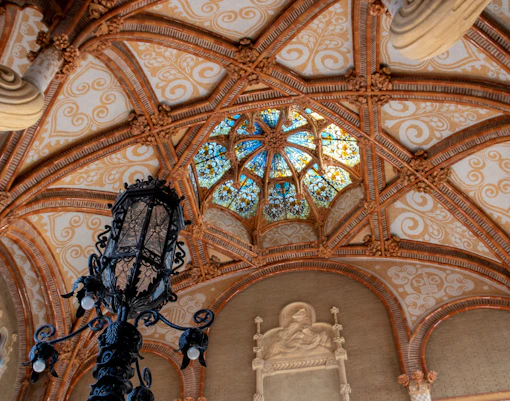
Allow time for the nave, façades, and museum areas. - Recinte Modernista de Sant Pau – 1 hr
A short continuation that adds non-Gaudí modernisme and breathing room. - Lunch and Gràcia reset – 1 hr
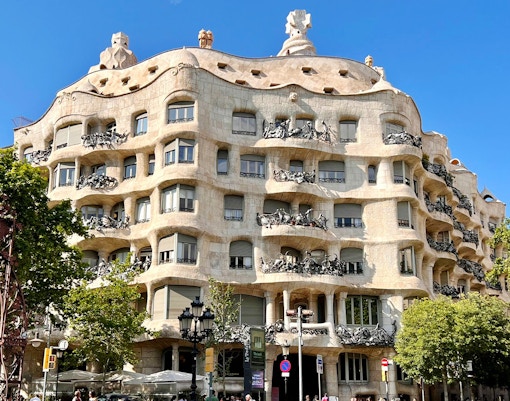
Return toward Gràcia for a slower neighborhood meal. - Casa Batlló or La Pedrera-Casa Milà – 1–1.5 hrs
Pick one, depending on your interest.
Alternative: If you want fewer transfers, skip Sant Pau and spend longer between Gràcia and Casa Vicens instead.
Path: Gràcia aperitivo → Bunkers del Carmel sunset → Plaça del Sol drinks
- Early dinner or vermouth in Gràcia – 60 min
Start downhill, where you have far more atmosphere and choice than around the main park entrances. - Walk or ride toward Bunkers del Carmel – 25 min
Time this for golden hour rather than full darkness. - Sunset viewpoint – 45 min
Stay through the shift from daylight to first city lights; that’s the most rewarding window. - Return to Gràcia – 25 min
Head back once the sky turns fully dark. - Plaça del Sol evening stop – 45 min
End with drinks and terrace life in a square that feels energetic without being over-scripted for tourists.
Alternative: If you’d rather skip the uphill final climb, ride to Passeig de Gràcia and use Casa Batlló’s illuminated façade as your evening anchor.
Path: Park Güell → snack break → Parc de la Creueta del Coll → CosmoCaixa
- Park Güell at a child’s pace – 60 min
Focus on the dragon staircase, pavilions, and lookout terrace rather than trying to cover every path. - Snack and rest stop – 20 min
Pause before anyone hits the post-sightseeing wall. - Parc de la Creueta del Coll – 35 min
Give children open space to move freely after a more structured attraction. - Transfer to CosmoCaixa – 25 min
This is the easiest rainy-day or heat-day pivot nearby. - CosmoCaixa – 1.5 hrs
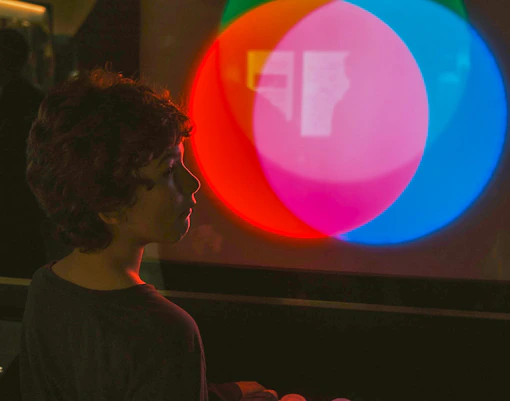
Interactive exhibits, visual science, and lower-pressure pacing make it a strong family follow-up. - Optional sweet stop in Gràcia – 20 min
Use La Nena or another casual café on the way back.
Alternative: For older children with more stamina, swap CosmoCaixa for Tibidabo and turn the upper city into a longer outing.
Path: Carretera del Carmel entrance → Park Güell Monumental Zone → taxi to Casa Batlló or Sagrada Familia
- Approach via Carretera del Carmel – 15 min arrival buffer
This is the easiest Park Güell entrance if you want to reduce steep climbs; it’s the most practical access point from taxi or bus. - Park Güell main route – 75 min
Stay focused on the core Monumental Zone rather than trying to cover every hillside path. Park Güell offers two wheelchairs for hire, subject to availability. - Rest break before transfer – 20 min
Take time before leaving the hilltop area; it reduces fatigue later. - Taxi or direct transit to Casa Batlló or Sagrada Familia – 25–35 min
Both are more straightforward than continuing on foot through the slopes. - Second attraction – 60–90 min
Choose the site with the best fit for your energy and mobility needs.
Alternative: If hill logistics feel frustrating, end after Park Güell and spend the rest of the afternoon in step-friendlier Gràcia squares rather than forcing another major transfer.
Visitor information
- Most nearby add-ons fall into two patterns: downhill walks into Gràcia within 20 min, or short bus, taxi, or metro links to bigger Gaudí sites.
- The closest useful metro stops are Line 3 (Lesseps) and Line 3 (Vallcarca), but both still involve uphill or downhill walking.
- Bus 24 is especially useful because it reduces the climb, and the Carretera del Carmel entrance is the easiest arrival point.
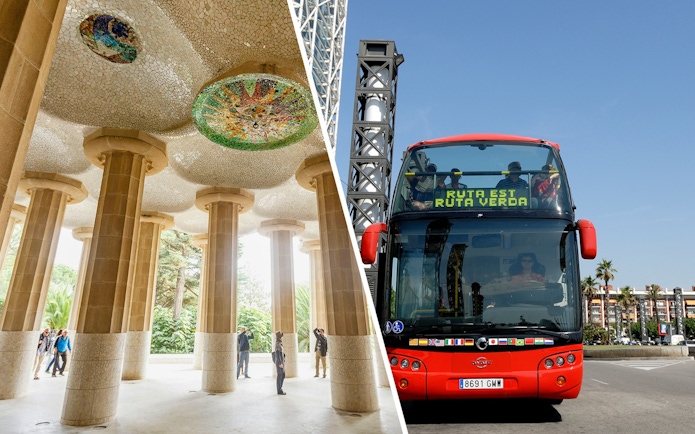
- The Barcelona Hop-On Hop-Off Green Route also serves Park Güell.
- If you want bundled transport and attractions, the Headout Barcelona Pass includes public transport options and sightseeing add-ons.
- Allow 1.5–2 hrs for Park Güell if you want the Monumental Zone without rushing.
- Guided visits usually run 60–90 mins, which is a good benchmark if you prefer structure.
- Sagrada Familia deserves 1.5 hrs minimum, and inventory rules matter here: entry is time-specific, and late arrivals are not accommodated beyond a short grace window.
- La Pedrera-Casa Milà needs about 60–90 min, while Casa Batlló is best with a reserved timed slot.
- Best overall rhythm: do Park Güell early, then head downhill or across town before the late-morning crowd thickens.
- Restrooms are easiest to access inside Park Güell and in major paid attractions afterwards; they’re less convenient once you’re wandering the hill streets between Carmel and upper Gràcia.
- For food, Gràcia is your best comfort zone, not the immediate souvenir-heavy edges by the busiest entrance.
- Carrer Verdi, Plaça de la Virreina, and Plaça del Sol all give you better sit-down options.
- Shade is limited in some exposed sections of Park Güell, so carry water and plan a café break downhill.
- Park Güell is manageable, but the hill is the real constraint.
- The attraction offers two free wheelchairs for hire, subject to availability, and the tourist coach parking area has dedicated reduced-mobility spaces.
- The easiest approach is via Carretera del Carmel, which cuts down the steepest climb.
- Sagrada Familia is wheelchair accessible, and guide dogs are welcome there.
- Casa Batlló is also wheelchair accessible.
- The main barrier is not the attractions themselves, but the steep streets and uneven effort between them, so taxis and direct bus approaches usually work better than improvised metro-and-walk combinations.
Visitor tips
Use the right entrance: If you want the least punishing approach, aim for Carretera del Carmel or take Bus 24 or a taxi. Carrer d’Olot is iconic, but arriving there on foot can feel much steeper than it looks on a map.
Go early if you want architecture, not elbows: Park Güell’s busiest photo areas clog up fast. First-entry slots make the staircase, bench, and Hypostyle Room far easier to enjoy and photograph without constant stop-start movement.
Pair uphill sights before heading down: If you want both Park Güell and Bunkers del Carmel, do them in the same block. Dropping into Gràcia and then climbing again later is the easiest way to waste energy.
Gràcia is the best next move for food: Skip the closest tourist-heavy strips and walk downhill toward Carrer Verdi, Plaça de la Virreina, or Plaça del Sol for better atmosphere and more everyday neighborhood dining.
Keep a weather-aware backup: If heat, rain, or tired kids derail your outdoor plans, switch to CosmoCaixa, Casa Batlló, or La Pedrera-Casa Milà instead of forcing another exposed hillside walk.
Book combos when you already know your second Gaudí stop: Park Güell often works best with Sagrada Familia, Casa Batlló, or La Pedrera-Casa Milà. One combined booking reduces admin and helps you avoid mismatched time slots across the city.
Frequently asked questions about things to do near Park Güell
Yes, the area is generally safe, but it feels quieter and more residential than central Barcelona. Stick to well-used routes in Gràcia, avoid isolated hill paths late, and use a taxi back if you’ve stayed at Bunkers del Carmel after dark.
It’s walkable, but not effortless. The main issue isn’t distance, it’s gradient. Downhill toward Gràcia feels easy, while returning uphill can be tiring, so plan routes in one direction and rely on buses or taxis for resets.
Gràcia’s squares and streets are the strongest local extension of a Park Güell visit. Plaça de la Virreina, Plaça del Sol, Carrer Verdi, and neighborhood spots like Bar Casi or La Nena feel more rooted in daily Barcelona life.
Parc del Carmel and the quieter edges around the park are the easiest picnic choices if you want air and views. Bring food from Gràcia first, since the immediate park surroundings lean more souvenir-snack than proper market picnic supplies.
Inside the park, the terrace and dragon staircase are the obvious classics. Outside it, Bunkers del Carmel gives you the best sense of Park Güell’s hilltop setting within the broader city, especially in late-afternoon light.
You can walk Parc del Carmel, head to Bunkers del Carmel, explore Carrer Verdi, relax in Plaça de la Virreina, or spend time in Jardins del Turó del Putxet. These all work well without another ticket purchase.
The strongest food options improve once you walk slightly downhill rather than staying beside the busiest entrances. For a better meal or café stop, Gràcia usually rewards the extra 10–20 min more than the immediate park perimeter.
Families usually do best with a mix of one major sight and one decompression stop. CosmoCaixa, Parc de la Creueta del Coll, Tibidabo, and child-friendly cafés in Gràcia all work better than stacking too many architectural visits back-to-back.
A short taxi or bus connection is usually the smoothest option, especially if you’re already tired from the hill. Metro works, but the approach to and from stations can add more uphill effort than visitors expect.
Yes. Jardins del Turó del Putxet, Parc del Carmel, and Plaça de la Virreina all feel calmer than the main exit zone. They’re good choices if you want to decompress before deciding whether to keep sightseeing or head central.