




Barcelona Tickets
Park Güell

Park Güell Viaducts

Included with Park Güell tickets

Timings

RECOMMENDED DURATION

2 hours

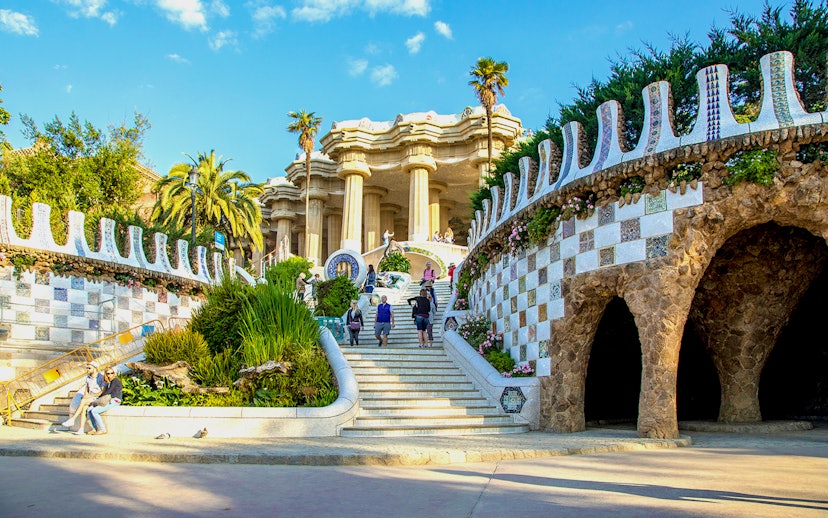
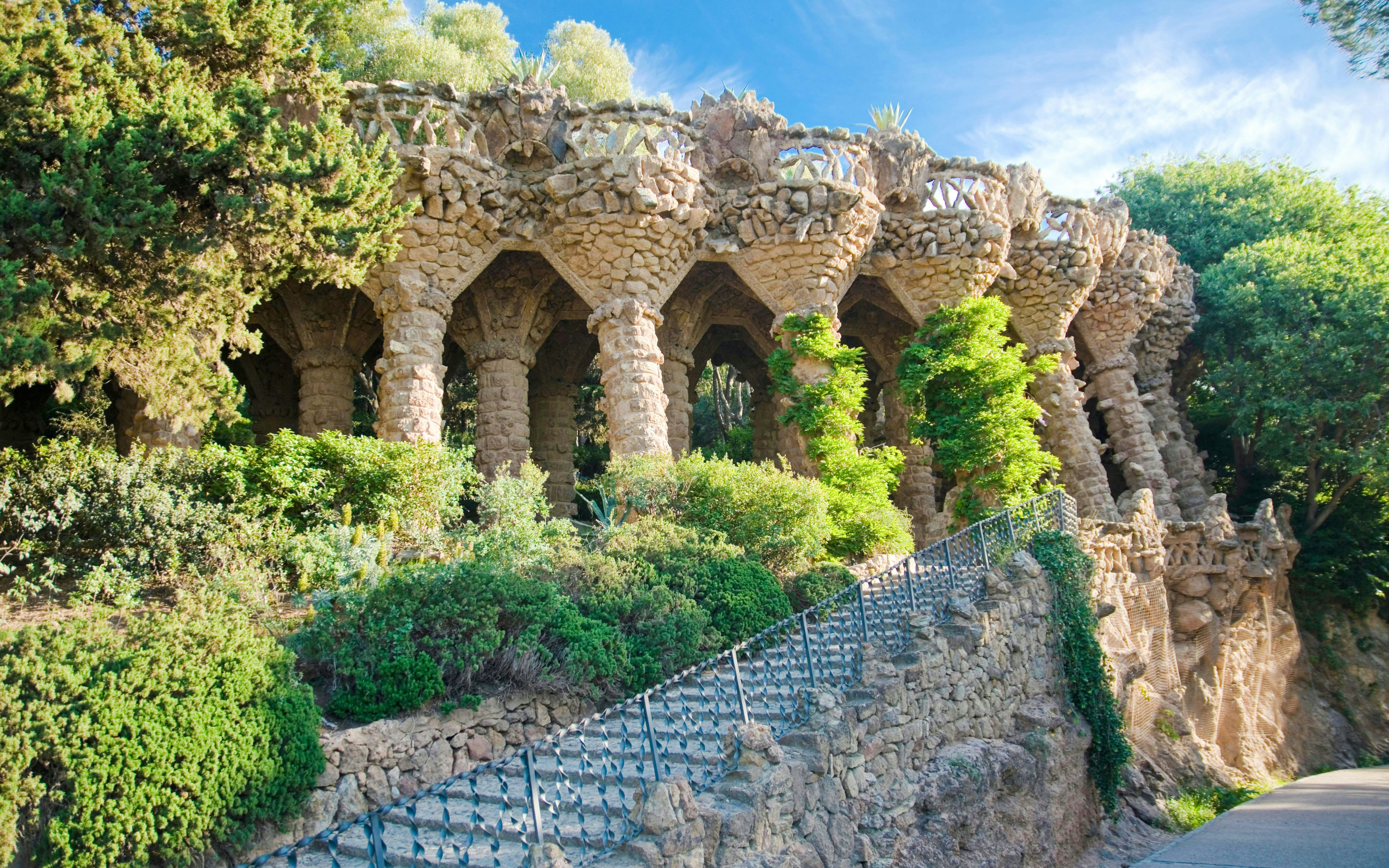
Park Guell stone viaducts surrounded by lush greenery in Barcelona.

Top things to do in Barcelona

Quick overview

  • Access: Included in all Park Güell tickets
  • Separate ticket: Not required
  • When you'll see it: Midway on most routes, or earlier if you enter from Carretera del Carmel
  • Visit duration: 20–40 mins self-guided/20–30 mins with a guide
  • Best time: First entry slot on a weekday, or late afternoon for softer light and thinner foot traffic
  • Restrictions: None specific to the viaducts; standard park preservation rules apply
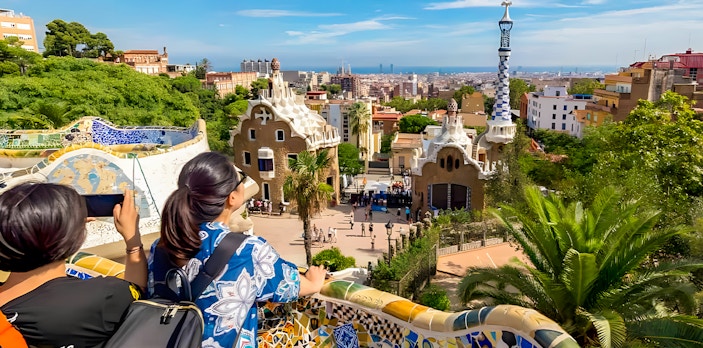
View from Park Güell terrace overlooking Barcelona cityscape.

The Park Güell viaducts are included with all Park Güell tickets. No separate ticket is needed. They matter because Gaudí turned plain access roads into sculptural stone structures that carry you through the hillside without flattening it. On most visits, you reach them after the Monumental Zone as you move toward the quieter upper paths, though the Carretera del Carmel entrance lets you prioritize them sooner. Choose a timed entry that gives you walking margin, because the viaducts reward unhurried time far more than a quick pass between headline photo stops.

How to best experience the viaducts

Best time to visit

First entry on a weekday gives you the calmest walk and the clearest sightlines under the arches. Midday brings harsher light and more through-traffic on the paths. If you want photos or quieter pacing, don’t aim for the busiest central hours.
How long to spend

Allow 20–40 minutes if you’re exploring on your own, or around 20–30 minutes if your guide folds the viaducts into a wider park route. That gives you time to notice the stonework and the changing views. If you rush, they read as shortcuts, not design.

Where it fits in your itinerary

The viaducts make the most sense once you’ve seen the Monumental Zone or if you enter from Carretera del Carmel and head across the upper slopes first. They sit outside the fastest highlight loop. Budget extra walking energy, or you’ll skip them when the hill starts to register.

Crowd patterns

Traffic is heaviest from late morning into early afternoon, especially in peak season from April to August. At that point, the paths feel more transitional than atmospheric. Early slots and later afternoon walks give you more space to stop, look up, and change vantage points.

What to prioritize if time is short

Prioritize the Portico of the Washerwoman and at least one stretch where the arches frame the slope and Barcelona beyond. Stand back first, then walk beneath the curve to see how the structure changes. If time is tight, cut the terrace lingering before you cut the viaduct walk.

Common mistakes to avoid

Most visitors treat the viaducts as background and keep walking without stepping back to view the full curve of the stone. Another mistake is entering from the steepest side when energy is low. Pick the entrance strategically, or the hill decides for you.

Best tickets to experience the viaducts

Ticket typeWhy choose it

General entry

Best if you want to wander at your own pace and spend extra time on the upper paths after the Monumental Zone.

Guided tour

Best for understanding why the viaducts follow the slope so precisely instead of cutting straight through the hillside.

Small-group guided tour

Best if you want more room to stop, ask questions, and walk beyond the busiest photo points without feeling rushed.

Why it's worth seeing

Most visitors remember Park Güell for its mosaics first and only later realize that the viaducts are some of Gaudí’s smartest designs. They were built to move carriages and people across a steep site without breaking the hill’s natural lines. That means you’re not just looking at decorative stonework here. You’re walking through an engineering idea that still shapes how the park feels, sounds, and opens up as you move.

Lower approach: the hill starts to unfold

As you leave the densest Monumental Zone paths, the viaduct system starts reading less like ornament and more like infrastructure. Look for the way the stone columns lean and branch with the terrain instead of standing rigidly apart from it. This lower stretch sets up the whole idea of Park Güell as a landscape shaped with the hill, not imposed against it.

Portico of the Washerwoman: the signature section

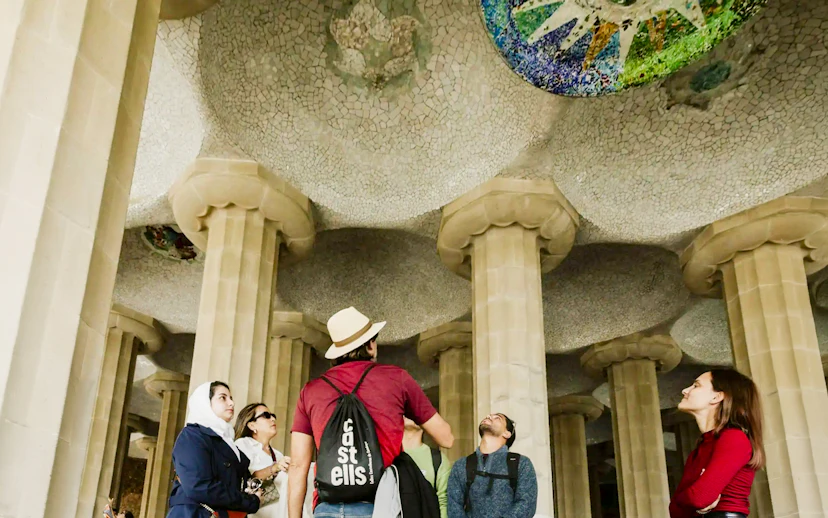
This is the stretch most people remember once they’ve actually walked it. One slanted column forms a figure often nicknamed the Washerwoman, while the vaulted stone ceiling bends with the path above. Pause at the outside edge before going underneath. From there, you can read both the sculptural silhouette and the practical job the structure performs in supporting the route.

Upper curves and outlooks: where the route becomes atmosphere

Farther along, the viaducts feel quieter and more spacious, with better chances to notice shadows, rough stone textures, and glimpses outward across Barcelona. This is where the system stops feeling like a passage and starts feeling like a destination. If you only see the famous lower section, you miss how the mood changes as the path climbs and the park opens up.

Historical & cultural significance

The viaducts were created between 1900 and 1914 as part of Eusebi Güell’s failed garden-city project, where they were meant to move residents and carriages across a steep hillside. What began as circulation infrastructure became one of Park Güell’s clearest examples of Gaudí’s landscape thinking, with stone roads that double as retaining structures. Today, they function less as roads than as one of the park’s most revealing public walks.

👉 Explore the full history of Park Güell

Notable figures

Antoni Gaudí | Architect

Designed the viaducts to follow the hillside rather than overpower it.

View Wikipedia

Eusebi Güell | Patron

Funded the wider estate project that gave the viaducts their original purpose.

View Wikipedia

Josep Maria Jujol | Collaborator

Helped shape Park Güell’s wider visual language during Gaudí’s most experimental Barcelona years.

View Wikipedia

Know before you go

  • Hours: Park Güell opening hours vary by season and by daylight period.
  • Entry format: All paid visits use timed entry, so your ticket is tied to a selected slot.
  • Peak season: April to August usually brings the longest waits at access control.
  • Planning note: Earlier slots leave you more buffer to walk beyond the Monumental Zone and reach the viaducts comfortably.
  • Official source: Check the official Park Güell booking page before you travel.

Main paid entrance: Carrer d’Olot, 08024 Barcelona.

  • Steep but assisted entrance: Av. del Santuari de Sant Josep de la Muntanya, which has outdoor escalators.
  • Easiest upper access: Carretera del Carmel, nº 23, which is the most practical approach if the viaducts are a priority.
  • Public transport tip: From the Carretera del Carmel side, the bus stop is about 100m away, with another mostly flat 200m to the monuments.
  • Route note: The viaducts are not a direct gate-side feature; expect extra uphill walking beyond the core Monumental Zone.
  • Wheelchair access: Partial; Park Güell offers two free wheelchairs for hire, subject to availability.
  • Reduced-mobility parking: The tourist coach parking area has three spaces for visitors with reduced mobility.
  • Best entrance choice: Carretera del Carmel is the least demanding approach for avoiding extra stairs at the start.
  • Terrain reality: Viaduct routes include gradients, uneven stone surfaces, and longer outdoor paths than the central terrace area.
  • Strollers: Possible in parts, but the upper hillside routes are less convenient than the flatter approach sections.
  • Requirement: No enforced dress code applies at the viaducts.
  • Recommended clothing: Wear comfortable outdoor walking clothes rather than city-sightseeing footwear.
  • Footwear: Closed-toe shoes with grip work better on worn stone and sloped paths.
  • Weather prep: Bring sun protection in summer and a light layer in cooler months, as the route is exposed.
  • Food and water: You may bring them into Park Güell, but consume them only in designated picnic areas.
  • Timed entry: Your slot controls park entry, so late arrival cuts into the time you have for upper-path walking.
  • Preservation: Access within the regulated areas of Park Güell may change if conservation work is underway.
  • Temporary closures: Certain areas can close for restoration or preservation, including well-known visitor routes.
  • On-site routing: Follow staff directions if a path is redirected around works or protected zones.
  • Walking surface: Expect uneven stone, outdoor grades, and stretches without level paving.
  • Stairs: Some routes include steps, though the Carretera del Carmel approach reduces the initial climb.
  • Effort level: Moderate; the viaduct walk is manageable for most visitors, but the hillside is noticeable.
  • Time on foot: Allow 20–40 minutes for the viaducts alone, plus more time for the rest of the park.
  • Best preparation: Water, shade gear, and stable shoes make the route more comfortable in every season.

Frequently asked questions about the viaducts

Yes. Entry to the viaducts is included with every valid Park Güell ticket. No separate ticket exists.

More reads